News
Civil Aviation
Pilot Training
Flight School Analysis
Aviation Jobs
Training
Services
About Us
Contact Us

Former Spirit Employees File Class-Action Lawsuit Over Abrupt Shutdown And Mass Layoffs

Picture of Aviation Today News Desk

Aviation Today News Desk

New York, United States: Former employees of Spirit Airlines have filed a proposed class-action lawsuit against the bankrupt carrier, alleging the airline violated federal labor laws by abruptly shutting down operations without providing the mandatory notice required for mass layoffs. The lawsuit was filed in the U.S. Bankruptcy Court for the Southern District of New York in May 2026, days after Spirit ceased all operations on May 2, 2026, bringing an end to the airline’s 34-year history as one of the largest ultra-low-cost carriers in the United States. According to court filings, six former employees, five from Florida and one from South Carolina are seeking class-action status on behalf of nearly 17,000 workers who lost their jobs when the airline suddenly halted flights and began winding down operations. The complaint alleges Spirit violated the federal Worker Adjustment and Retraining Notification (WARN) Act, which requires employers with more than 100 employees to provide at least 60 days’ written notice before mass layoffs or closures. Plaintiffs claim workers received no meaningful advance warning before termination notices were issued on May 2. Employees further alleged that Spirit management continued reassuring staff as recently as April 16, 2026, that the airline intended to continue operating and allegedly instructed employees to ignore rumors suggesting the company was nearing collapse. The lawsuit seeks compensation including 60 days of wages and salary, overtime and commissions, accrued vacation and sick leave, retirement contributions, medical and ERISA-related benefits, along with final unpaid paychecks that some workers claim are still pending. The legal action also draws attention to Spirit’s request for approximately $10.7 million in retention bonuses for executives and select employees tasked with overseeing the liquidation process. Former employees argue the request came while thousands of workers allegedly remained unpaid following the shutdown. Spirit Airlines has not publicly commented in detail on the lawsuit but stated that final employee paychecks were still being audited to ensure workers were properly compensated for all hours worked. Spirit officially ceased operations in the early hours of May 2, 2026, after failing to secure additional financing or complete rescue agreements with creditors and the U.S. government. The airline announced an immediate “orderly wind-down,” grounding all flights and shutting down customer service operations across its network. The final Spirit Airlines flight reportedly landed shortly after midnight on May 2 at Dallas-Fort Worth International Airport following a flight from Detroit, effectively marking the end of the airline’s operations. Spirit had previously filed for Chapter 11 bankruptcy protection twice, including a major bankruptcy filing in August 2025 as the airline attempted to restructure its debt and continue operating. Spirit Airlines pilots and flight attendants had agreed to temporary pay and benefit cuts in an effort to help the carrier reduce costs and continue operations through bankruptcy recovery efforts. The agreements included an 8% pilot pay cut and reduced retirement contributions, with plans to restore benefits once the airline returned to profitability. Spirit explored a government-backed rescue proposal worth roughly $500 million that could have given the U.S. government up to a 90% stake in the airline. However, the proposal reportedly collapsed amid opposition from creditors and lenders. On May 5, 2026, U.S. Bankruptcy Judge Sean Lane approved the airline’s liquidation proceedings, allowing Spirit to begin selling aircraft, engines, airport slots, and other assets in an effort to repay creditors. Court filings indicated that between 130 and 150 employees would temporarily remain during the liquidation process before staffing levels are further reduced. The shutdown immediately impacted nearly 17,000 employees across the United States, including pilots, flight attendants, maintenance technicians, airport workers, and corporate staff. WARN (Worker Adjustment and Retraining Notification) Act, a U.S. federal labor law that requires companies with 100 or more employees to provide at least 60 days’ advance notice before mass layoffs, plant closures, or major shutdowns. Notices issued after the closure revealed layoffs across several major operational bases, including Fort Lauderdale, Orlando, Miami, Houston, Dallas-Fort Worth, and Detroit. Labor unions and employee advocates criticized the airline’s handling of the shutdown and bankruptcy proceedings. The International Association of Machinists and Aerospace Workers called on the bankruptcy court and company leadership to ensure employees receive all severance, back pay, and benefits owed to them.
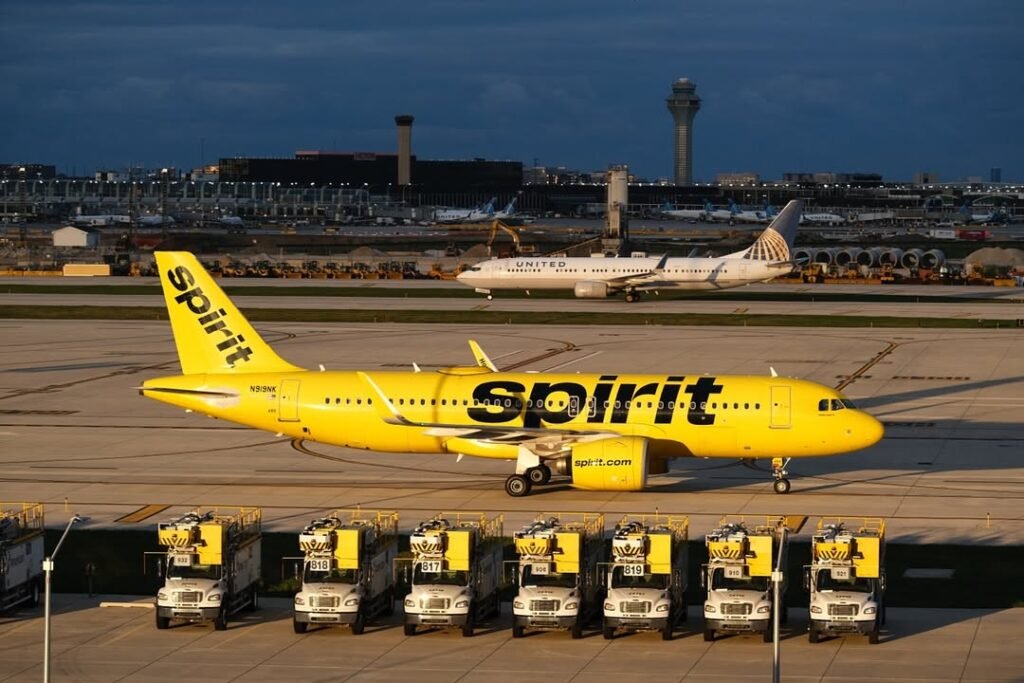
Image: Spirit Airlines

New York, United States: Former employees of Spirit Airlines have filed a proposed class-action lawsuit against the bankrupt carrier, alleging the airline violated federal labor laws by abruptly shutting down operations without providing the mandatory notice required for mass layoffs.

The lawsuit was filed in the U.S. Bankruptcy Court for the Southern District of New York in May 2026, days after Spirit ceased all operations on May 2, 2026, bringing an end to the airline’s 34-year history as one of the largest ultra-low-cost carriers in the United States.

According to court filings, six former employees, five from Florida and one from South Carolina are seeking class-action status on behalf of nearly 17,000 workers who lost their jobs when the airline suddenly halted flights and began winding down operations.

The complaint alleges Spirit violated the federal Worker Adjustment and Retraining Notification (WARN) Act, which requires employers with more than 100 employees to provide at least 60 days’ written notice before mass layoffs or closures. Plaintiffs claim workers received no meaningful advance warning before termination notices were issued on May 2.

Employees further alleged that Spirit management continued reassuring staff as recently as April 16, 2026, that the airline intended to continue operating and allegedly instructed employees to ignore rumors suggesting the company was nearing collapse.

The lawsuit seeks compensation including 60 days of wages and salary, overtime and commissions, accrued vacation and sick leave, retirement contributions, medical and ERISA-related benefits, along with final unpaid paychecks that some workers claim are still pending.

The legal action also draws attention to Spirit’s request for approximately $10.7 million in retention bonuses for executives and select employees tasked with overseeing the liquidation process. Former employees argue the request came while thousands of workers allegedly remained unpaid following the shutdown.

Spirit Airlines has not publicly commented in detail on the lawsuit but stated that final employee paychecks were still being audited to ensure workers were properly compensated for all hours worked.

Spirit officially ceased operations in the early hours of May 2, 2026, after failing to secure additional financing or complete rescue agreements with creditors and the U.S. government. The airline announced an immediate “orderly wind-down,” grounding all flights and shutting down customer service operations across its network.

The final Spirit Airlines flight reportedly landed shortly after midnight on May 2 at Dallas-Fort Worth International Airport following a flight from Detroit, effectively marking the end of the airline’s operations.

Spirit had previously filed for Chapter 11 bankruptcy protection twice, including a major bankruptcy filing in August 2025 as the airline attempted to restructure its debt and continue operating. Spirit Airlines pilots and flight attendants had agreed to temporary pay and benefit cuts in an effort to help the carrier reduce costs and continue operations through bankruptcy recovery efforts. The agreements included an 8% pilot pay cut and reduced retirement contributions, with plans to restore benefits once the airline returned to profitability. 

Spirit explored a government-backed rescue proposal worth roughly $500 million that could have given the U.S. government up to a 90% stake in the airline. However, the proposal reportedly collapsed amid opposition from creditors and lenders.

On May 5, 2026, U.S. Bankruptcy Judge Sean Lane approved the airline’s liquidation proceedings, allowing Spirit to begin selling aircraft, engines, airport slots, and other assets in an effort to repay creditors.

Court filings indicated that between 130 and 150 employees would temporarily remain during the liquidation process before staffing levels are further reduced.

The shutdown immediately impacted nearly 17,000 employees across the United States, including pilots, flight attendants, maintenance technicians, airport workers, and corporate staff.

WARN (Worker Adjustment and Retraining Notification) Act, a U.S. federal labor law that requires companies with 100 or more employees to provide at least 60 days’ advance notice before mass layoffs, plant closures, or major shutdowns. Notices issued after the closure revealed layoffs across several major operational bases, including Fort Lauderdale, Orlando, Miami, Houston, Dallas-Fort Worth, and Detroit.

Labor unions and employee advocates criticized the airline’s handling of the shutdown and bankruptcy proceedings. The International Association of Machinists and Aerospace Workers called on the bankruptcy court and company leadership to ensure employees receive all severance, back pay, and benefits owed to them.

Leave a Comment

Subscribe to our Newsletter

Recent News