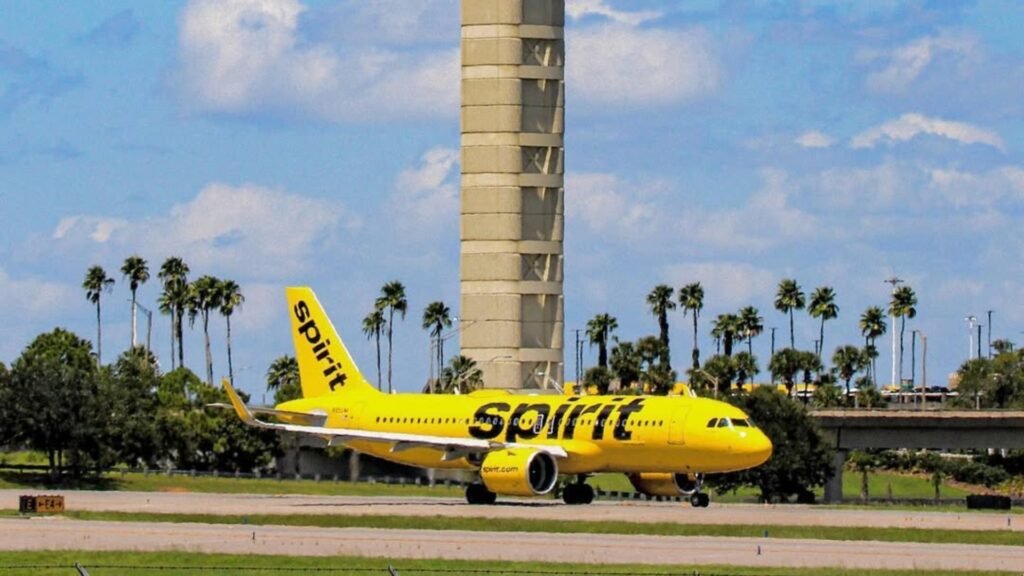
Miramar, United States: The sudden collapse of Spirit Airlines has brought an abrupt end to one of the most prominent ultra-low-cost carriers in the United States, with the airline ceasing operations on May 2, 2026, after prolonged financial distress and failed rescue efforts. The company confirmed that all flights had been cancelled with immediate effect and that customer service operations had been discontinued, formally ending its 34-year run in the aviation industry.
The shutdown triggered widespread disruption across its network, with all scheduled services halted and passengers stranded across domestic and international destinations. At least 277 flights were cancelled on the day of the shutdown alone, while all future operations were scrapped.
Although the airline has not released an exact figure, the scale of disruption is estimated to have affected tens of thousands of passengers across the United States, the Caribbean, and Latin America. In response, the U.S. Department of Transportation coordinated with major carriers to offer capped “rescue fares” to assist stranded travelers.
The operational halt has also had a significant impact on the airline’s workforce, with approximately 17,000 employees and contractors affected by the closure. Several U.S. carriers, including Delta Air Lines, United Airlines, Southwest Airlines, JetBlue Airways, and Frontier Airlines, announced contingency measures to accommodate displaced passengers, with some also exploring employment opportunities for affected staff.
The collapse followed the failure of a proposed $500 million federal bailout that had been under discussion with the administration of Donald Trump. The White House had reportedly presented a final proposal shortly before the shutdown, which included the possibility of the U.S. government taking a significant stake in the airline. However, the plan faced resistance from creditors and policymakers and ultimately failed to materialize. Officials also expressed concerns about the long-term viability of continued financial support, suggesting it could merely delay an inevitable collapse.
Spirit’s financial troubles had been mounting for several years, culminating in two Chapter 11 bankruptcy filings within a short span. The airline first filed for bankruptcy protection in November 2024 amid rising losses and debt pressures. It briefly emerged from restructuring in March 2025, but persistent liquidity challenges led to a second Chapter 11 filing in August 2025. Despite these efforts, the airline struggled to stabilize its finances, particularly after failed merger attempts with JetBlue Airways and Frontier Airlines, which had been viewed as critical to its long-term survival.
External factors further compounded the airline’s difficulties. The sharp rise in jet fuel prices, partly driven by geopolitical tensions linked to the Iran conflict, was a key factor that accelerated the airline’s decline. Combined with high operating costs, increasing competition from larger carriers, and limited financial flexibility, these pressures ultimately proved unsustainable for the low-cost airline model on which Spirit had built its business.
Founded in 1983, Spirit Airlines played a significant role in reshaping the U.S. aviation market by pioneering the ultra-low-cost model and making air travel more accessible to price-sensitive passengers. At its peak, the airline exerted considerable influence on domestic fare structures, forcing larger competitors to adopt more competitive pricing strategies. Its exit from the market is expected to reduce competition on several routes and could lead to an increase in airfares, particularly in price-sensitive segments.
In the aftermath of the shutdown, passengers have been advised not to proceed to airports, while refunds for bookings are being processed either through credit card providers or via bankruptcy proceedings. Loyalty program points and travel credits are unlikely to be recoverable. Meanwhile, the airline’s remaining assets, including aircraft and airport slots, are expected to be subject to liquidation or sale as part of the wind-down process.

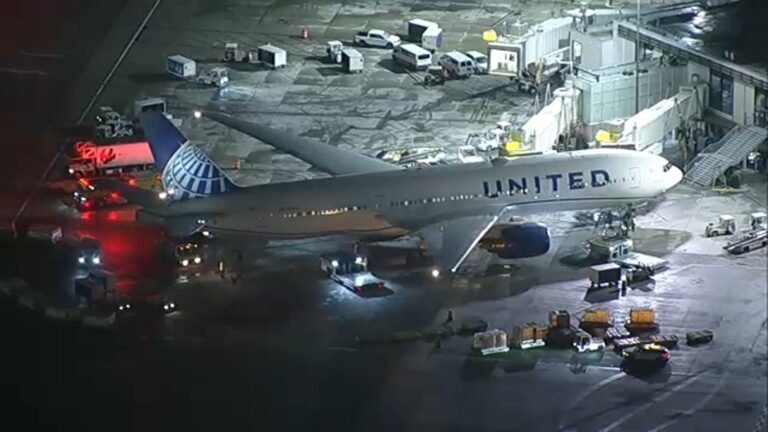
![Washington, United States: A United Airlines flight bound for Guatemala City made an emergency diversion to Washington Dulles International Airport after a passenger allegedly attempted to open a cabin door at cruising altitude and assaulted another traveler, according to air traffic control communications and federal authorities. The incident involved United Airlines Flight 1551, operated by a Boeing 737 MAX 8, which departed from Newark Liberty International Airport on Thursday evening carrying 145 passengers and six crew members. The aircraft had been en route to Guatemala City when the crew declared an emergency and diverted to Washington Dulles International Airport in Virginia. According to audio between the flight crew and air traffic controllers, the pilot informed controllers that the disruptive passenger attempted to open Door 2L while the aircraft was cruising at approximately 36,000 feet. The pilot also reported that the passenger later assaulted another individual onboard. During the exchange, the tower asked the crew which door the passenger had attempted to access. The pilot responded: “Door 2L at 36,000 feet and then [the passenger] assaulted a fellow passenger.” When controllers asked whether there were any injuries onboard, the pilot replied: “Not to our knowledge.” The aircraft landed safely at Washington Dulles at approximately 8:38 p.m. local time. Law enforcement and emergency personnel met the aircraft upon arrival. The FBI later confirmed that agents responded to the incident at the airport, although the agency did not immediately release additional details regarding the passenger’s identity, possible charges, or whether the individual was taken into federal custody. Flight tracking data showed the aircraft remained airborne for a period before diverting toward the Washington region instead of continuing south toward Guatemala. The diversion temporarily disrupted the scheduled international service but no injuries among passengers or crew were officially reported. United Airlines had not issued a detailed public statement at the time of publication regarding the circumstances surrounding the diversion or the status of the passenger involved. Federal authorities are expected to review crew reports, passenger statements, and onboard evidence as part of the investigation.](https://aviationtoday.in/wp-content/uploads/2026/05/AVIATION-TODAY-UNITEDV-AIRLINES-RUDE-PASSENGER-768x432.jpg)


![Washington, United States: A United Airlines flight bound for Guatemala City made an emergency diversion to Washington Dulles International Airport after a passenger allegedly attempted to open a cabin door at cruising altitude and assaulted another traveler, according to air traffic control communications and federal authorities. The incident involved United Airlines Flight 1551, operated by a Boeing 737 MAX 8, which departed from Newark Liberty International Airport on Thursday evening carrying 145 passengers and six crew members. The aircraft had been en route to Guatemala City when the crew declared an emergency and diverted to Washington Dulles International Airport in Virginia. According to audio between the flight crew and air traffic controllers, the pilot informed controllers that the disruptive passenger attempted to open Door 2L while the aircraft was cruising at approximately 36,000 feet. The pilot also reported that the passenger later assaulted another individual onboard. During the exchange, the tower asked the crew which door the passenger had attempted to access. The pilot responded: “Door 2L at 36,000 feet and then [the passenger] assaulted a fellow passenger.” When controllers asked whether there were any injuries onboard, the pilot replied: “Not to our knowledge.” The aircraft landed safely at Washington Dulles at approximately 8:38 p.m. local time. Law enforcement and emergency personnel met the aircraft upon arrival. The FBI later confirmed that agents responded to the incident at the airport, although the agency did not immediately release additional details regarding the passenger’s identity, possible charges, or whether the individual was taken into federal custody. Flight tracking data showed the aircraft remained airborne for a period before diverting toward the Washington region instead of continuing south toward Guatemala. The diversion temporarily disrupted the scheduled international service but no injuries among passengers or crew were officially reported. United Airlines had not issued a detailed public statement at the time of publication regarding the circumstances surrounding the diversion or the status of the passenger involved. Federal authorities are expected to review crew reports, passenger statements, and onboard evidence as part of the investigation.](https://aviationtoday.in/wp-content/uploads/2026/05/AVIATION-TODAY-UNITEDV-AIRLINES-RUDE-PASSENGER-300x169.jpg)