News
Civil Aviation
Pilot Training
Flight School Analysis
Aviation Jobs
Training
Services
About Us
Contact Us

AAIB Final Report: Vapor Lock And Crew Actions Led To FSTC Tecnam P2006T Crash In 2022

Picture of Aviation Today News Desk

Aviation Today News Desk

Bhiwani, India: India’s Aircraft Accident Investigation Bureau (AAIB) has released its final investigation report into the accident involving Tecnam P2006T aircraft VT-VDB operated by FSTC Flying School at Bhiwani Airfield, Haryana, on May 12, 2022, concluding that fuel vapor lock in the left engine, combined with crew handling deficiencies and limited experience on type, led to the crash during a training flight. The twin-engine Tecnam P2006T was conducting a routine training sortie at Chaudhary Bansi Lal Airport, Bhiwani, with a flight instructor and a student pilot on board. The exercise involved six circuit-and-landing maneuvers and was the second training sortie of the day. According to the investigation, the aircraft completed its first circuit and performed a normal touch-and-go landing on Runway 30. Shortly after becoming airborne again, the crew experienced rough running and a loss of power in the left engine. The instructor took control and initiated asymmetric-flight procedures to maintain directional control. While the aircraft was still climbing at approximately 100 feet above ground level, the crew reported roughness and a reduction in power from the right engine as well. As the aircraft’s airspeed decayed, it was unable to sustain the climb. The crew elected to conduct a forced landing within the airfield boundary. The aircraft touched down heavily, sustaining substantial damage before coming to rest near the perimeter wall. Both occupants evacuated safely. No fatalities, serious injuries, fire, or damage to third parties were reported. The accident aircraft was a 2019-built Tecnam P2006T, serial number 269, powered by two Rotax 912 S3 engines. Records examined by investigators showed the aircraft held valid airworthiness documentation and had been maintained in accordance with DGCA-approved maintenance programs. The 34-year-old flight instructor held a valid Commercial Pilot Licence and had accumulated approximately 1,589 flight hours. However, he had only around 28 hours of experience on the Tecnam P2006T type. The 20-year-old student pilot had logged approximately 182 flight hours, most of them on Cessna 172 aircraft. Prior to the accident, he had accumulated only about 1 hour and 15 minutes on the Tecnam P2006T. Investigators found both crew members were properly licensed, medically fit, adequately rested, and had not consumed alcohol. A central focus of the investigation was determining whether an engine malfunction had caused the accident. AAIB investigators conducted extensive examinations and operational testing of both Rotax engines and associated fuel, ignition, and electrical systems. The report concluded that neither engine suffered a technical malfunction and both were capable of producing power. Investigators also noted that the aircraft’s Garmin avionics system had the capability to record engine and flight parameters. However, no SD card had been installed in the data-logging slot, meaning no flight data was recorded. Subsequent attempts by the U.S. The National Transportation Safety Board (NTSB) to recover information from the units' internal memory was unsuccessful. Weather conditions at Bhiwani played a significant role in the occurrence. Meteorological data recorded temperatures of approximately 44°C at the time of the flight, while a weather station measured 46°C immediately after the accident. The aircraft type is approved for operations up to 50°C. Investigators determined that the combination of extreme ambient temperatures, elevated runway surface temperatures, and the use of automotive gasoline (MOGAS) created conditions favorable for vapor lock formation. Vapor lock occurs when fuel vaporizes within fuel lines, disrupting the continuous supply of liquid fuel to the engine. The report noted that FSTC operated its Tecnam fleet on MOGAS containing 10% ethanol. Although the fuel met all approved specifications and manufacturer requirements, investigators found that its volatility increased the likelihood of vapor formation under very hot operating conditions. According to the report, the student pilot switched off the aircraft’s electric fuel pumps after leveling at circuit altitude, following normal procedures. As the aircraft entered the circuit pattern and later prepared for the touch-and-go maneuver, engine power settings were reduced, resulting in lower fuel flow and reduced cooling airflow through the engine compartments. Following touchdown and the subsequent takeoff, investigators believe heat accumulated within the engine cowling area, allowing fuel vapor to form in the fuel lines supplying the left engine. The resulting vapor lock interrupted fuel flow, causing rough running and loss of power in the left engine. The right engine later experienced a reduction in performance under similar environmental conditions, though investigators found evidence indicating it continued producing power throughout the forced landing sequence. While acknowledging the instructor initially applied correct asymmetric-flight techniques after the left-engine power loss, the report found several critical procedures outlined in the Aircraft Flight Manual (AFM) were not followed. Investigators determined that the failed left-engine propeller was not feathered, creating additional aerodynamic drag. The landing gear also remained extended, further degrading aircraft performance. The report additionally concluded that the instructor did not lower the aircraft’s pitch attitude sufficiently to preserve airspeed after the initial engine failure. As a result, airspeed decayed below the aircraft’s minimum control speed (VMCA), reducing controllability and climb capability. AAIB stated that the crew likely interpreted the right engine’s reduced performance as a complete engine failure, although evidence suggested the engine was still producing power. The investigation further noted that neither a left-engine failure call nor a Mayday transmission was made to air traffic personnel. AAIB also identified several organizational shortcomings at the flying school. Investigators found that FSTC had reduced local circuit altitude from the DGCA-approved 1,500 feet to 700 feet without formally amending its Training and Procedures Manual or obtaining regulatory approval. The investigation additionally criticized the emergency checklist carried onboard, describing it as a small single-page document that did not clearly describe actions required during various emergency situations. Another finding noted that the school did not utilize the aircraft’s built-in Garmin data-recording capability, despite the system being available. The report concluded that the aircraft was airworthy, properly maintained, loaded within limits, and carrying sufficient fuel. AAIB determined that the ambient temperature was close to the aircraft’s operational limit and conducive to vapor lock formation. Investigators also found that both crew members had comparatively limited experience on the Tecnam P2006T and that emergency procedures were not followed precisely after the initial engine power loss. The final probable cause stated that the accident occurred when the left engine encountered vapor lock and the right engine suffered a slight loss of power while operating in temperatures near the aircraft’s operational limit. The aircraft subsequently impacted the ground during a forced landing. Contributing factors identified by AAIB included non-adherence to Aircraft Flight Manual procedures and the pairing of two crew members with limited experience handling emergency situations on the aircraft type.

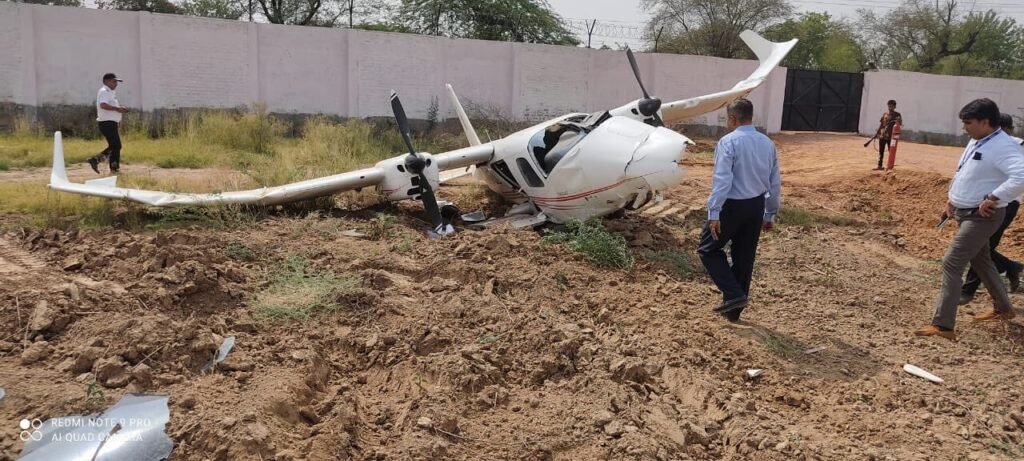
Image: @shukla_tarun (X)

Bhiwani, India: India’s Aircraft Accident Investigation Bureau (AAIB) has released its final investigation report into the accident involving Tecnam P2006T aircraft VT-VDB operated by FSTC Flying School at Bhiwani Airfield, Haryana, on May 12, 2022, concluding that fuel vapor lock in the left engine, combined with crew handling deficiencies and limited experience on type, led to the crash during a training flight.

The twin-engine Tecnam P2006T was conducting a routine training sortie at Chaudhary Bansi Lal Airport, Bhiwani, with a flight instructor and a student pilot on board. The exercise involved six circuit-and-landing maneuvers and was the second training sortie of the day.

According to the investigation, the aircraft completed its first circuit and performed a normal touch-and-go landing on Runway 30. Shortly after becoming airborne again, the crew experienced rough running and a loss of power in the left engine. The instructor took control and initiated asymmetric-flight procedures to maintain directional control.

While the aircraft was still climbing at approximately 100 feet above ground level, the crew reported roughness and a reduction in power from the right engine as well. As the aircraft’s airspeed decayed, it was unable to sustain the climb. The crew elected to conduct a forced landing within the airfield boundary. The aircraft touched down heavily, sustaining substantial damage before coming to rest near the perimeter wall.

Both occupants evacuated safely. No fatalities, serious injuries, fire, or damage to third parties were reported.

The accident aircraft was a 2019-built Tecnam P2006T, serial number 269, powered by two Rotax 912 S3 engines. Records examined by investigators showed the aircraft held valid airworthiness documentation and had been maintained in accordance with DGCA-approved maintenance programs.

The 34-year-old flight instructor held a valid Commercial Pilot Licence and had accumulated approximately 1,589 flight hours. However, he had only around 28 hours of experience on the Tecnam P2006T type.

The 20-year-old student pilot had logged approximately 182 flight hours, most of them on Cessna 172 aircraft. Prior to the accident, he had accumulated only about 1 hour and 15 minutes on the Tecnam P2006T.

Investigators found both crew members were properly licensed, medically fit, adequately rested, and had not consumed alcohol.

A central focus of the investigation was determining whether an engine malfunction had caused the accident.

AAIB investigators conducted extensive examinations and operational testing of both Rotax engines and associated fuel, ignition, and electrical systems. The report concluded that neither engine suffered a technical malfunction and both were capable of producing power.

Investigators also noted that the aircraft’s Garmin avionics system had the capability to record engine and flight parameters. However, no SD card had been installed in the data-logging slot, meaning no flight data was recorded. Subsequent attempts by the U.S. The National Transportation Safety Board (NTSB) to recover information from the units’ internal memory was unsuccessful.

Weather conditions at Bhiwani played a significant role in the occurrence. Meteorological data recorded temperatures of approximately 44°C at the time of the flight, while a weather station measured 46°C immediately after the accident. The aircraft type is approved for operations up to 50°C.

Investigators determined that the combination of extreme ambient temperatures, elevated runway surface temperatures, and the use of automotive gasoline (MOGAS) created conditions favorable for vapor lock formation.

Vapor lock occurs when fuel vaporizes within fuel lines, disrupting the continuous supply of liquid fuel to the engine.

The report noted that FSTC operated its Tecnam fleet on MOGAS containing 10% ethanol. Although the fuel met all approved specifications and manufacturer requirements, investigators found that its volatility increased the likelihood of vapor formation under very hot operating conditions.

According to the report, the student pilot switched off the aircraft’s electric fuel pumps after leveling at circuit altitude, following normal procedures.

As the aircraft entered the circuit pattern and later prepared for the touch-and-go maneuver, engine power settings were reduced, resulting in lower fuel flow and reduced cooling airflow through the engine compartments.

Following touchdown and the subsequent takeoff, investigators believe heat accumulated within the engine cowling area, allowing fuel vapor to form in the fuel lines supplying the left engine.

The resulting vapor lock interrupted fuel flow, causing rough running and loss of power in the left engine.

The right engine later experienced a reduction in performance under similar environmental conditions, though investigators found evidence indicating it continued producing power throughout the forced landing sequence.

While acknowledging the instructor initially applied correct asymmetric-flight techniques after the left-engine power loss, the report found several critical procedures outlined in the Aircraft Flight Manual (AFM) were not followed.

Investigators determined that the failed left-engine propeller was not feathered, creating additional aerodynamic drag. The landing gear also remained extended, further degrading aircraft performance.

The report additionally concluded that the instructor did not lower the aircraft’s pitch attitude sufficiently to preserve airspeed after the initial engine failure. As a result, airspeed decayed below the aircraft’s minimum control speed (VMCA), reducing controllability and climb capability.

AAIB stated that the crew likely interpreted the right engine’s reduced performance as a complete engine failure, although evidence suggested the engine was still producing power.

The investigation further noted that neither a left-engine failure call nor a Mayday transmission was made to air traffic personnel.

AAIB also identified several organizational shortcomings at the flying school. Investigators found that FSTC had reduced local circuit altitude from the DGCA-approved 1,500 feet to 700 feet without formally amending its Training and Procedures Manual or obtaining regulatory approval.

The investigation additionally criticized the emergency checklist carried onboard, describing it as a small single-page document that did not clearly describe actions required during various emergency situations.

Another finding noted that the school did not utilize the aircraft’s built-in Garmin data-recording capability, despite the system being available.

The report concluded that the aircraft was airworthy, properly maintained, loaded within limits, and carrying sufficient fuel.

AAIB determined that the ambient temperature was close to the aircraft’s operational limit and conducive to vapor lock formation. Investigators also found that both crew members had comparatively limited experience on the Tecnam P2006T and that emergency procedures were not followed precisely after the initial engine power loss.

The final probable cause stated that the accident occurred when the left engine encountered vapor lock and the right engine suffered a slight loss of power while operating in temperatures near the aircraft’s operational limit. The aircraft subsequently impacted the ground during a forced landing.

Contributing factors identified by AAIB included non-adherence to Aircraft Flight Manual procedures and the pairing of two crew members with limited experience handling emergency situations on the aircraft type.

Leave a Comment

Subscribe to our Newsletter

Recent News