News
Civil Aviation
Pilot Training
Flight School Analysis
Aviation Jobs
Training
Services
About Us
Contact Us

United Boeing 777 Returns To Dublin Mid-Atlantic After Reported Fluid Leak 

Picture of Aviation Today News Desk

Aviation Today News Desk

Dublin, Ireland: A United Airlines Boeing 777 operating a scheduled transatlantic service from Dublin to Newark was forced to return to Ireland after the crew detected a reported fluid leak while flying over the Atlantic Ocean. The aircraft involved was United Airlines Flight UA23, operated by a Boeing 777-222ER registered N78005. The flight departed Dublin Airport on June 8, 2026, bound for Newark Liberty International Airport in New Jersey. According to flight-tracking data and aviation monitoring reports, the aircraft had already departed Irish airspace and was proceeding westbound over the Atlantic when the crew identified a technical issue involving a fluid leak. Faced with a potential systems-related problem over open water, the pilots elected to discontinue the oceanic crossing and return to Dublin as a precautionary measure. The widebody aircraft subsequently reversed course and safely landed back at Dublin Airport. No injuries to passengers or crew have been reported. The leak was detected during the initial stages of the transatlantic journey. However, neither United Airlines nor airport authorities have publicly disclosed the exact source of the fluid leak. As a result, it remains unclear whether the issue involved hydraulic fluid, engine oil, fuel, or another aircraft system. The decision to return rather than continue across the Atlantic reflects standard operational practice for long-haul flights when crews encounter technical abnormalities that could affect aircraft systems reliability. Returning to the departure airport allows maintenance personnel to inspect the aircraft immediately and determine the extent of the problem before further operations. Flight tracking records show the aircraft involved was Boeing 777-222ER N78005, a long-range twin-engine aircraft regularly deployed on United Airlines' transatlantic network. The incident ended without injuries, and the aircraft landed safely after the precautionary return to Dublin.

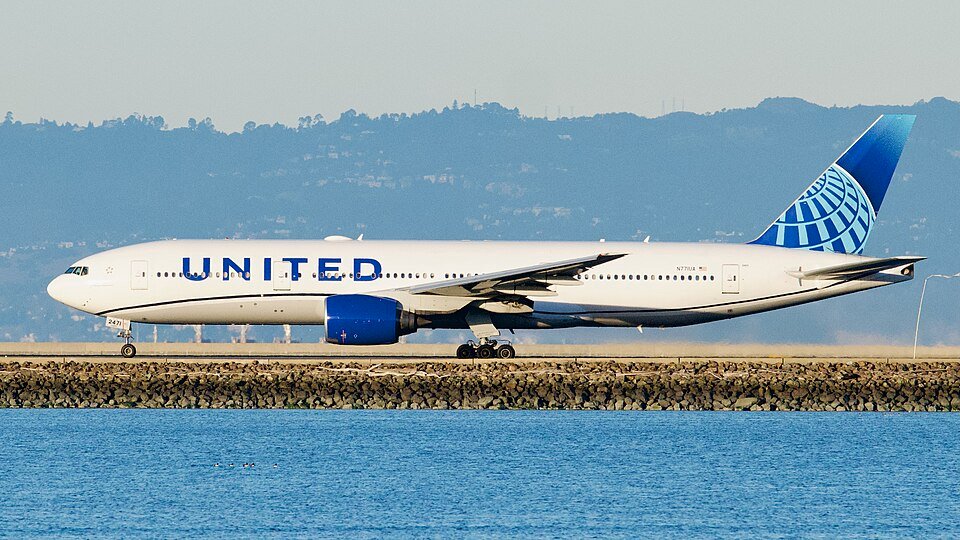
Image: Bill Abbott (Flickr)

Dublin, Ireland: A United Airlines Boeing 777 operating a scheduled transatlantic service from Dublin to Newark was forced to return to Ireland after the crew detected a reported fluid leak while flying over the Atlantic Ocean.

The aircraft involved was United Airlines Flight UA23, operated by a Boeing 777-222ER registered N78005. The flight departed Dublin Airport on June 8, 2026, bound for Newark Liberty International Airport in New Jersey.

According to flight-tracking data and aviation monitoring reports, the aircraft had already departed Irish airspace and was proceeding westbound over the Atlantic when the crew identified a technical issue involving a fluid leak. Faced with a potential systems-related problem over open water, the pilots elected to discontinue the oceanic crossing and return to Dublin as a precautionary measure.

The widebody aircraft subsequently reversed course and safely landed back at Dublin Airport. No injuries to passengers or crew have been reported.

The leak was detected during the initial stages of the transatlantic journey. However, neither United Airlines nor airport authorities have publicly disclosed the exact source of the fluid leak. As a result, it remains unclear whether the issue involved hydraulic fluid, engine oil, fuel, or another aircraft system.

The decision to return rather than continue across the Atlantic reflects standard operational practice for long-haul flights when crews encounter technical abnormalities that could affect aircraft systems reliability. Returning to the departure airport allows maintenance personnel to inspect the aircraft immediately and determine the extent of the problem before further operations.

Flight tracking records show the aircraft involved was Boeing 777-222ER N78005, a long-range twin-engine aircraft regularly deployed on United Airlines’ transatlantic network. The incident ended without injuries, and the aircraft landed safely after the precautionary return to Dublin.


Leave a Comment

Subscribe to our Newsletter

Recent News