The Next Challenge: From Networks to Operations
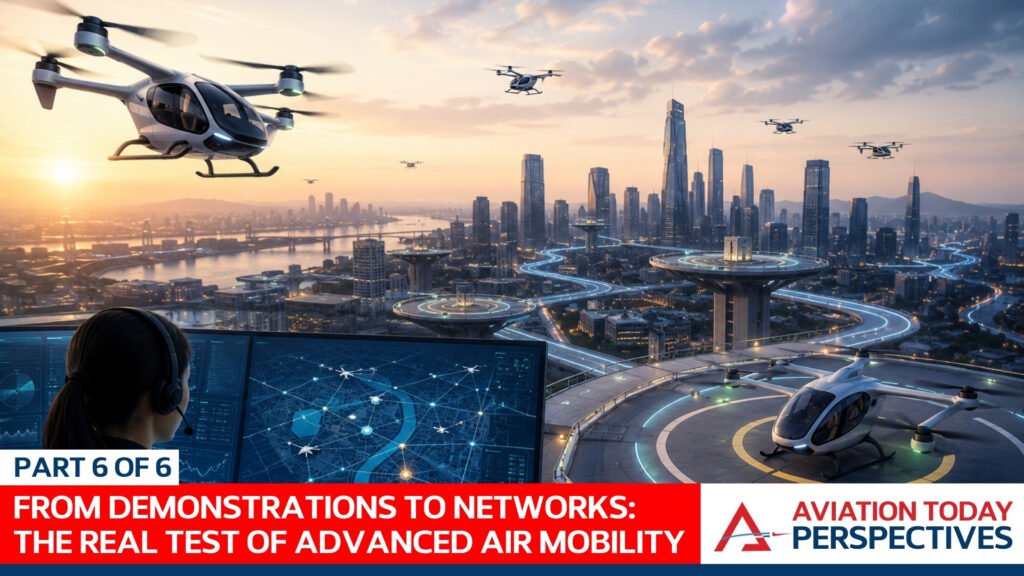
Building networks is necessary, but networks alone do not create sustainable mobility systems. Demand, vertiports, premium service models, and government coordination can establish the foundation for Advanced Air Mobility, but the long-term success of AAM will depend on something more difficult: the ability to operate safely, repeatedly, predictably, and resiliently under real-world conditions.
As AAM evolves from demonstrations to networks, the industry’s focus must also evolve from aircraft and infrastructure toward operations and synchronization. Questions surrounding operational resilience, safety management, human performance, workforce readiness, digital integration, community trust, and governance will become increasingly important as networks scale.
History shows that transportation systems succeed not merely because they can move people, but because they can do so consistently and safely while adapting to disruptions, changing demand, and increasing complexity. Reliability ultimately matters more than novelty.
The challenge ahead is therefore larger than building routes or constructing vertiports. It is creating conditions that allow transportation networks to become trusted, adaptive, and enduring mobility systems. That next phase will require the industry to think beyond infrastructure and begin designing the operational foundations that enable Advanced Air Mobility to scale with confidence.
Conclusion: The Sky Is Not the Market
Advanced Air Mobility is often described as a new aviation market. That description is too narrow. AAM is a transportation-network challenge with aviation at its center.
The aircraft matter. Certification matters. Vertiports matter. Airspace integration matters but none of them, alone, creates demand. The industry’s next phase must be defined by disciplined route selection, digitally integrated service design, government-enabled networks, and a clear understanding of who will use AAM, when they will use it, and why they will pay for it.
Just as important, they must understand what could prevent those travelers from using it again. The winning AAM cities will not necessarily be the places with the most dramatic demonstrations or the most futuristic infrastructure.
They will be the places that identify genuine mobility pain points, connect the right destinations, make the service easy to use, and expand carefully from one high-value corridor into a functioning metropolitan network. The objective is not to create flying taxis for their own sake. The objective is to make urban travel meaningfully better by making it an alternative mode of transportation that is more effective, more efficient, and less costly.
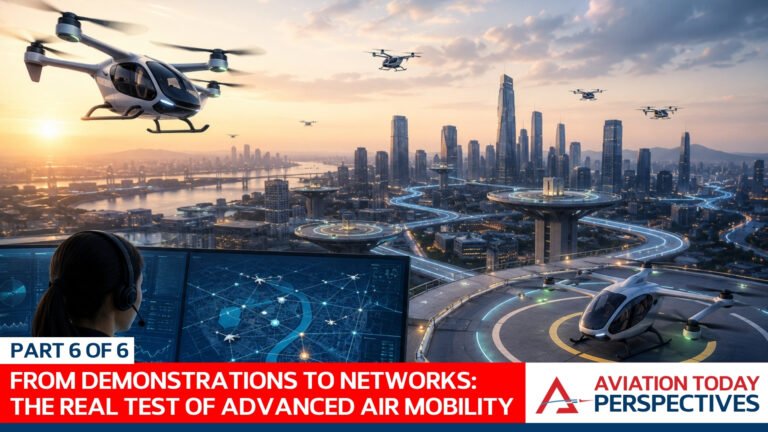
This is the 6th of a series of 6 articles on: “From Demonstrations to Networks: The Real Test of Advanced Air Mobility
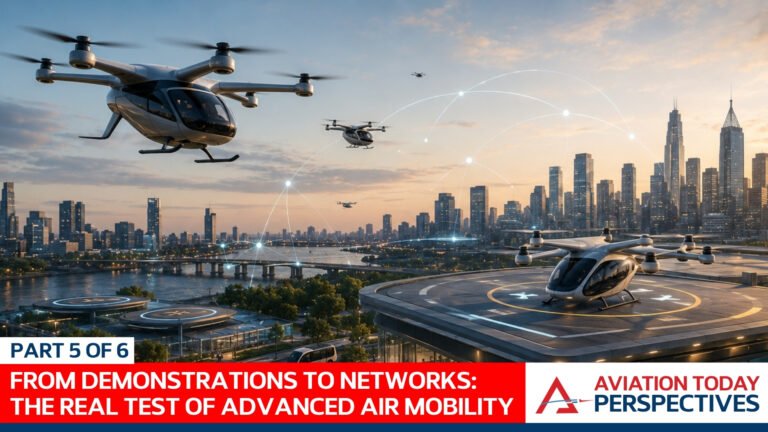
Read Part 5 of this six-part series here
This article is part of Aviation Today’s Perspectives, a dedicated series that publishes expert viewpoints from aviation authorities and industry leaders on emerging trends, policy developments, and the future of global aviation.
Disclaimer: The views and opinions expressed in this article are solely those of the authors and do not necessarily reflect the views or editorial position of Aviation Today.
About The Authors