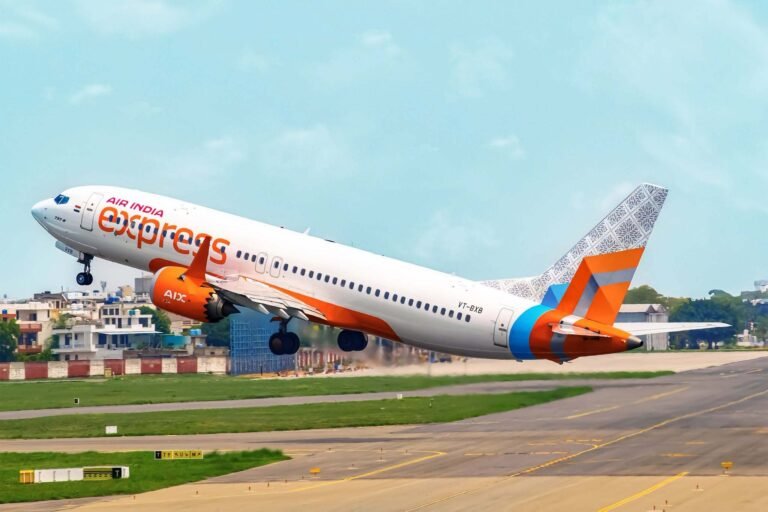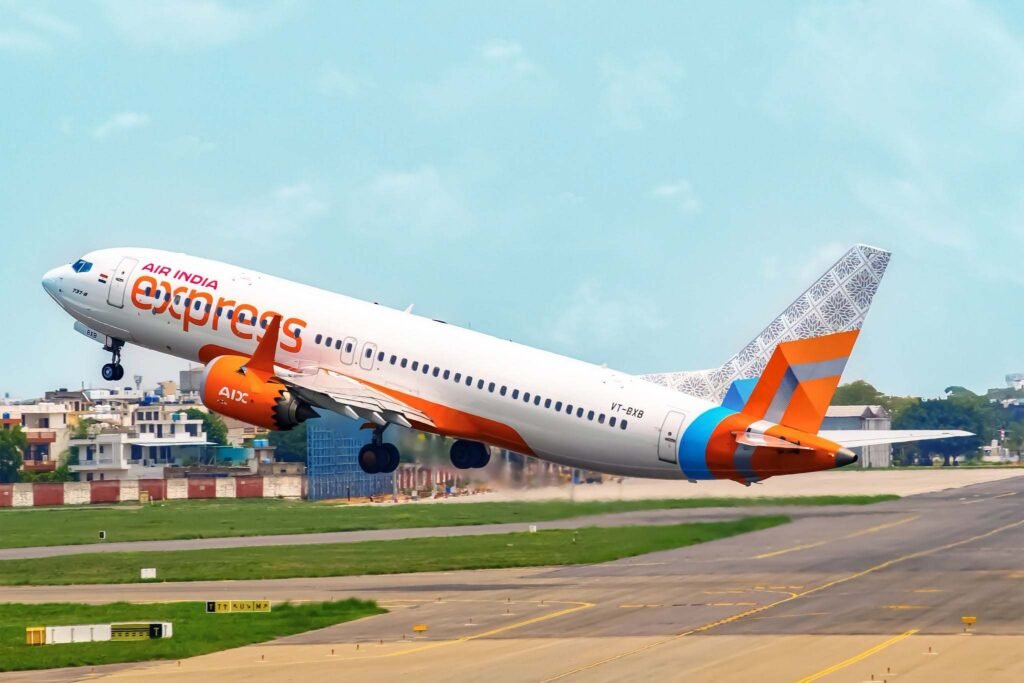
Goa, India: The Aircraft Accident Investigation Bureau (AAIB) has found that miscommunication between an Air India Express flight crew and air traffic control, coupled with inadequate coordination between civil and Navy controllers, led to a serious runway incursion at Dabolim Airport on 3 April 2026, when a Boeing 737 entered an active runway while an Indian Navy fighter was taking off.
In its final investigation report, the AAIB identified the misinterpretation of the instruction “Expect backtrack” as permission to enter the runway as a probable cause. The crew entered the active runway without obtaining explicit clearance or establishing two-way communication with Navy ATC, creating a potential collision involving the two aircraft.
The incident involved Air India Express flight AXB-1109, operated by Boeing 737-8 MAX VT-BXL, which was preparing to depart for Delhi with 165 passengers and six crew members on board. No injuries or aircraft damage were reported.
The incident occurred at 02:47:50 UTC (08:17:50 IST). The aircraft initially received pushback clearance for Runway 26, although Runway 08 was in use. The AAIB found that the Airports Authority of India (AAI) Surface Movement Control (SMC) controller had not properly established the runway in use during the shift handover.
After the runway change was communicated, the controller instructed the aircraft to expect a backtrack for Runway 08 and taxi via Taxiway N2, holding at the runway holding point. However, the trainee first officer read back the taxi instruction but missed the instruction to hold, which the controller failed to correct.
At the N2 holding point, the aircraft stopped for approximately 16 seconds while the first officer requested a repeat of the departure clearance. Meanwhile, an Indian Navy fighter aircraft was cleared for take-off from Runway 08.
The SMC controller subsequently instructed the Air India Express crew to change over to 119.7 MHz, the Navy approach frequency. The captain read back the frequency and added that the aircraft was entering the runway. However, the controller did not acknowledge the runway-entry call, assuming the aircraft had established communication with Navy ATC.
The Air India Express aircraft entered the active runway without obtaining explicit clearance or establishing two-way communication with Navy ATC and began backtracking towards Runway 08.
The Navy tower controller spotted the civil aircraft entering the runway while the fighter was on its take-off roll and immediately warned its pilot about an unidentified aircraft on the runway.
According to the AAIB, the fighter had reached its decision speed (V1) of 100 knots at approximately 1,250 metres from the take-off point and reached a rotation speed of 130 knots at around 1,850 metres when the warning was received. The pilot could not initially sight the Air India Express aircraft because of the runway slope.
The Navy fighter expedited its take-off and lifted off approximately 2,000 metres from the take-off point, near Taxiways N5 and N6. The distance between its lift-off point and the Air India Express aircraft was approximately 900–1,000 metres.
The fighter subsequently reached approximately 450 feet above the runway near Taxiway N3. The AAIB noted that the fighter pilot had limited runway remaining for an aborted take-off in case of an engine failure or other thrust-related emergency because of the civil aircraft’s presence.
The report warned that the occurrence could have had “catastrophic consequences” if an emergency had occurred with the Navy aircraft, crediting the fighter pilot’s presence of mind and prompt reaction with preventing a potential ground collision.
The investigation found that the Air India Express crew was occupied with training activities, resulting in missed radio calls and communication lapses. The trainee first officer was overly reliant on the instructor and became occupied with verifying take-off performance calculations after the runway change, reducing his situational awareness and ability to monitor radio communications.
The AAIB also observed that the captain appeared to be in a hurry to line up and take off to reduce runway occupancy time. The crew did not follow the instruction to hold at the N2 holding point and establish communication with Navy ATC before entering the runway.
On the ATC side, the SMC controller failed to ensure a complete readback of the holding instruction and did not correct the crew’s runway-entry announcement. The investigation also found that the controller had not received adequate information about the runway in use and Navy flying during the shift handover.
The report further identified inadequate coordination between AAI SMC and Navy ATC, with the two aircraft operating on different radio frequencies and therefore unaware of each other’s traffic situation.
The AAIB also noted that video and apron camera footage was not preserved by AAI and Navy ATC, while the Navy fighter’s cockpit data recorder was not shared with investigators due to technical reasons.
The AAIB identified two probable causes: the captain’s misinterpretation of “Expect backtrack” as runway-entry clearance without seeking confirmation, and the crew’s failure to follow instructions to hold at the holding point and contact Navy approach before entering the active runway.
It identified two contributory factors: the trainee first officer’s over-reliance on the instructor and distraction by heads-down tasks, and a hearback error by the SMC controller, who failed to ensure the crew correctly acknowledged the holding instruction.
The bureau issued safety recommendations to Air India Express, AAI, the Indian Navy and the Directorate General of Civil Aviation (DGCA). Air India Express was advised to counsel the crew, provide additional training to the captain and sensitise its flight crews about the identified lapses.
AAI was asked to reinforce standard radio phraseology, ensure controllers correct incorrect readbacks and review the use of expressions such as “expect backtrack”. The bureau also recommended considering Taxiway N2 a hotspot because of its proximity to civil apron Bays 1 and 2.
The Indian Navy was advised to publish information on stop-bar installation and use at Dabolim in the Aeronautical Information Publication (AIP) and consider a standard frequency-change procedure for civil aircraft. The DGCA was asked to establish a formal framework for coordination and evidence-sharing between civil aviation and Defence authorities.
Following the occurrence, AAI and Navy authorities also revised their shift handover procedures, requiring SMC controllers to coordinate directly with Navy ATC through the hotline to confirm critical information, including the runway in use and frequency changeover.