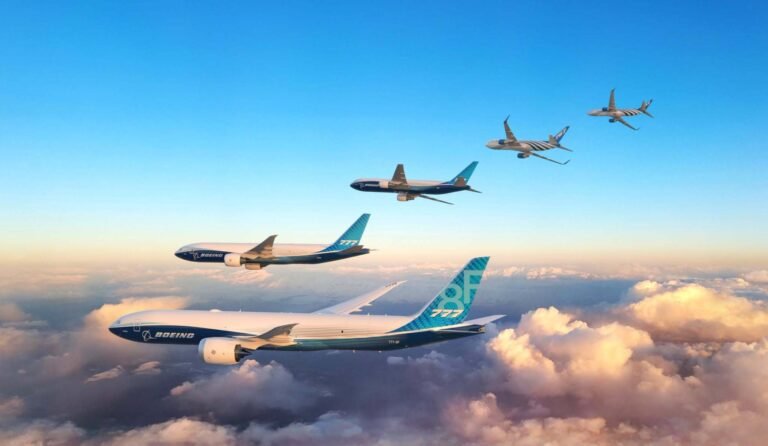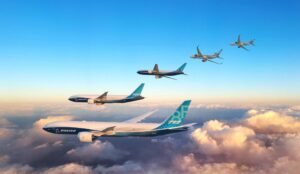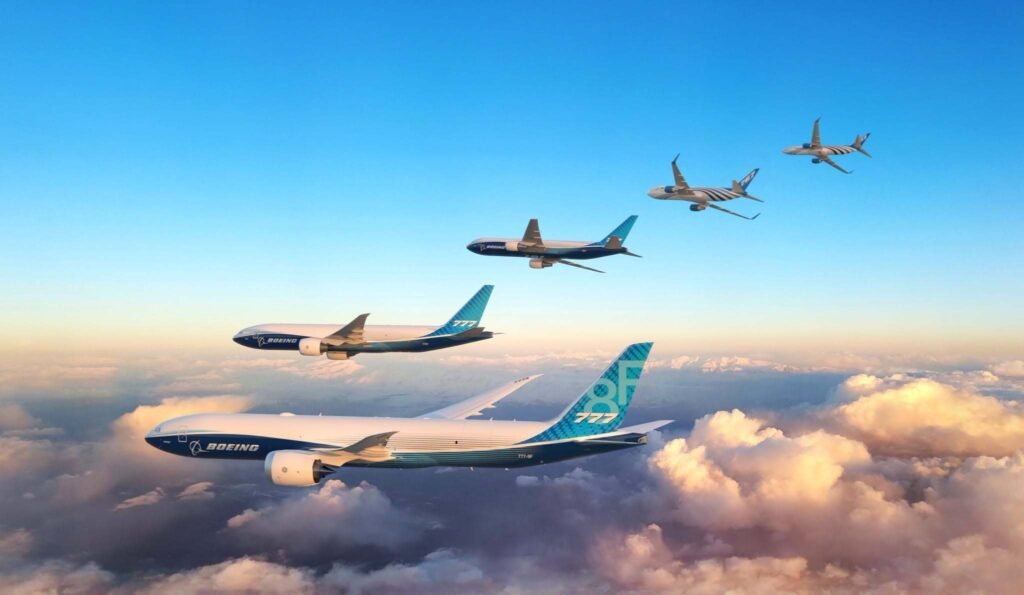
Miami, United States: Boeing has projected that the global dedicated freighter fleet will expand by 67% to 4,010 aircraft by 2045, as worldwide air cargo traffic doubles over the next two decades. The forecast, published in the company’s 2026 World Air Cargo Forecast (WACF), estimates that operators will require 2,930 new and converted freighters to accommodate growing demand and replace aging aircraft.
Released on October 28 at The International Air Cargo Association’s (TIACA) Air Cargo Forum in Miami, the biennial forecast expects global air cargo traffic to grow at an annual rate of 3.5% between 2026 and 2045, measured in cargo tonne-kilometres. The worldwide freighter fleet is projected to increase from 2,395 aircraft in 2025 to 4,010 by 2045, with dedicated freighters expected to continue carrying more than half of global air cargo traffic.
Boeing expects approximately 55% of the 2,930 required freighter deliveries to provide additional capacity, while the remaining 45% will replace older, less efficient aircraft. Around two-thirds of the deliveries are projected to come from passenger-to-freighter conversions, with the remainder consisting of newly manufactured freighters.
Boeing expects trade flows involving Asia to account for approximately 60% of the global air cargo market over the forecast period. South Asia–East Asia is projected to become the fastest-growing international air cargo market, with traffic expected to increase 3.2 times by 2045. The East Asia–North America route, currently the world’s largest air cargo flow, is forecast to nearly double over the same period.
The company also identifies domestic India and the intra-East Asia and Oceania markets among the fastest-growing segments, supported by expanding online retail, digital connectivity and distribution networks. E-commerce and direct-to-consumer business models are expected to increase demand for faster and time-definite cargo transportation, particularly across South Asia, Southeast Asia and Latin America.
The forecast identifies artificial intelligence investment and advanced manufacturing as additional drivers of air cargo growth. Increasing demand for semiconductors, computing equipment and communications hardware is creating a greater need for reliable and time-sensitive transportation. Boeing cited International Air Transport Association (IATA) data indicating that more than 70% of AI-related goods were transported by air in 2025.
Changing trade policies and geopolitical uncertainty are also encouraging companies to diversify manufacturing and sourcing locations, reshaping international cargo routes. Boeing noted that China’s share of US air import volumes from East Asia declined from more than two-thirds in 2017 to slightly more than one-third in 2025, while Northeast and Southeast Asia together increased their share to nearly two-thirds.
Boeing expects integrators, which provide time-definite and express cargo services, to account for nearly 25% of global air cargo traffic by 2045 as demand for faster deliveries increases. The company also highlighted the importance of airlines combining passenger belly cargo capacity with dedicated main-deck freighters to serve different markets and cargo requirements.
Commenting on the outlook, Darren Hulst, Boeing vice president of Commercial Marketing, said, “Air cargo’s adaptability and speed are strategic advantages enabling reliable transport, dynamic rerouting and critical support for evolving supply chains.”
He added, “As global trade patterns change and demand for time-sensitive, high-value goods grows, dedicated freighters will remain essential to global commerce.”
Boeing noted that air freight represents less than 1% of global trade by volume but accounts for approximately one-third of its value. The company estimated that airlines operating freighter aircraft, including cargo-only and passenger airlines, accounted for approximately 90% of the air cargo industry’s estimated $170 billion revenue in 2025.
The 2026–2045 World Air Cargo Forecast forms part of Boeing’s biennial assessment of global air trade, industry developments and long-term freighter requirements.