News
Civil Aviation
Pilot Training
Flight School Analysis
Aviation Jobs
Training
Services
About Us
Contact Us

US Lawmakers Agree On ADS-B In Mandate In Aviation Safety Deal After DCA Collision

Picture of Aviation Today News Desk

Aviation Today News Desk

Washington, United States: US lawmakers have reached a bipartisan, bicameral agreement in principle on key aviation safety reforms, including a mandate requiring civilian aircraft equipped with ADS-B Out to receive surrounding aircraft location signals through ADS-B In technology. The agreement was announced on November 17, 2026, by House Transportation and Infrastructure Committee Chairman Sam Graves, Ranking Member Rick Larsen, Senate Commerce, Science, and Transportation Committee Chairman Ted Cruz, and Ranking Member Maria Cantwell. According to the official announcement by the US House Committee on Transportation and Infrastructure, the agreement covers the civil aviation provisions of legislation developed in response to recommendations made by the National Transportation Safety Board (NTSB) following its investigation into the January 2025 midair collision near Ronald Reagan Washington National Airport (DCA). Under the proposed requirement, all aircraft already required to broadcast their positions through ADS-B Out would also have to receive those signals through ADS-B In. This would allow equipped aircraft to receive information about other aircraft operating nearby, improving pilots' situational awareness and supporting collision avoidance. Senate Commerce Committee Chairman Ted Cruz confirmed the scope of the agreement, stating, "Today, the Senate and the House have reached an agreement in principle to mandate ADS-B In. Under this agreement, all aircraft required to broadcast their location via ADS-B Out will now be mandated to receive those same signals through ADS-B In." He added that discussions with the House and Senate Armed Services Committees were continuing on outstanding provisions, while expressing confidence that Congress would pass comprehensive legislation before the end of the 119th Congress. The announcement included statements from all four congressional committee leaders, who acknowledged the importance of addressing the safety gaps exposed by the Washington collision. House Transportation and Infrastructure Committee Chairman Sam Graves said the agreement followed cooperation between congressional leaders, the NTSB, the Federal Aviation Administration (FAA), aviation safety stakeholders and families of the victims. Graves stated, "The January 2025 midair collision in Washington, DC was a terrible tragedy, and Congress owes it to the victims and their families to get this safety legislation right." He added, "I'm happy that we've reached an agreement in principle for the civil aviation components of the legislation, and that we are very close to a final agreement on the entire bill." Graves said lawmakers would continue working towards a final House-Senate bill being signed into law before the end of the current Congress, with the aim of addressing NTSB safety recommendations and preventing similar accidents. House Transportation and Infrastructure Committee Ranking Member Rick Larsen highlighted the role of victims' families in pushing for legislative changes. Larsen said, "The DCA midair collision was a stark reminder that we must remain vigilant in our pursuit of aviation safety. More can always be done to make air travel safer." He further stated, "Due in no small part to their efforts, today we have announced an agreement in principle with the Senate on a requirement for ADS-B In and other needed reforms for our civil aviation system." Senate Commerce Committee Ranking Member Maria Cantwell confirmed that the agreement covers the civil aviation provisions but stressed that negotiations remain incomplete. Cantwell said, "We reached an agreement with the House Transportation and Infrastructure Committee, in principle, on the civil aviation provisions of this legislation. But our work is not done." She added, "We need a comprehensive bill that holds everybody to the same standards. We need the flying public to know their safety comes first, always first and we need the standards that meet that." Cantwell also said she would continue working with Armed Services Committee members, military partners and the FAA to finalise the outstanding provisions. The agreement follows months of negotiations to reconcile two separate pieces of aviation safety legislation. The first is H.R. 7613, the Airspace Location and Enhanced Risk Transparency (ALERT) Act of 2026, which was previously passed by the House of Representatives. The second is S. 2503, the Rotorcraft Operations Transparency and Oversight Reform (ROTOR) Act, which advanced through the Senate unanimously but fell one vote short of passage in the House. The two proposals address aviation safety reforms following the NTSB investigation, including aircraft tracking requirements and measures concerning helicopter operations in shared civilian airspace. The Senate's November 17 announcement confirmed that the ADS-B In requirement originated in the ROTOR Act, introduced by Cruz and Cantwell. However, the military aviation provisions have yet to be fully agreed upon. The House and Senate Armed Services Committees are still required to resolve outstanding differences concerning military aircraft operating in civilian airspace. The treatment of military aircraft is a significant outstanding issue in the negotiations. The January 2025 collision involved an Army Black Hawk helicopter that was not transmitting its position through ADS-B Out during the training flight, with security concerns cited in discussions surrounding the absence of the signal. The Senate's proposed legislation would require military aircraft to use ADS-B during routine training flights while allowing exceptions for sensitive military missions. However, the precise military requirements under the newly agreed framework have not been finalized. Cantwell stressed the need for military accountability in shared national airspace, while Cruz acknowledged that discussions with the Armed Services Committees were still underway. The proposed reforms follow the NTSB's investigation into the January 29, 2025, collision between American Airlines Flight 5342 and the US Army Black Hawk helicopter near Reagan National Airport. The accident killed all 67 people aboard both aircraft and prompted renewed scrutiny of aircraft surveillance, helicopter operations and coordination in congested airspace. In the November 17 report, the NTSB determined that ADS-B technology could have alerted the American Airlines aircraft's pilots 59 seconds before the collision and the helicopter crew 48 seconds before impact. The NTSB has advocated mandatory ADS-B In requirements for more than two decades, highlighting the potential role of the technology in improving aircraft traffic awareness. The latest congressional agreement represents progress towards incorporating the technology into civil aviation safety requirements. Nevertheless, the full legislative package still requires final negotiations, agreement on military provisions and completion of the congressional process. The four committee leaders have expressed their intention to complete the legislation before the end of the 119th Congress, although the November 17 announcement does not constitute final passage or enactment of the bill.
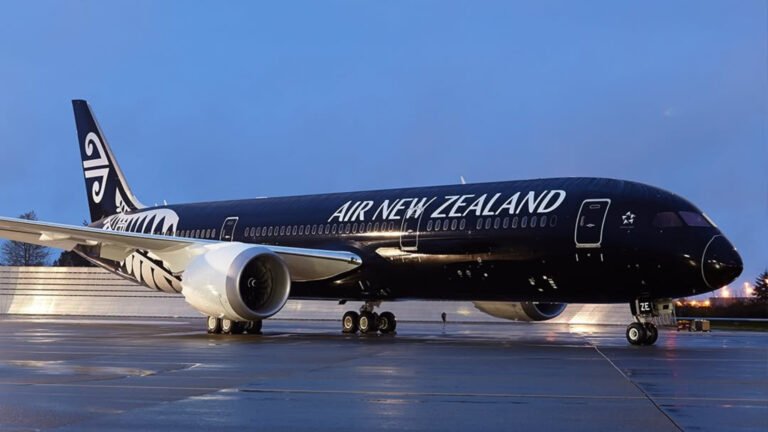
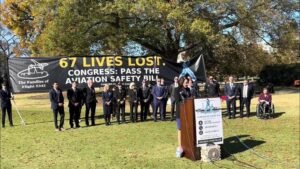
Image: @commercedems (X)

Washington, United States: US lawmakers have reached a bipartisan, bicameral agreement in principle on key aviation safety reforms, including a mandate requiring civilian aircraft equipped with ADS-B Out to receive surrounding aircraft location signals through ADS-B In technology.

The agreement was announced on November 17, 2026, by House Transportation and Infrastructure Committee Chairman Sam Graves, Ranking Member Rick Larsen, Senate Commerce, Science, and Transportation Committee Chairman Ted Cruz, and Ranking Member Maria Cantwell.

According to the official announcement by the US House Committee on Transportation and Infrastructure, the agreement covers the civil aviation provisions of legislation developed in response to recommendations made by the National Transportation Safety Board (NTSB) following its investigation into the January 2025 midair collision near Ronald Reagan Washington National Airport (DCA).

Under the proposed requirement, all aircraft already required to broadcast their positions through ADS-B Out would also have to receive those signals through ADS-B In. This would allow equipped aircraft to receive information about other aircraft operating nearby, improving pilots’ situational awareness and supporting collision avoidance.

Senate Commerce Committee Chairman Ted Cruz confirmed the scope of the agreement, stating, “Today, the Senate and the House have reached an agreement in principle to mandate ADS-B In. Under this agreement, all aircraft required to broadcast their location via ADS-B Out will now be mandated to receive those same signals through ADS-B In.”

He added that discussions with the House and Senate Armed Services Committees were continuing on outstanding provisions, while expressing confidence that Congress would pass comprehensive legislation before the end of the 119th Congress.

The announcement included statements from all four congressional committee leaders, who acknowledged the importance of addressing the safety gaps exposed by the Washington collision.

House Transportation and Infrastructure Committee Chairman Sam Graves said the agreement followed cooperation between congressional leaders, the NTSB, the Federal Aviation Administration (FAA), aviation safety stakeholders and families of the victims.

Graves stated, “The January 2025 midair collision in Washington, DC was a terrible tragedy, and Congress owes it to the victims and their families to get this safety legislation right.”

He added, “I’m happy that we’ve reached an agreement in principle for the civil aviation components of the legislation, and that we are very close to a final agreement on the entire bill.”

Graves said lawmakers would continue working towards a final House-Senate bill being signed into law before the end of the current Congress, with the aim of addressing NTSB safety recommendations and preventing similar accidents.

House Transportation and Infrastructure Committee Ranking Member Rick Larsen highlighted the role of victims’ families in pushing for legislative changes.

Larsen said, “The DCA midair collision was a stark reminder that we must remain vigilant in our pursuit of aviation safety. More can always be done to make air travel safer.”

He further stated, “Due in no small part to their efforts, today we have announced an agreement in principle with the Senate on a requirement for ADS-B In and other needed reforms for our civil aviation system.”

Senate Commerce Committee Ranking Member Maria Cantwell confirmed that the agreement covers the civil aviation provisions but stressed that negotiations remain incomplete.

Cantwell said, “We reached an agreement with the House Transportation and Infrastructure Committee, in principle, on the civil aviation provisions of this legislation. But our work is not done.”

She added, “We need a comprehensive bill that holds everybody to the same standards. We need the flying public to know their safety comes first, always first and we need the standards that meet that.”

Cantwell also said she would continue working with Armed Services Committee members, military partners and the FAA to finalise the outstanding provisions.

The agreement follows months of negotiations to reconcile two separate pieces of aviation safety legislation. The first is H.R. 7613, the Airspace Location and Enhanced Risk Transparency (ALERT) Act of 2026, which was previously passed by the House of Representatives.

The second is S. 2503, the Rotorcraft Operations Transparency and Oversight Reform (ROTOR) Act, which advanced through the Senate unanimously but fell one vote short of passage in the House.

The two proposals address aviation safety reforms following the NTSB investigation, including aircraft tracking requirements and measures concerning helicopter operations in shared civilian airspace.

The Senate’s November 17 announcement confirmed that the ADS-B In requirement originated in the ROTOR Act, introduced by Cruz and Cantwell.

However, the military aviation provisions have yet to be fully agreed upon. The House and Senate Armed Services Committees are still required to resolve outstanding differences concerning military aircraft operating in civilian airspace.

The treatment of military aircraft is a significant outstanding issue in the negotiations. The January 2025 collision involved an Army Black Hawk helicopter that was not transmitting its position through ADS-B Out during the training flight, with security concerns cited in discussions surrounding the absence of the signal.

The Senate’s proposed legislation would require military aircraft to use ADS-B during routine training flights while allowing exceptions for sensitive military missions. However, the precise military requirements under the newly agreed framework have not been finalized.

Cantwell stressed the need for military accountability in shared national airspace, while Cruz acknowledged that discussions with the Armed Services Committees were still underway.

The proposed reforms follow the NTSB’s investigation into the January 29, 2025, collision between American Airlines Flight 5342 and the US Army Black Hawk helicopter near Reagan National Airport.

The accident killed all 67 people aboard both aircraft and prompted renewed scrutiny of aircraft surveillance, helicopter operations and coordination in congested airspace.

In the November 17 report, the NTSB determined that ADS-B technology could have alerted the American Airlines aircraft’s pilots 59 seconds before the collision and the helicopter crew 48 seconds before impact.

The NTSB has advocated mandatory ADS-B In requirements for more than two decades, highlighting the potential role of the technology in improving aircraft traffic awareness.

The latest congressional agreement represents progress towards incorporating the technology into civil aviation safety requirements. Nevertheless, the full legislative package still requires final negotiations, agreement on military provisions and completion of the congressional process.

The four committee leaders have expressed their intention to complete the legislation before the end of the 119th Congress, although the November 17 announcement does not constitute final passage or enactment of the bill.


Leave a Comment

Subscribe to our Newsletter

Recent News

Aviation Today Perspectives