Seoul, South Korea: Lockheed Martin has proposed joint development and production of next-generation high-speed military helicopters with South Korean companies, offering up to 90% X2 technology intellectual property transfer as discussions continue with Korea Aerospace Industries.
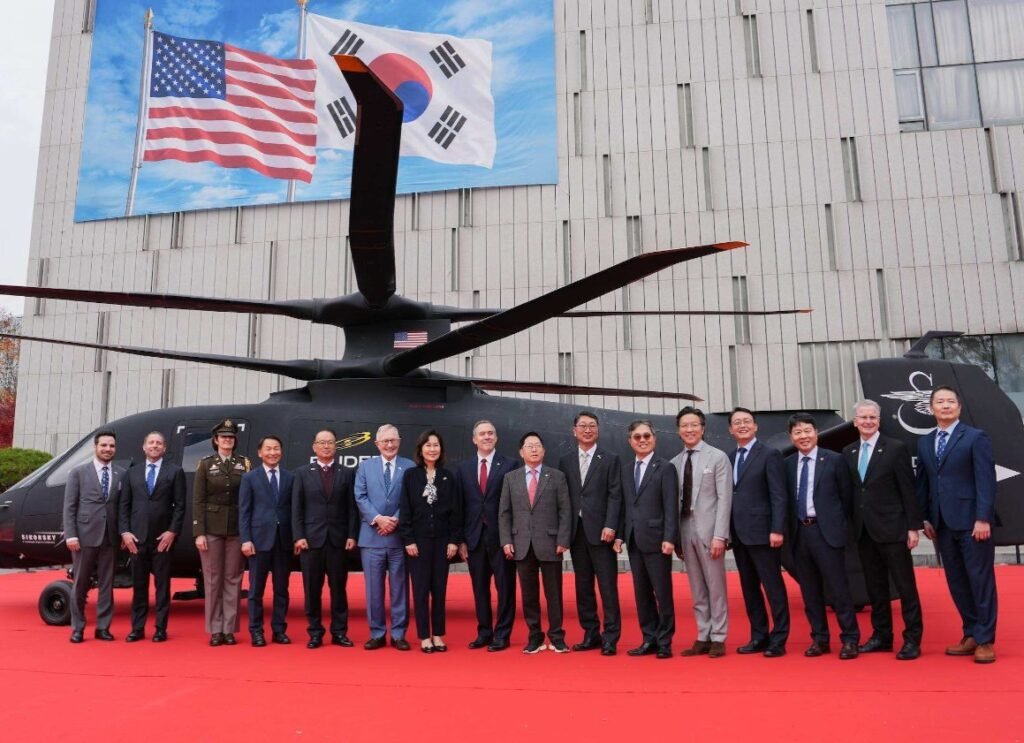
Lockheed Martin has outlined a defence cooperation proposal with South Korea centred on the development of a next-generation High-Speed Medium Utility Helicopter (HSMUH), with potential joint production and exports to third countries. The proposal was presented during the Freedom 250: Honoring Shared Sacrifice, Strengthening Our Alliance event, co-hosted by Lockheed Martin and the US Embassy in Seoul on November 17, 2026 at the War Memorial of Korea in Yongsan-gu, Seoul.
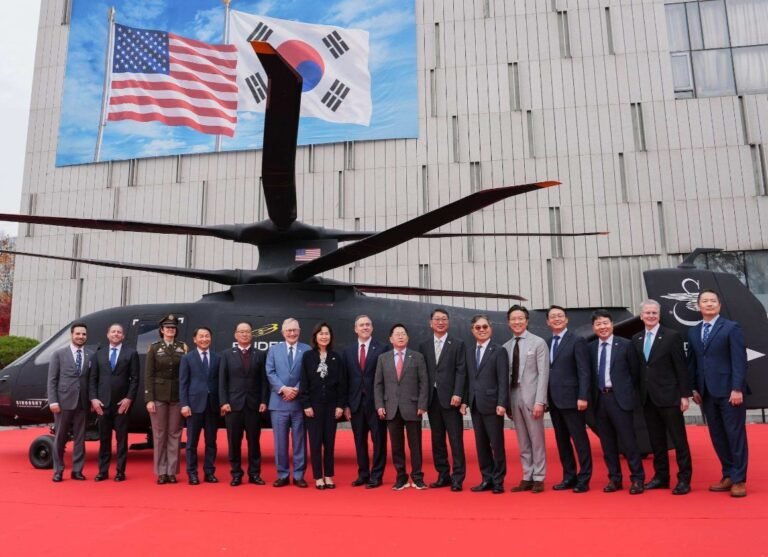
The event, organised as part of the year-long commemoration of the 250th anniversary of US independence, opened with a wreath-laying ceremony honouring the fallen soldiers of both countries, including those who died during the Korean War. Around 200 government and military officials attended, including US Ambassador to South Korea Michelle Park Steel, Commander of United States Forces Korea General Xavier Brunson, South Korea’s Vice Minister of Patriots and Veterans Affairs Kang Yun-jin, and Lockheed Martin International President Jay Pittman. Representatives from Korea Aerospace Industries (KAI), Korean Air and HD Hyundai Heavy Industries also participated.
In her opening remarks, Ambassador Steel said, “To deter aggression, maintain peace, and create high-quality jobs in both countries, we must continuously promote robust defense cooperation, joint technology development, and the strengthening of joint production capabilities.”
The proposal builds on Lockheed Martin’s longstanding industrial cooperation with South Korean defence companies. Its work with KAI has included licensed production of F-16 fighter aircraft, the T-50 supersonic advanced trainer and cooperation on the KF-21 fighter programme. The company has also worked with Korean Air on UH-60 Black Hawk helicopter production and maintenance, and with HD Hyundai Heavy Industries on the Aegis destroyer combat system.
During the event, Dylan Landis, Head of Strategy and Business Development for the Indo-Pacific region at Lockheed Martin Sikorsky, outlined the company’s proposal for the HSMUH programme. Lockheed Martin is seeking to explore joint development and production with South Korean industry, with the possibility of exporting the resulting helicopter to international markets.
The company is offering to transfer up to 90% of the intellectual property developed through its X2 rotorcraft technology programme to South Korean industry. Speaking to reporters in Seoul, Landis said, “We have invested north of a billion dollars” in establishing the X2 technological capability. He added that the company was prepared to transfer up to 90% of the programme’s intellectual property, enabling South Korean companies to design, develop, manufacture and maintain the helicopter.
Sikorsky’s S-97 RAIDER technology demonstrator was displayed at the event, marking the domestic unveiling of the aircraft in South Korea. The experimental helicopter incorporates X2 technology, which combines two coaxial, counter-rotating main rotors with a rear-mounted pusher propeller. The configuration is designed to retain conventional helicopter capabilities, including vertical take-off and landing, hovering and low-speed manoeuvrability, while improving forward speed, range and high-speed performance.
Landis described the technology as “a capability, not a configuration”, explaining that Lockheed Martin was proposing the underlying technology rather than offering the S-97 RAIDER as the aircraft for South Korea’s programme.
Lockheed Martin has identified KAI as the prospective prime contractor for the HSMUH programme. The South Korean company is currently conducting a feasibility study and gathering information on the programme’s requirements, while discussions between the two companies have continued through much of 2026.
Landis said the intention was for KAI to take responsibility for designing and producing the helicopter, with Lockheed Martin providing the technology and technical expertise. However, the final operational requirements have not yet been established, and the aircraft’s configuration remains undecided.
The proposed helicopter is expected to weigh approximately 29,000 pounds (13.2 tonnes), compared with around 9,000 pounds for the S-97 RAIDER. The preliminary concept outlined by Landis would accommodate two pilots, two crew chiefs and 12 passengers. He also cited a potential 60% increase in lift capability from the stacked-rotor arrangement compared with conventional aircraft.
Lockheed Martin said the technology could offer operational advantages in South Korea’s mountainous terrain and complex operating environments, where helicopters may need to manoeuvre in confined spaces and operate at varying elevations.
Despite the company’s existing investment of more than US$1 billion in X2 technology development, Lockheed Martin has not committed to a specific new investment in South Korea. Landis said the final investment decision would depend on the programme’s requirements and the South Korean Army’s operational needs.
The proposed industrial cooperation is also expected to extend beyond major defence manufacturers to smaller and medium-sized enterprises in South Korea. Lockheed Martin is engaging with potential suppliers to assess their capabilities ahead of the programme’s final requirements.
The proposal also envisages a wider partnership involving KAI, Korean Air and HD Hyundai Heavy Industries, with discussions covering cooperation across aviation and maritime defence sectors. Lockheed Martin Korea Chief Executive Lee Won-ik described the X2-based initiative as an opportunity to move beyond technology adoption towards joint development, production and exports.
The proposal remains at the cooperation and feasibility stage, with the final helicopter design, programme requirements, investment commitments and production arrangements yet to be determined.