Why India should bring pilot ground training under a common standard?
A cadet can decode a weather report and score well on a written paper. Give the same cadet a route with deteriorating weather, a fuel constraint and two alternates. Ask whether they would depart, delay or divert, and what would change their decision. The answer tells us whether that knowledge received is ready to be used or not in an adequate manner.
After more than two decades in ab-initio training, I want India to ask that question before cadets enter the cockpit. Ground schools and individual instructors help candidates across the country. Their reach is an asset. As provision expands, a student should be able to check who teaches the course, what it covers, how progress is assessed and what a completion record means. A common standard would make those answers visible.
A common standard for ground training
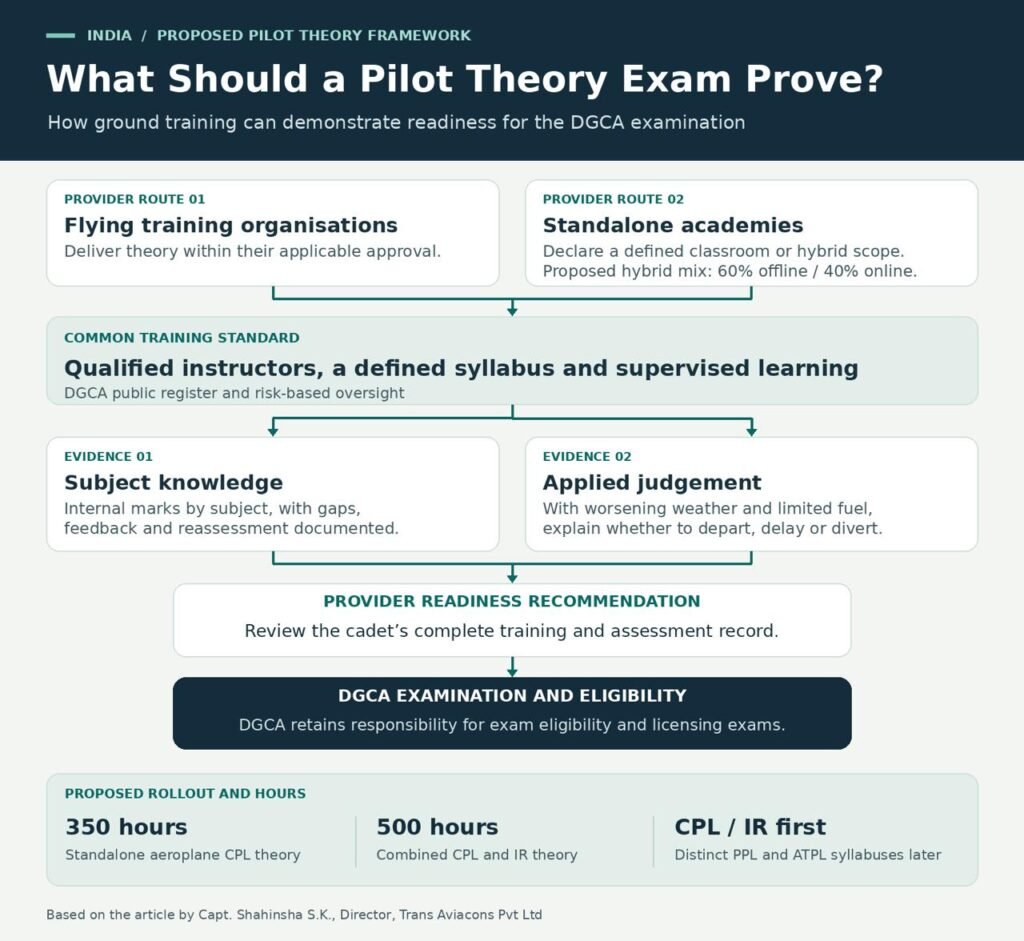
I propose a Declared Training Organisation (DTO) framework for theoretical knowledge. Flying training organisations would meet the common academic standard through their applicable approval route. Standalone academies could declare a defined scope, including Traditional classroom training or Hybrid delivery with 60% offline and 40% online. DGCA would maintain a public register and verify compliance through risk-based oversight. A student changing provider would carry a record of the subjects already completed along with exam readiness certificate and student report.
DGCA already has a starting point. Its flying-school requirements cover instructor competence and ground training, while its examination syllabuses specify what candidates are expected to know. The missing link is a consistent way to show what a course taught, what the cadet can apply and who is accountable for that evidence across providers.
The framework should ultimately cover private, commercial and airline transport pilot theory, as well as instrument rating theory. Begin with CPL and IR, then extend the standard through distinct syllabuses for PPL and ATPL. Majority of Countries, Including European Union and UK have adopted this declaration system, which regulates theory training-only providers for PPL; CPL & IR. India should design its own legal route for a broader declaration model.
Give the hours a purpose
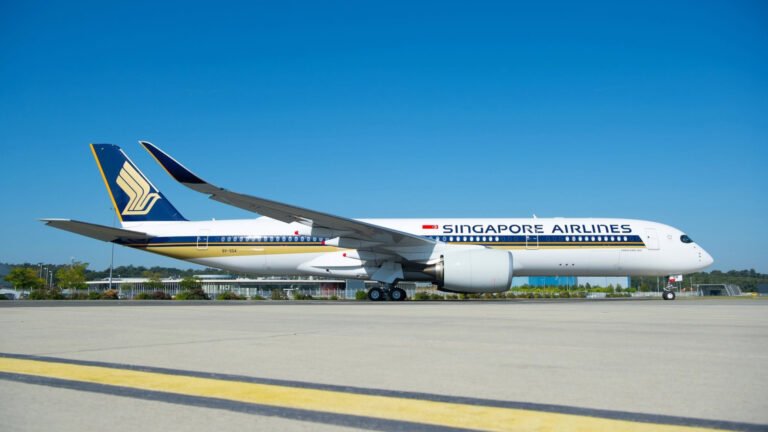
I propose a minimum of 350 hours for standalone aeroplane CPL theory and 500 hours for combined CPL and IR theory, using Singapore’s published framework as a benchmark. DGCA’s published FTO appendix currently sets 350 hours for combined CPL/IR and gives a separate recommended allocation that adds to 410 hours. The proposal should define what qualifies as supervised instruction and explain how classroom teaching, verified digital learning and assessment fit within the training programme.
Readiness before the examination
A candidate’s registration establishes identity and administrative eligibility. A readiness recommendation should establish that the relevant learning has taken place. It should include internal marks by subject and evidence gathered throughout training, with records of any gaps, feedback and reassessment. DGCA would retain responsibility for the licensing examination and eligibility decisions.
The training record should document observable professional behaviours. When conditions change during an exercise, instructors should assess how the cadet reassesses the plan, manages workload, communicates uncertainty and seeks help when needed. They should also observe how the cadet responds to feedback and recovers from mistakes. A common rubric allows instructors to assess these behaviours consistently over time. The assessment of aeromedical fitness remains the responsibility of the aeromedical system.
My principle is to train hard and test light. The test should verify learning, and the course should prepare cadets for the decisions they will make in flight. Question-bank practice has a place in revision. The quality of the system is better judged by how candidates handle unfamiliar problems and how their knowledge transfers to flight training. Annual pass percentages alone cannot settle that question.
The DGCA could develop the Declared Training Organisation (DTO) framework under the new Rule 117 and introduce it in phases. The rollout should reflect industry demand and ensure that enough providers meet the required standards, with sufficient capacity and geographic reach to keep pilot theory training accessible to cadets.
When a cadet reaches the cockpit, what matters is whether they can recognise a changing situation, explain the risk and act in time. Ground training is where those habits can begin.
Disclaimer: The views and opinions expressed in this article are solely those of the author and do not necessarily reflect the views or editorial position of Aviation Today.