Picture credits: Wikipedia
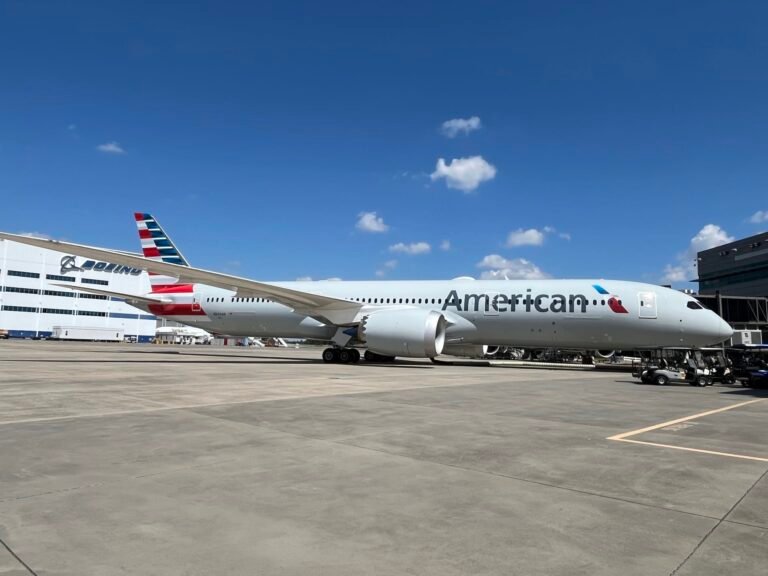
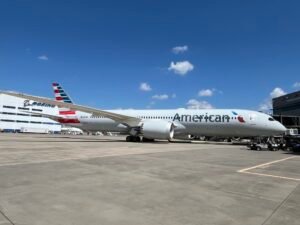
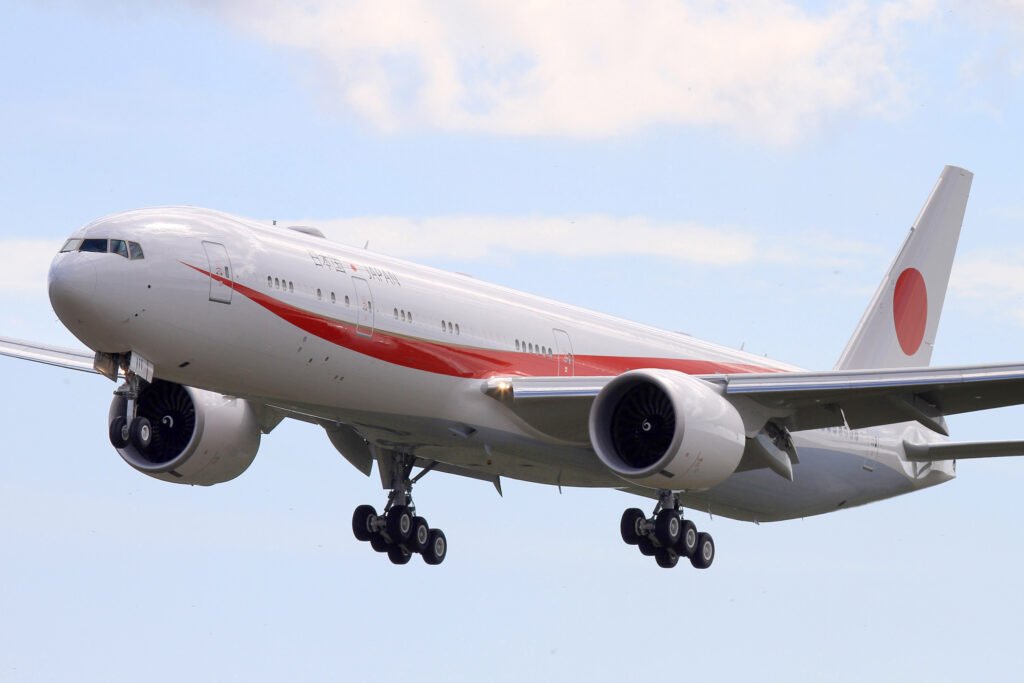
Seattle: Boeing has likely delivered the last of its 777-300ER aircraft, as its 2024 order and delivery records show just one unit dispatched during the year. This marks the conclusion of production for the widely popular long-haul aircraft, introduced in 2004.
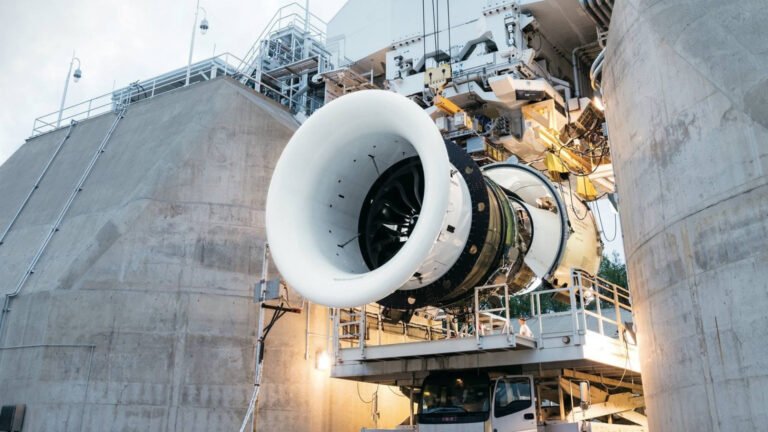
The 777-300ER, powered by General Electric GE90 engines, was designed for efficiency and reliability, with a range of 7,370 nautical miles and the capacity to carry up to 392 passengers in a two-class configuration. It became a cornerstone of long-haul aviation, widely adopted by airlines for its performance and cost-effectiveness.
In December 2024, Boeing Commercial Airplanes CEO Stephanie Pope announced the resumption of production for several aircraft lines, including the 737, 767, and 777, following a machinists’ strike. However, the 777 program is now dedicated solely to the production of the 777X, a next-generation variant that has faced significant delays.
737 MAX Certification Challenges
Boeing is also addressing regulatory challenges for its 737 MAX 7 and MAX 10 aircraft. On January 17, 2025, the company requested temporary exemptions from the Federal Aviation Administration (FAA) to meet updated safety standards for its stall-management yaw damper (SMYD) system.
The SMYD system was recently reclassified to stricter “Level A” safety standards, which apply to systems where failures could result in catastrophic consequences. Boeing has proposed a compliance timeline extending to October 2028, allowing time for retrofitting delivered aircraft to meet the new requirements.
The exemption would also enable Boeing to introduce an enhanced angle-of-attack (AOA) system across all 737 MAX models. The company has assured that current operational 737 MAX aircraft are unaffected by these certification issues.
Ongoing Regulatory and Production Efforts
This exemption request follows a similar move in 2023 when the FAA granted Boeing temporary relief from lightning and radiation standards for the 737 MAX 7. Boeing has emphasized that the SMYD system has a proven safety record, citing over 250 million flight hours.
Boeing plans to demonstrate compliance once certification for the MAX 7 and MAX 10 is secured, alongside the fleetwide implementation of the enhanced AOA system.
With the conclusion of the 777-300ER program and ongoing certification efforts for the 737 MAX series, Boeing continues to navigate production transitions and meet evolving regulatory requirements.
Stay tuned to Aviation Today for more aviation related updates.

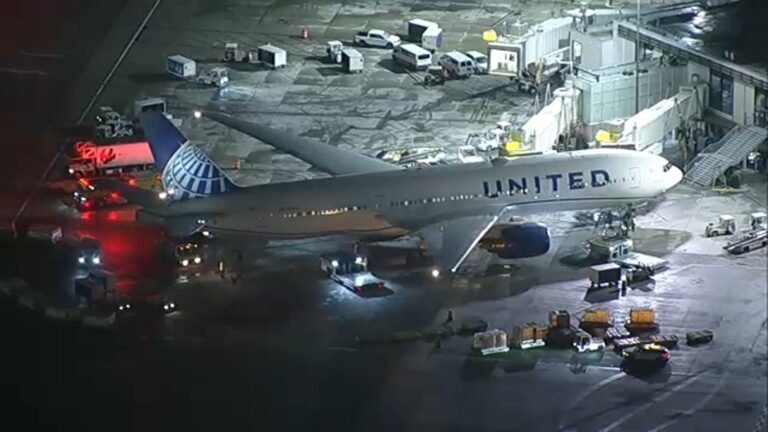
![Washington, United States: A United Airlines flight bound for Guatemala City made an emergency diversion to Washington Dulles International Airport after a passenger allegedly attempted to open a cabin door at cruising altitude and assaulted another traveler, according to air traffic control communications and federal authorities. The incident involved United Airlines Flight 1551, operated by a Boeing 737 MAX 8, which departed from Newark Liberty International Airport on Thursday evening carrying 145 passengers and six crew members. The aircraft had been en route to Guatemala City when the crew declared an emergency and diverted to Washington Dulles International Airport in Virginia. According to audio between the flight crew and air traffic controllers, the pilot informed controllers that the disruptive passenger attempted to open Door 2L while the aircraft was cruising at approximately 36,000 feet. The pilot also reported that the passenger later assaulted another individual onboard. During the exchange, the tower asked the crew which door the passenger had attempted to access. The pilot responded: “Door 2L at 36,000 feet and then [the passenger] assaulted a fellow passenger.” When controllers asked whether there were any injuries onboard, the pilot replied: “Not to our knowledge.” The aircraft landed safely at Washington Dulles at approximately 8:38 p.m. local time. Law enforcement and emergency personnel met the aircraft upon arrival. The FBI later confirmed that agents responded to the incident at the airport, although the agency did not immediately release additional details regarding the passenger’s identity, possible charges, or whether the individual was taken into federal custody. Flight tracking data showed the aircraft remained airborne for a period before diverting toward the Washington region instead of continuing south toward Guatemala. The diversion temporarily disrupted the scheduled international service but no injuries among passengers or crew were officially reported. United Airlines had not issued a detailed public statement at the time of publication regarding the circumstances surrounding the diversion or the status of the passenger involved. Federal authorities are expected to review crew reports, passenger statements, and onboard evidence as part of the investigation.](https://aviationtoday.in/wp-content/uploads/2026/05/AVIATION-TODAY-UNITEDV-AIRLINES-RUDE-PASSENGER-768x432.jpg)


![Washington, United States: A United Airlines flight bound for Guatemala City made an emergency diversion to Washington Dulles International Airport after a passenger allegedly attempted to open a cabin door at cruising altitude and assaulted another traveler, according to air traffic control communications and federal authorities. The incident involved United Airlines Flight 1551, operated by a Boeing 737 MAX 8, which departed from Newark Liberty International Airport on Thursday evening carrying 145 passengers and six crew members. The aircraft had been en route to Guatemala City when the crew declared an emergency and diverted to Washington Dulles International Airport in Virginia. According to audio between the flight crew and air traffic controllers, the pilot informed controllers that the disruptive passenger attempted to open Door 2L while the aircraft was cruising at approximately 36,000 feet. The pilot also reported that the passenger later assaulted another individual onboard. During the exchange, the tower asked the crew which door the passenger had attempted to access. The pilot responded: “Door 2L at 36,000 feet and then [the passenger] assaulted a fellow passenger.” When controllers asked whether there were any injuries onboard, the pilot replied: “Not to our knowledge.” The aircraft landed safely at Washington Dulles at approximately 8:38 p.m. local time. Law enforcement and emergency personnel met the aircraft upon arrival. The FBI later confirmed that agents responded to the incident at the airport, although the agency did not immediately release additional details regarding the passenger’s identity, possible charges, or whether the individual was taken into federal custody. Flight tracking data showed the aircraft remained airborne for a period before diverting toward the Washington region instead of continuing south toward Guatemala. The diversion temporarily disrupted the scheduled international service but no injuries among passengers or crew were officially reported. United Airlines had not issued a detailed public statement at the time of publication regarding the circumstances surrounding the diversion or the status of the passenger involved. Federal authorities are expected to review crew reports, passenger statements, and onboard evidence as part of the investigation.](https://aviationtoday.in/wp-content/uploads/2026/05/AVIATION-TODAY-UNITEDV-AIRLINES-RUDE-PASSENGER-300x169.jpg)