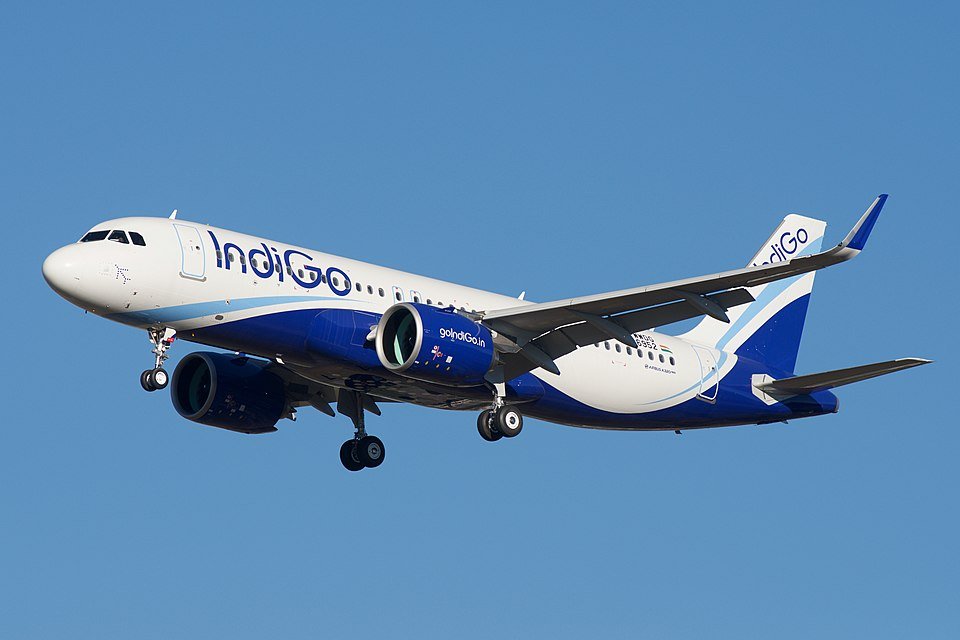
Gurugram, India: India’s largest airline, IndiGo, has become the first airline globally to receive 500 Airbus aircraft directly from Airbus, marking a major milestone in commercial aviation and emphasizing the carrier’s rapid scale-up over the past two decades.
The landmark aircraft, an Airbus A320neo registered VT-ION was inducted earlier this month without ceremony, reflecting the airline’s cost-focused, efficiency-driven operating philosophy.
IndiGo’s achievement places it ahead of legacy global carriers in terms of direct Airbus deliveries. Among passenger airlines, Lufthansa trails with around 466 aircraft, while China Eastern Airlines has received about 449, according to industry data.
While aircraft leasing companies such as AerCap have handled higher volumes, IndiGo remains the largest operator to receive aircraft directly as an airline, setting a new global benchmark.
As of March 2025, the airline had taken delivery of 499 Airbus aircraft, with additional deliveries in April pushing the total beyond the 500 mark.
The milestone traces back to a bold move in 2005, when IndiGo’s parent, InterGlobe Aviation, placed an order for 100 Airbus aircraft at the Paris Air Show, a decision widely questioned at the time given the limited scale of India’s aviation market.
At that point, even state-run carriers such as Air India and Air India Express together operated a fleet of just over 40 aircraft, highlighting the scale of IndiGo’s ambition.
The airline later became the launch customer for the A320neo family, which now forms the backbone of its high-frequency, low-cost domestic and regional network.
IndiGo also leads Airbus’ global order book, with approximately 1,400 aircraft committed, the largest such backlog worldwide.
Of these, around 899 aircraft are yet to be delivered over the next decade, positioning the airline for sustained expansion.
The order pipeline includes:
- A320neo and A321neo family aircraft (core narrow-body fleet)
- A321XLR aircraft, enabling longer-range narrow-body routes
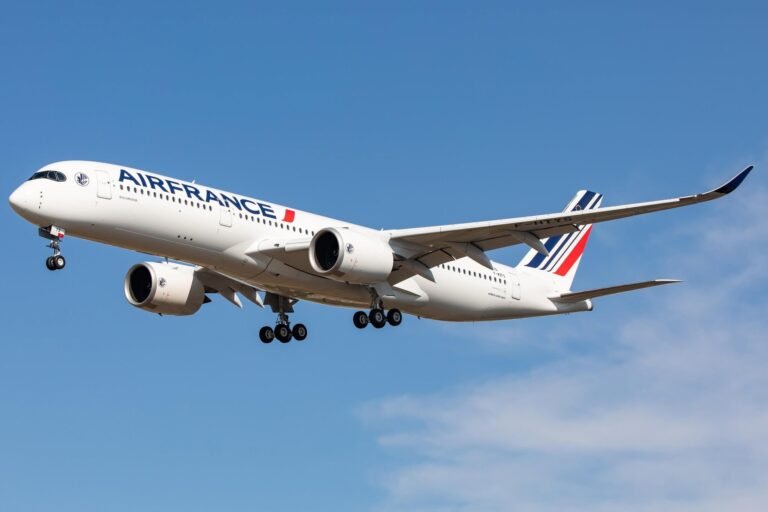
- Around 60 Airbus A350-900 widebody aircraft, marking IndiGo’s entry into long-haul international operations
However, deliveries of widebody aircraft have faced delays due to global supply chain constraints, industry reports noted.
The induction of A350 aircraft represents a significant strategic shift for IndiGo, traditionally known for its low-cost, short-haul model. The widebody fleet will support the airline’s ambition to expand into long-haul international markets, a segment currently dominated by foreign carriers.
The airline has also begun inducting A321XLR aircraft, strengthening its medium-haul international connectivity.
The milestone comes amid a challenging phase for the aviation sector, including rising fuel prices and geopolitical headwinds in West Asia, as well as IndiGo’s own operational disruptions in late 2025.
Despite these challenges, IndiGo continues to maintain its dominant position in India’s aviation market and is pursuing aggressive fleet and network expansion.

![Washington, United States: A United Airlines flight bound for Guatemala City made an emergency diversion to Washington Dulles International Airport after a passenger allegedly attempted to open a cabin door at cruising altitude and assaulted another traveler, according to air traffic control communications and federal authorities. The incident involved United Airlines Flight 1551, operated by a Boeing 737 MAX 8, which departed from Newark Liberty International Airport on Thursday evening carrying 145 passengers and six crew members. The aircraft had been en route to Guatemala City when the crew declared an emergency and diverted to Washington Dulles International Airport in Virginia. According to audio between the flight crew and air traffic controllers, the pilot informed controllers that the disruptive passenger attempted to open Door 2L while the aircraft was cruising at approximately 36,000 feet. The pilot also reported that the passenger later assaulted another individual onboard. During the exchange, the tower asked the crew which door the passenger had attempted to access. The pilot responded: “Door 2L at 36,000 feet and then [the passenger] assaulted a fellow passenger.” When controllers asked whether there were any injuries onboard, the pilot replied: “Not to our knowledge.” The aircraft landed safely at Washington Dulles at approximately 8:38 p.m. local time. Law enforcement and emergency personnel met the aircraft upon arrival. The FBI later confirmed that agents responded to the incident at the airport, although the agency did not immediately release additional details regarding the passenger’s identity, possible charges, or whether the individual was taken into federal custody. Flight tracking data showed the aircraft remained airborne for a period before diverting toward the Washington region instead of continuing south toward Guatemala. The diversion temporarily disrupted the scheduled international service but no injuries among passengers or crew were officially reported. United Airlines had not issued a detailed public statement at the time of publication regarding the circumstances surrounding the diversion or the status of the passenger involved. Federal authorities are expected to review crew reports, passenger statements, and onboard evidence as part of the investigation.](https://aviationtoday.in/wp-content/uploads/2026/05/AVIATION-TODAY-UNITEDV-AIRLINES-RUDE-PASSENGER-768x432.jpg)


![Washington, United States: A United Airlines flight bound for Guatemala City made an emergency diversion to Washington Dulles International Airport after a passenger allegedly attempted to open a cabin door at cruising altitude and assaulted another traveler, according to air traffic control communications and federal authorities. The incident involved United Airlines Flight 1551, operated by a Boeing 737 MAX 8, which departed from Newark Liberty International Airport on Thursday evening carrying 145 passengers and six crew members. The aircraft had been en route to Guatemala City when the crew declared an emergency and diverted to Washington Dulles International Airport in Virginia. According to audio between the flight crew and air traffic controllers, the pilot informed controllers that the disruptive passenger attempted to open Door 2L while the aircraft was cruising at approximately 36,000 feet. The pilot also reported that the passenger later assaulted another individual onboard. During the exchange, the tower asked the crew which door the passenger had attempted to access. The pilot responded: “Door 2L at 36,000 feet and then [the passenger] assaulted a fellow passenger.” When controllers asked whether there were any injuries onboard, the pilot replied: “Not to our knowledge.” The aircraft landed safely at Washington Dulles at approximately 8:38 p.m. local time. Law enforcement and emergency personnel met the aircraft upon arrival. The FBI later confirmed that agents responded to the incident at the airport, although the agency did not immediately release additional details regarding the passenger’s identity, possible charges, or whether the individual was taken into federal custody. Flight tracking data showed the aircraft remained airborne for a period before diverting toward the Washington region instead of continuing south toward Guatemala. The diversion temporarily disrupted the scheduled international service but no injuries among passengers or crew were officially reported. United Airlines had not issued a detailed public statement at the time of publication regarding the circumstances surrounding the diversion or the status of the passenger involved. Federal authorities are expected to review crew reports, passenger statements, and onboard evidence as part of the investigation.](https://aviationtoday.in/wp-content/uploads/2026/05/AVIATION-TODAY-UNITEDV-AIRLINES-RUDE-PASSENGER-300x169.jpg)