Addis Ababa, Ethiopia: The International Air Transport Association (IATA) has called on African governments to prioritise aviation as a core pillar of economic and social development, stressing that the sector must be viewed as essential infrastructure rather than a source of taxation.
Speaking at the Focus Africa Conference in Addis Ababa, IATA’s Regional Vice President for Africa and the Middle East, Kamil Alawadhi, said aviation delivers long-term value through job creation, trade facilitation, tourism growth, and regional integration.
“Aviation is the economic infrastructure for Africa. Its value lies in the long-term benefits it delivers,” Alawadhi said. “An aviation strategy focused on safety, cost-competitiveness, energy security and sustainability, and ease of doing business will create jobs, enable trade, support tourism, and further regional integration.”
He added that the economic benefits generated by aviation “will allow governments to push forward social and economic development more durably than any tax that might be collected from travelers.”
IATA acknowledged that Africa has made progress in aviation safety, with accident rates improving between 2024 and 2025. However, it noted that the region still lags behind global standards.
The association highlighted that Africa’s accident rate remains significantly higher than the global average, underlining the need for stronger implementation of International Civil Aviation Organization (ICAO) standards and recommended practices.
It also pointed to weak accident reporting compliance, urging states to publish timely and complete investigation reports in line with Annex 13 obligations, calling these reports essential for improving aviation safety.
IATA raised concerns over the high cost of aviation operations in Africa, stating that taxes and charges imposed by governments and infrastructure providers are approximately 15% higher than the global average.
The association warned that increasing charges such as passenger-related fees distort ticket pricing, reduce demand, and weaken air connectivity across the continent.
It also urged governments to reverse rising aviation-related API-PNR charges and implement regional decisions aimed at reducing aviation taxes and charges to improve affordability and market access.
Another key concern highlighted was the issue of blocked airline funds. IATA reported that African countries account for a significant share of global blocked airline revenues, with funds failing to be repatriated despite international agreements guaranteeing such transfers.
The association stressed that inability to access revenues undermines airline operations, forcing carriers to reduce flight frequencies or suspend routes, ultimately affecting connectivity and economic activity.
IATA called on governments to comply with international obligations and ensure unrestricted repatriation of airline revenues.
The organisation also emphasised the need to improve the ease of doing business in aviation markets across Africa.
It highlighted visa restrictions as a major barrier to intra-African travel, noting that nearly half of travel within the continent still requires visas before departure. IATA said easing these restrictions would significantly boost tourism, trade, and regional mobility.
It further urged governments to remove operational bottlenecks that hinder airline efficiency and market access.
IATA also highlighted Africa’s potential role in sustainable aviation, particularly in Sustainable Aviation Fuel (SAF) production and carbon markets.
The association noted that Africa could supply significant volumes of SAF feedstock by 2050, using agricultural residues, forestry waste, and municipal waste streams.
It also encouraged African states to participate in the Carbon Offsetting and Reduction Scheme for International Aviation (CORSIA), describing it as a key global mechanism for managing aviation emissions while unlocking climate finance opportunities for developing economies.
IATA concluded that Africa’s aviation sector has strong growth potential, but structural challenges related to cost, safety, regulation, and financial restrictions must be addressed to fully unlock its economic impact.
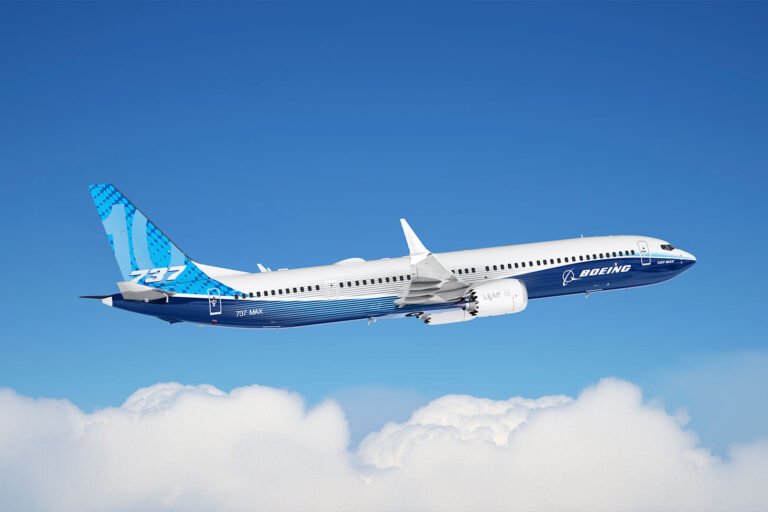


![Washington, United States: A United Airlines flight bound for Guatemala City made an emergency diversion to Washington Dulles International Airport after a passenger allegedly attempted to open a cabin door at cruising altitude and assaulted another traveler, according to air traffic control communications and federal authorities. The incident involved United Airlines Flight 1551, operated by a Boeing 737 MAX 8, which departed from Newark Liberty International Airport on Thursday evening carrying 145 passengers and six crew members. The aircraft had been en route to Guatemala City when the crew declared an emergency and diverted to Washington Dulles International Airport in Virginia. According to audio between the flight crew and air traffic controllers, the pilot informed controllers that the disruptive passenger attempted to open Door 2L while the aircraft was cruising at approximately 36,000 feet. The pilot also reported that the passenger later assaulted another individual onboard. During the exchange, the tower asked the crew which door the passenger had attempted to access. The pilot responded: “Door 2L at 36,000 feet and then [the passenger] assaulted a fellow passenger.” When controllers asked whether there were any injuries onboard, the pilot replied: “Not to our knowledge.” The aircraft landed safely at Washington Dulles at approximately 8:38 p.m. local time. Law enforcement and emergency personnel met the aircraft upon arrival. The FBI later confirmed that agents responded to the incident at the airport, although the agency did not immediately release additional details regarding the passenger’s identity, possible charges, or whether the individual was taken into federal custody. Flight tracking data showed the aircraft remained airborne for a period before diverting toward the Washington region instead of continuing south toward Guatemala. The diversion temporarily disrupted the scheduled international service but no injuries among passengers or crew were officially reported. United Airlines had not issued a detailed public statement at the time of publication regarding the circumstances surrounding the diversion or the status of the passenger involved. Federal authorities are expected to review crew reports, passenger statements, and onboard evidence as part of the investigation.](https://aviationtoday.in/wp-content/uploads/2026/05/AVIATION-TODAY-UNITEDV-AIRLINES-RUDE-PASSENGER-768x432.jpg)


![Washington, United States: A United Airlines flight bound for Guatemala City made an emergency diversion to Washington Dulles International Airport after a passenger allegedly attempted to open a cabin door at cruising altitude and assaulted another traveler, according to air traffic control communications and federal authorities. The incident involved United Airlines Flight 1551, operated by a Boeing 737 MAX 8, which departed from Newark Liberty International Airport on Thursday evening carrying 145 passengers and six crew members. The aircraft had been en route to Guatemala City when the crew declared an emergency and diverted to Washington Dulles International Airport in Virginia. According to audio between the flight crew and air traffic controllers, the pilot informed controllers that the disruptive passenger attempted to open Door 2L while the aircraft was cruising at approximately 36,000 feet. The pilot also reported that the passenger later assaulted another individual onboard. During the exchange, the tower asked the crew which door the passenger had attempted to access. The pilot responded: “Door 2L at 36,000 feet and then [the passenger] assaulted a fellow passenger.” When controllers asked whether there were any injuries onboard, the pilot replied: “Not to our knowledge.” The aircraft landed safely at Washington Dulles at approximately 8:38 p.m. local time. Law enforcement and emergency personnel met the aircraft upon arrival. The FBI later confirmed that agents responded to the incident at the airport, although the agency did not immediately release additional details regarding the passenger’s identity, possible charges, or whether the individual was taken into federal custody. Flight tracking data showed the aircraft remained airborne for a period before diverting toward the Washington region instead of continuing south toward Guatemala. The diversion temporarily disrupted the scheduled international service but no injuries among passengers or crew were officially reported. United Airlines had not issued a detailed public statement at the time of publication regarding the circumstances surrounding the diversion or the status of the passenger involved. Federal authorities are expected to review crew reports, passenger statements, and onboard evidence as part of the investigation.](https://aviationtoday.in/wp-content/uploads/2026/05/AVIATION-TODAY-UNITEDV-AIRLINES-RUDE-PASSENGER-300x169.jpg)