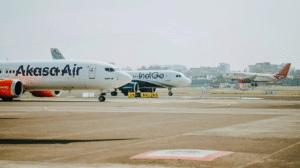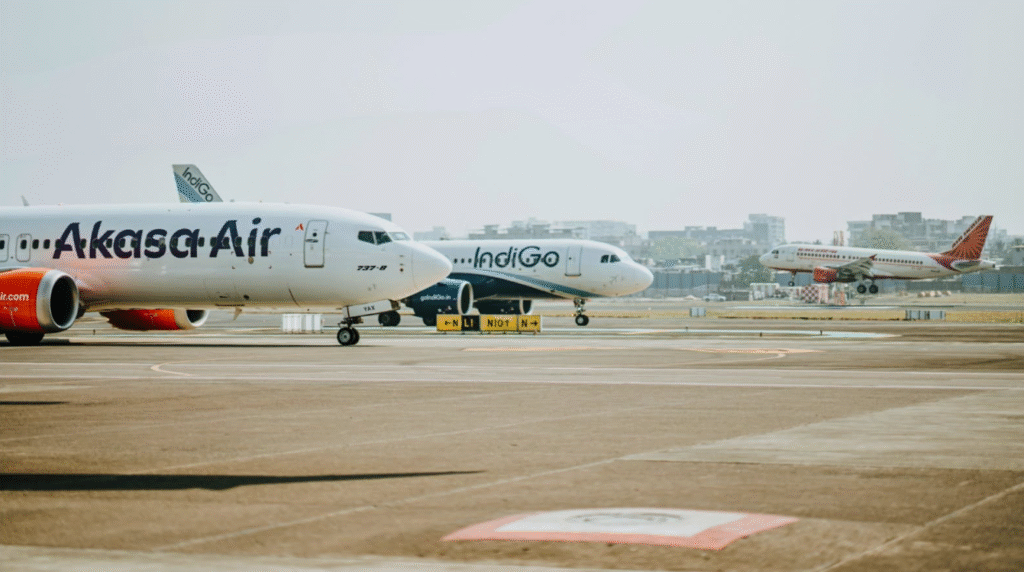
New Delhi, India: Indian airlines are stepping up efforts to strengthen domestic Maintenance, Repair and Overhaul (MRO) capabilities as expanding aircraft fleets, dependence on overseas maintenance facilities and disruptions to international maintenance arrangements expose gaps in India’s existing infrastructure. Air India, IndiGo and Akasa Air have highlighted the need to develop greater maintenance capabilities within the country, with airlines looking at in-house operations and partnerships with independent MRO providers.
The issue came into focus at the Aviation India and South Asia 2026 conference in New Delhi on 4 November, 2026 where senior engineering and maintenance executives from the three airlines discussed the challenges of supporting expanding fleets with adequate domestic maintenance infrastructure.
Air India’s Senior Vice President of Engineering and Maintenance, Jeremy Yew, said the prevailing situation had prompted the airline to reassess how much maintenance work could be undertaken in-house, particularly for widebody aircraft. He highlighted that most detailed maintenance work on widebody aircraft is currently performed overseas, leaving airlines dependent on international facilities for specialised requirements.
Yew explained that Air India had planned to send some aircraft to maintenance facilities in West Asia but encountered difficulties securing alternative capacity when the regional crisis began. The disruption highlighted the challenges airlines can face when their overseas maintenance arrangements become unavailable and alternative facilities cannot accommodate the required work.
However, Yew indicated that strengthening in-house capabilities would not necessarily undermine independent MRO providers. He pointed to the possibility of “win-win relationships” with independent maintenance companies, provided commercial arrangements were appropriate and the required quality and safety standards were maintained.
Air India expects to establish its MRO facility in Bengaluru by the end of 2027, according to Yew’s remarks at the conference. The airline also has more than 540 aircraft scheduled for delivery in the coming years, increasing the importance of developing sufficient maintenance capacity to support its expanding operations.
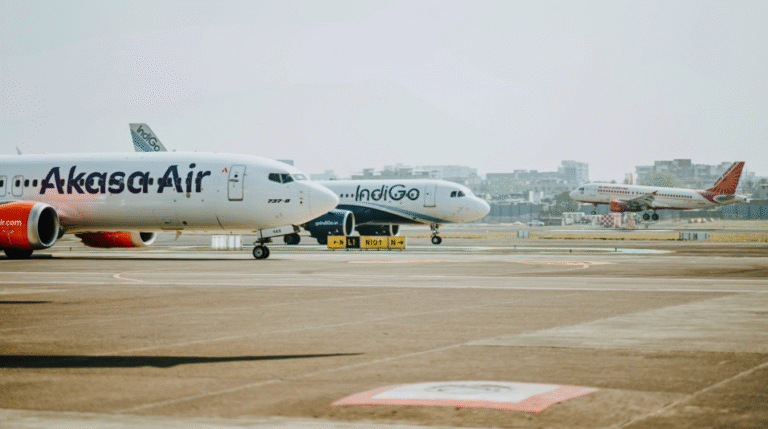
IndiGo’s Senior Vice President of Engineering and Maintenance, Parichay Datta, similarly stressed the need for domestic maintenance self-reliance, saying, “There is no choice but to be self-reliant.” He explained the imbalance between airline expansion and the development of maintenance infrastructure, stating, “With the rate of expansion of an airline and a different rate of expansion of MRO (facilities), we have got to be self-reliant.”
Datta also emphasised that partnerships with MRO providers must be commercially viable and supported by the necessary technical capabilities. He added that some of the complexities associated with maintenance operations were being reduced as more MRO facilities became available within India.
Akasa Air is also developing its maintenance capabilities, with the airline’s Senior Vice President of Maintenance and Engineering, Daniel Saldanha, stating that its MRO facility at Noida International Airport is expected to be ready in 2028.
The discussion comes as India’s commercial aircraft fleet, estimated at around 800 aircraft, is expected to double in the coming years as airlines add capacity to meet rising passenger demand. The growth is increasing pressure on the domestic maintenance ecosystem to expand its infrastructure, technical capabilities and workforce alongside airline fleet additions.
The conference also featured representatives from GMR Aero Technic, state-owned AI Engineering Services Limited, Air Works and Max Aerospace, who highlighted the business opportunities emerging from India’s expanding MRO requirements and the importance of developing capabilities within the country.
The discussions indicate that the push for domestic MRO self-reliance is being driven by two connected challenges: the growing maintenance requirements associated with fleet expansion and the operational risks of depending heavily on overseas facilities. The West Asia disruption has brought the latter into sharper focus, particularly for Air India, while IndiGo’s comments underline the longer-term mismatch between aircraft growth and maintenance infrastructure development.
For Indian airlines, expanding domestic MRO capacity could provide greater flexibility in maintenance scheduling, improve access to specialised services and reduce exposure to disruptions affecting overseas facilities. However, the development of a competitive domestic ecosystem will also depend on the availability of appropriately equipped facilities, technical expertise and commercially viable partnerships with independent maintenance providers.
The November discussions signal a growing industry emphasis on ensuring that India’s maintenance infrastructure develops alongside its expanding commercial aircraft fleet, rather than allowing maintenance capacity to become a constraint on airline operations.