Warsaw, Poland: Multiple European flights operated by Ryanair, Wizz Air, LOT Polish Airlines and Scandinavian Airlines (SAS) were targeted by bomb threats on 3 November 2026, triggering security inspections, an unscheduled diversion, fighter-jet escorts and temporary airport restrictions across Poland, Spain, Italy and Bulgaria. All seven aircraft landed safely, and subsequent inspections found no explosives.
The incidents followed a separate bomb threat involving a Wizz Air flight from London Luton to Sofia on 2 November, which was diverted to Budapest under Hungarian fighter-jet escort. The latest incidents affected flights arriving in Warsaw, Murcia, Rome and Sofia, with authorities investigating the reported threats. No confirmed connection between the incidents has been established.
3 November: Multiple flights targeted across Europe
LOT flight diverted to Warsaw-Modlin; SAS lands at Warsaw-Chopin
On the morning of 3 November, two separate bomb threats affected flights scheduled to arrive in Warsaw, Poland.
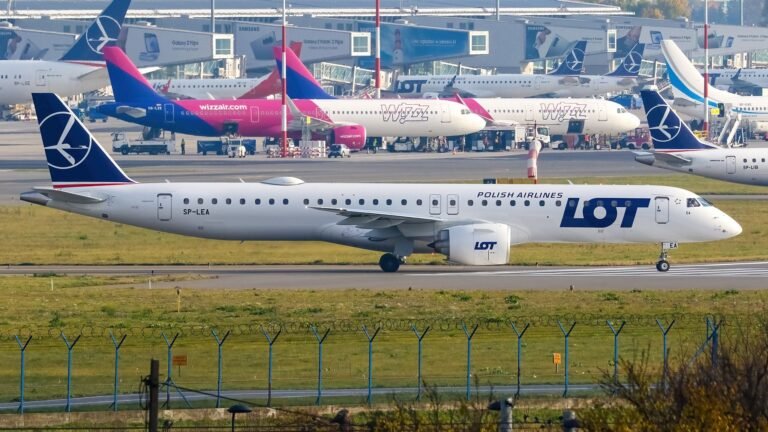
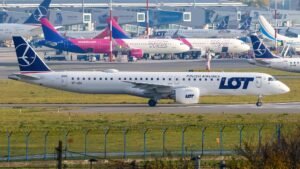
The first involved LOT Polish Airlines flight LO286, a Boeing 737 MAX 8 operating from London Heathrow Airport (LHR), United Kingdom, to Warsaw Chopin Airport (WAW). The aircraft departed Heathrow at 06:43 local time but was diverted to Warsaw-Modlin Airport (WMI) following a reported security threat.
According to Warsaw-Modlin Airport’s official statement, a bomb-threat alert was declared at 09:54 local time. The Boeing 737 MAX landed at 10:01, carrying 181 people. The aircraft was directed to a designated area while airport authorities and specialist security teams initiated the required procedures.
The airport was closed to flight operations during the response. In its 10:45 update, airport management confirmed that passengers were being evacuated and would wait in the arrivals hall while security teams continued their work.
LOT later confirmed that airport authorities had informed the airline of a potential security threat aboard its aircraft. Following the inspection, the airline said: “The aircraft security inspection has been completed, with no suspicious items found.”
The airline added that, after border-control checks, passengers were transferred by coach to Warsaw Chopin Airport.
Warsaw-Modlin Airport announced at 11:50 that flight operations had resumed, although the aircraft’s parking area and specified taxiways remained restricted while security inspections continued. At 12:21, the bomb alert was formally cancelled. The airport’s 13:00 statement confirmed that normal operations had been restored.
The airport’s closure to flight operations lasted approximately 1 hour and 56 minutes, from the 09:54 alert until the 11:50 resumption. Full normal operations were confirmed after the alert was cancelled at 12:21.
The second incident in Warsaw involved SAS flight SK751, an Airbus A320neo operating from Copenhagen Airport (CPH), Denmark, to Warsaw Chopin Airport. The aircraft landed normally at its destination and passengers disembarked.
SAS spokesperson Alexandra Lindgren Kaoukji confirmed that a threat had been made against the flight. The airline stated: “The aircraft landed normally in Warsaw and the passengers have disembarked.”
The carrier also said the matter had been referred to Polish police. A separate SAS spokesperson told AeroTime: “We are following established security procedures while taking care of our passengers and crew.”
Warsaw Chopin Airport activated its standard security procedures and temporarily closed one runway while the aircraft was inspected. The airport remained operational, and Polish authorities subsequently said the reported threat had not been confirmed.
Ryanair flight from Manchester triggers security response at Murcia
Another incident involved a Ryanair Boeing 737 MAX 8-200 operating from Manchester Airport (MAN), United Kingdom, to Región de Murcia International Airport (RMU), Spain.
The aircraft arrived in Murcia at approximately 10:30 local time on 3 November after a bomb alert was reported. Airport operator Aena activated its emergency security protocol, and passengers and crew were evacuated.
The aircraft had 121 people on board, comprising 114 passengers and seven crew members. All underwent security checks while Spanish Civil Guard specialists inspected the aircraft.
Francisco Lucas, the Spanish Government’s delegate in the Region of Murcia, confirmed that the inspection ruled out the presence of explosives. He subsequently announced that normal airport activity had resumed.
The emergency response was stood down after the security checks returned negative results. Murcia airport resumed normal operations at approximately 13:00 local time.
Two Ryanair flights checked at Rome Fiumicino
Two additional bomb alerts affected Ryanair flights arriving at Rome Fiumicino Airport (FCO), Italy, from Lisbon Airport (LIS), Portugal, and Dublin Airport (DUB), Ireland.
The first aircraft from Lisbon landed at approximately 09:40 local time on 3 November. A second Ryanair service from Dublin arrived at approximately 10:30 local time, with the Italian Air Force deploying two Eurofighter aircraft to intercept and escort it to Fiumicino.
Rome airport operator Aeroporti di Roma (ADR) confirmed that security procedures were activated for both arrivals. The inspections included aircraft, baggage, passengers and crew, with specialist bomb-disposal teams involved in the searches.
According to ADR, both aircraft underwent security checks, and the alerts were cleared after the inspections found no explosives. The airport operator said the incidents did not affect other airport operations.
The two incidents were also reported to have originated from an anonymous email sent to ADR, prompting investigations by Italian airport police and postal police to identify its sender.
Ryanair and Wizz Air flights checked at Sofia
Two further threats were reported against flights arriving at Sofia Airport (SOF), Bulgaria, on 3 November.
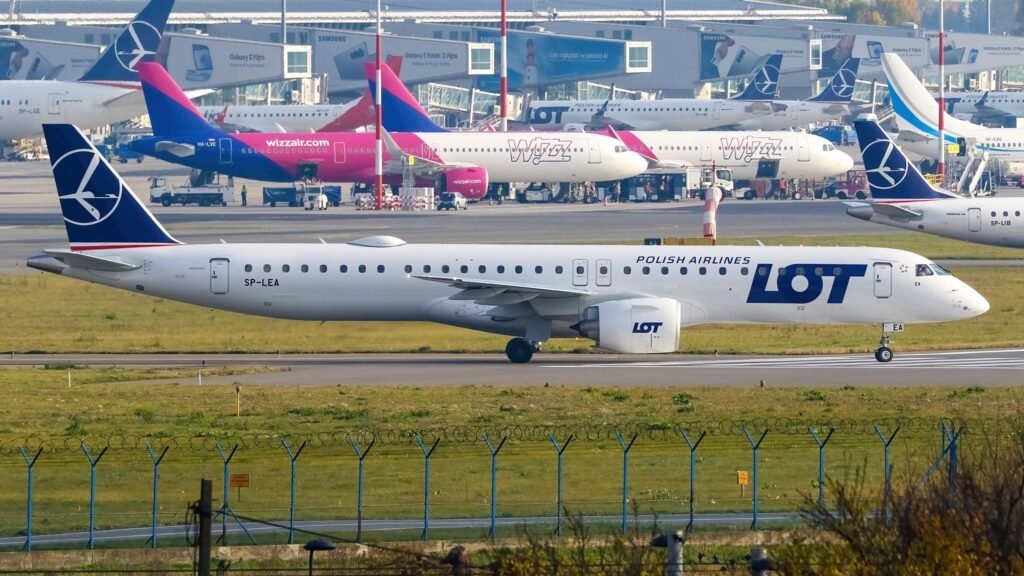
The first involved a Wizz Air service, flight W6 4352, operating from Milan Bergamo Airport (BGY), Italy, to Sofia. The aircraft landed safely, and the airline confirmed that it had been notified of the threat by Bulgarian authorities.
Wizz Air stated: “As the aircraft was already approaching its final destination, no diversion was necessary, and the flight landed safely at Sofia Airport.”
The airline added that the relevant authorities completed the required security checks and subsequently cleared the aircraft. It also confirmed that it was cooperating with the authorities.
The second threat involved a Ryanair flight operating from Dublin to Sofia. Bulgaria’s Transport Minister Georgi Peev confirmed that the aircraft landed safely with 185 passengers on board. Security teams inspected the aircraft, and no explosive devices were found.
Airport disruption and investigation
Warsaw-Modlin was the only airport among the incidents for which an official full suspension of flight operations was confirmed. Its operations resumed at 11:50, with normal functioning restored after the bomb alert was cancelled at 12:21.
At Warsaw Chopin, one runway was temporarily closed during the inspection of the SAS aircraft, but the airport continued operating. In Murcia, Aena activated its emergency protocol, with normal airport operations subsequently restored at approximately 13:00. At Rome Fiumicino and Sofia, aircraft and passenger security checks were carried out without confirmed airport-wide closures.
Across the incidents, authorities reported no explosives aboard the inspected aircraft. Investigations into the origin of the threats remained ongoing, and officials had not established whether the separate reports were connected.
2 November: Wizz Air flight diverted to Budapest
These incidents followed a separate incident reported on 2 November, 2026 when Wizz Air flight W64302, an Airbus A321neo operating from London Luton Airport (LTN) to Sofia Airport (SOF), Bulgaria, received a bomb threat while airborne.
The aircraft was diverted to Budapest Ferenc Liszt International Airport (BUD), Hungary, where it landed safely under the escort of a Hungarian Air Force Gripen fighter jet. Hungarian Defence Minister Romulusz Ruszin-Szendi confirmed that the fighter aircraft was scrambled following an alert issued through NATO’s air-defence readiness system.
Wizz Air confirmed that the London Luton–Sofia service had been diverted following a bomb threat received during the flight. The airline said the aircraft landed safely in Budapest, where authorities conducted security checks on the aircraft and passengers.
The carrier stated: “Wizz Air is cooperating fully with the authorities. The safety of passengers and crew remains our highest priority.”
Subsequent inspections found no explosive device aboard the aircraft, according to information provided by Wizz Air to the Hungarian state news agency.
The incidents highlight the operational disruption that can follow even unsubstantiated aviation security alerts, with aircraft diversions, fighter-jet deployments, passenger evacuations and temporary restrictions at major European airports.