Johannesburg, South Africa: South African airlines are activating contingency measures after an unplanned shutdown at Sasol’s Natref refinery disrupted jet-fuel supplies to O.R. Tambo International Airport in Johannesburg, raising concerns over how long carriers can maintain normal operations if supplies remain constrained.
Sasol said the disruption followed an unplanned shutdown of a downstream unit at Natref, affecting its ability to meet full supply commitments for certain fuel grades, including aviation fuel. “Sasol Oil will, however, continue to partially supply its jet fuel customers at O.R. Tambo,” the company said, adding that mitigation measures were being implemented while Natref worked to restore normal operations.
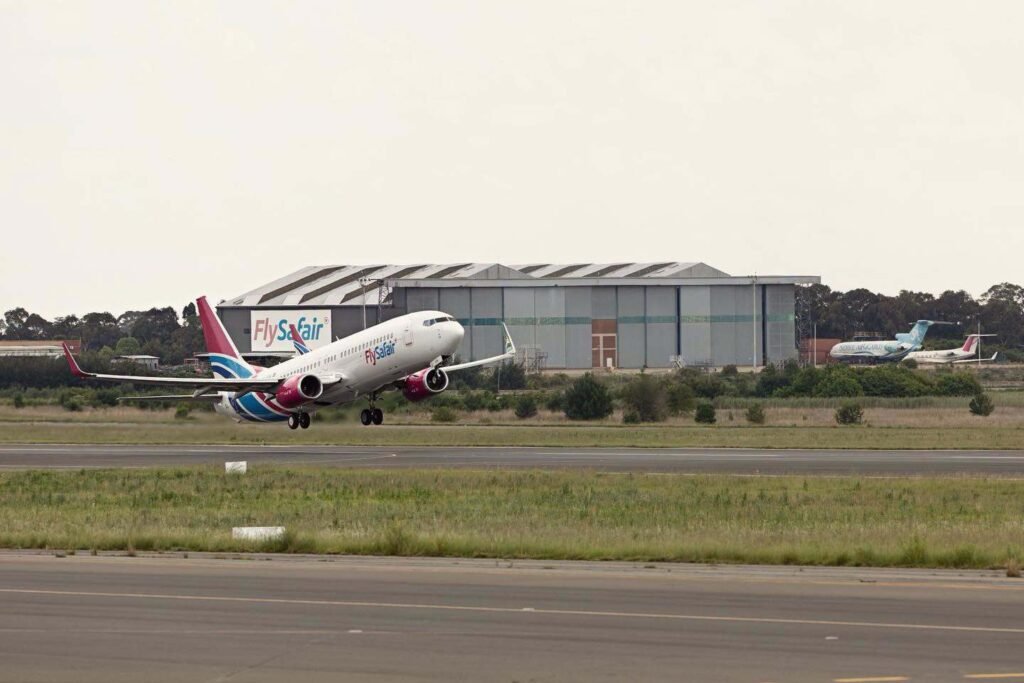
FlySafair said its flight schedule remained protected through contingency arrangements. Chief marketing officer Kirby Gordon said there had been “some disruptions to the expected jet fuel supply dynamics to O.R. Tambo this week,” with several suppliers affected, but the airline had temporarily increased supplies from providers with available fuel. He said the carrier was continuing to monitor the situation and work with stakeholders.
The airline is also prepared to use fuel tankering if necessary, allowing aircraft to carry additional fuel from airports such as Durban or Cape Town so they require less fuel at Johannesburg. Gordon described tankering as a last-resort measure because carrying additional fuel increases operating costs.
South African Airways has also activated contingency measures. SAA group corporate affairs executive Mphilo Dlamini said the airline was aware of potential fuel-supply issues at O.R. Tambo linked to the Natref disruption. “Our priority is to maintain a safe, reliable and on-time operation while minimising any disruption to our customers,” Dlamini said.
The scale of O.R. Tambo’s dependence on Natref makes the disruption significant. Natref is an inland refinery in Sasolburg with crude-refining capacity of about 108,000 barrels per day and is one of only two conventional crude refineries currently operating in South Africa, alongside Astron Energy’s Cape Town refinery.
ACSA, however, moved to reassure airlines and passengers that the situation had not yet reached the point of widespread operational disruption. Acting ACSA CEO Charles Shilowa said, “there is no immediate expectation of flight disruptions,” with mitigation plans already in place across the airport network.
According to ACSA’s August 27, 2026 update, O.R. Tambo had five to six days of jet-fuel stock cover while consuming an average of about 3,850 cubic metres per day. Natref normally supplies 70% to 80% of the airport’s demand, with the remainder coming through the Multi-Product Pipeline from the coast and dedicated rail deliveries.
At Cape Town International Airport, demand was approximately 1,400 cubic metres per day, with around 4.5 days of stock cover and daily replenishment. ACSA said that level was expected to increase to about 5.5 days after a fuel-storage tank returned to service following planned maintenance. Astron Energy supplies 70% to 75% of Cape Town’s fuel stock, while the remaining 25% to 30% comes from marine imports stored at the Burgan terminal.
Elsewhere in the network, King Shaka International Airport had approximately 12 days of jet-fuel cover, while Chief Dawid Stuurman International, King Phalo, George, Bram Fischer, Kimberley and Upington airports operate on import-backed supply structures with daily replenishment. ACSA said it maintains a minimum baseline of five days of stock at airport fuel farms.
ACSA said a drop in stock cover to three days would trigger formal crisis-management procedures, including intensified monitoring of replenishments, direct engagement with affected airlines and activation of its Fuel Forum. Despite the disruption, flight schedules across the ACSA network were continuing normally on August 27, 2026.
Aviation analyst Guy Leitch warned that the immediate situation was manageable but that South Africa’s wider fuel-supply position remained vulnerable. He said airlines were already using tankering from airports such as Durban and Cape Town to reduce their dependence on Johannesburg, while noting that the strategy adds significantly to airline costs.
Leitch also said O.R. Tambo’s reserves were only slightly above seven days in his assessment, compared with what he described as a potential 45-day period of disrupted Natref supplies. He argued that at least three weeks of supply would be a more appropriate minimum given the wider disruption to international fuel markets.
The South African disruption comes only days after Namibia faced a separate aviation-fuel shortage. The two incidents are not connected. In Namibia, a Jet A-1 cargo failed quality checks at Walvis Bay and was prevented from entering the aviation-fuel supply system. The shortage forced Lufthansa-owned Discover Airlines to route some Windhoek-Europe services through Luanda, Angola, for refuelling, while Lufthansa Cargo temporarily suspended some services.
A report published on August 19, 2026 said Discover Airlines’ Windhoek-Frankfurt service was diverted to Luanda for refuelling, with the aircraft continuing to Germany after the stop. Lufthansa said it was facing “a local and temporary shortage in fuel” at Windhoek and that its procurement and ground teams were working to restore normal supply.
The Namibia disruption followed the failure of aviation fuel to meet routine quality requirements after arriving at Walvis Bay. The incident has showcased the vulnerability of regional aviation networks when fuel supply chains are disrupted, particularly as airlines are already facing elevated jet-fuel costs.