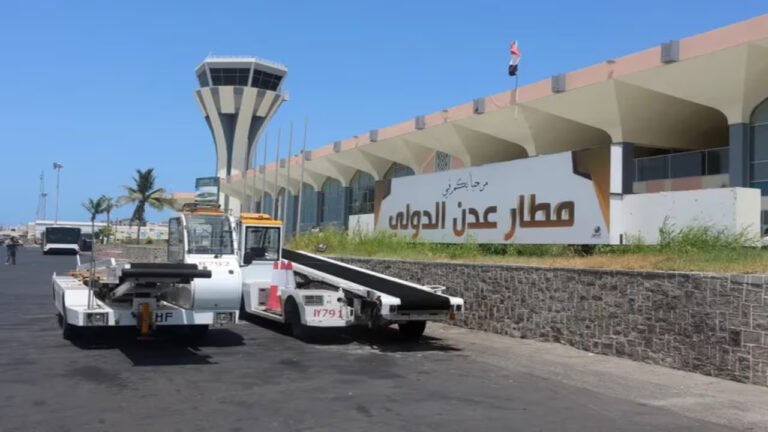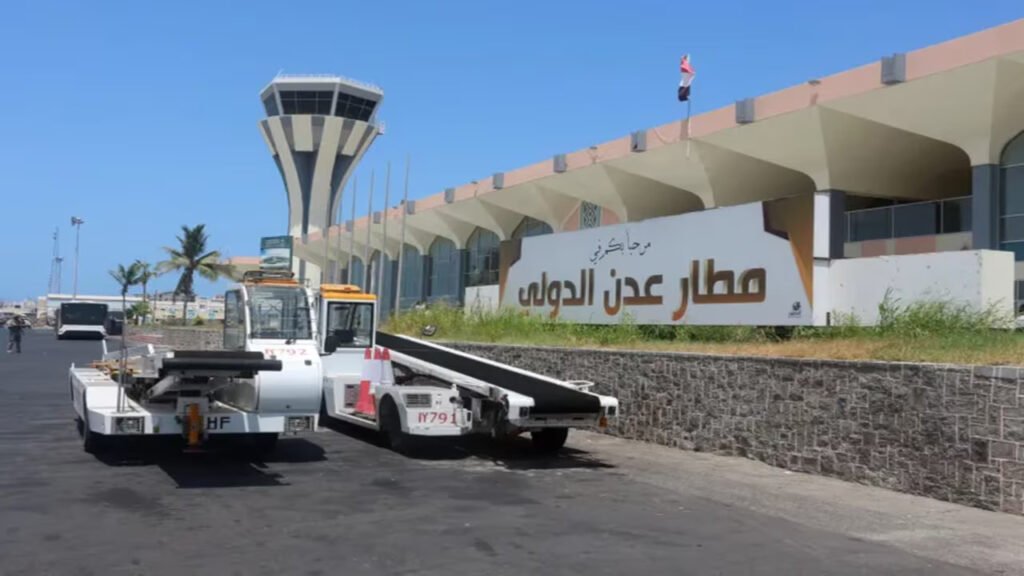
Aden, Yemen: Two missiles struck the grounds of Aden International Airport in Yemen on Friday, 16 October, 2026 coming within about 500 metres of a Yemenia Airways passenger aircraft that was preparing to depart for Cairo, in an attack that officials said could have caused a major civilian disaster. At least 151 passengers aboard Yemenia Airways Flight IY612 were safely evacuated, with no casualties reported. The missiles landed inside the airport complex, with one reported about 500 metres from the aircraft and around 100 metres from the middle of the runway.
Yemen’s Transport Minister Badr Basalma said the passengers were removed from Flight IY612 and taken away from the airport after the missiles struck. The second missile reportedly landed near the end of the runway. The incident also affected another passenger flight: a Fly Aden aircraft arriving from Cairo was in the air at the time and was instructed to divert to another Yemeni airport, with Seiyun identified as the alternative destination. The available reports therefore confirm one Yemenia flight evacuated and one incoming Fly Aden flight diverted, rather than a wider wave of airline diversions from the latest strike.
The Yemenia aircraft was operating Flight IY612 from Aden to Cairo, while the incoming Fly Aden service was identified by Yemen’s Transport Ministry as Flight QFF101 from Cairo. The missiles landed within the airport perimeter, according to Aden police and the Transport Ministry.
Yemen’s internationally recognised government blamed the Iran-aligned Houthi movement for the attack. Information Minister Moammar Al-Eryani said the missiles represented a direct danger to passengers and aviation personnel. He described the incident as “not merely an attack on a civilian airport, but a direct threat to the lives of passengers and aviation crews, the safety of air navigation, and a flagrant violation of international laws.”
Al-Eryani also said the narrow escape prevented what could have been a “horrific humanitarian catastrophe”. The Aden Capital Security Department separately confirmed that two missiles launched by the Houthis had landed inside the airport complex and said there were no reported casualties. Yemen’s Transport Ministry described the attack as part of a “systematic Houthi escalation targeting vital facilities and state assets”, accusing the group of deliberately endangering civilians.
The Houthis acknowledged the attack but said their intended target was not the passenger aircraft or civilian airport operations. A military source cited by the Houthi-controlled Saba news agency said the group targeted “the Saudi forces’ command headquarters in the Badr camp in Aden province” along with a weapons depot. The reported military target is located adjacent to the airport area. There was no independent confirmation in the reports reviewed that the claimed military facilities were damaged.
The strike came just one day after another major Houthi attack in Aden. On Thursday, 15 October, a Houthi strike hit the Al-Maashiq presidential palace complex, killing at least five people and injuring 16, according to Yemeni officials. The palace is a key government facility and the attack marked another major escalation around Aden, which serves as the seat of Yemen’s internationally recognised government.
The airport attack also occurred as fighting intensified elsewhere in Yemen. Government forces said on Friday that they had made territorial gains in Marib province and claimed to have “neutralised” more than 430 Houthi fighters and destroyed or disabled more than 100 vehicles and military assets in 24 hours. Those battlefield figures were claimed by the Yemeni government and were not independently verified in the reports reviewed. The Saudi-led coalition also released footage it said showed strikes on a Houthi weapons-smuggling operation around the Red Sea port of Hodeidah.
The latest incident was the second missile attack on Aden International Airport in less than 10 days. On 7 October, the Houthis launched ballistic missiles and explosive-laden drones at the airport. One missile landed near the runway minutes before a Yemenia Airways flight from Cairo was due to arrive. Authorities cancelled the landing and diverted the incoming flight to Jeddah, Saudi Arabia, evacuated the terminal and moved two aircraft away from the tarmac. No casualties were reported in that attack.
The renewed attacks have placed Aden’s airport, one of the most important international gateways serving areas under the recognised Yemeni government, under growing security pressure. Transport Minister Basalma stressed that the airport serves Yemenis well beyond the territory controlled by the government, including patients travelling abroad for medical treatment, students and Yemenis living outside the country. He said the airport “serves all Yemeni cities, from al-Mahra to Saada.”
The broader escalation is part of Yemen’s renewed civil war between the Houthis and the Saudi-backed internationally recognised government. The Houthis seized Sanaa in 2014, prompting a Saudi-led military intervention in 2015. After years of reduced fighting following a UN-backed truce, the conflict has intensified again, with the Houthis expanding attacks against Saudi targets and government-held areas while government forces have launched operations to regain territory along the Red Sea and around the strategic Bab el-Mandeb Strait.
The latest Aden strike has therefore raised a direct aviation-security concern beyond the military target claimed by the Houthis. With a passenger aircraft preparing for departure, another aircraft approaching from Cairo and missiles landing inside the airport perimeter, the incident brought civilian aviation operations into the centre of Yemen’s escalating conflict. No passengers or crew were reported killed or injured in the 16 October attack, but officials warned that the outcome could have been far more serious had the missiles struck the aircraft or runway at the wrong moment.