Wausau, United States: The National Transportation Safety Board (NTSB) preliminary report, reported publicly on 13 October 2026, details the pilot’s account, fuel-system inspection and aircraft damage. During a post-accident interview with a Federal Aviation Administration (FAA) inspector, the pilot’s aviation mechanic said the pilot attributed the power loss to his delay in switching tanks and not turning on the electric fuel-boost pump. The NTSB has not issued a final probable-cause determination, and the investigation remains ongoing.
A delayed switch between fuel tanks and failure to activate the electric fuel-boost pump were cited by the pilot as reasons for the loss of engine power that forced a Beechcraft K35 carrying US lawmaker Tom Tiffany to make an emergency water landing in Lake Wausau, Wisconsin, on 12 September 2026.
The aircraft, registered N6071E, was substantially damaged in the accident. Both occupants, pilot Leonard Boltz, 73, and passenger Tiffany, 68 sustained minor injuries and escaped from the aircraft before being rescued.
The NTSB report states that the accident occurred at approximately 8:49 p.m. Central Daylight Time on 12 September 2026, near Wausau, Wisconsin. The Beech K35 was operating a personal flight under Part 91 of the US Federal Aviation Regulations from La Crosse Regional Airport to Wausau Downtown Airport.
According to the report, the pilot was flying in the airport traffic pattern for landing at Wausau Downtown Airport. Shortly after extending the landing gear while abeam the runway threshold, he observed a “higher-than-normal engine exhaust gas temperature (EGT).”
The report states: “According to the pilot, the higher-than-normal engine EGT reminded him to switch fuel tanks.”
The pilot selected the right main fuel tank and moved the mixture and throttle levers fully forward, but the engine did not respond. He told investigators that he did not activate the electric fuel-boost pump while attempting to restore engine power.
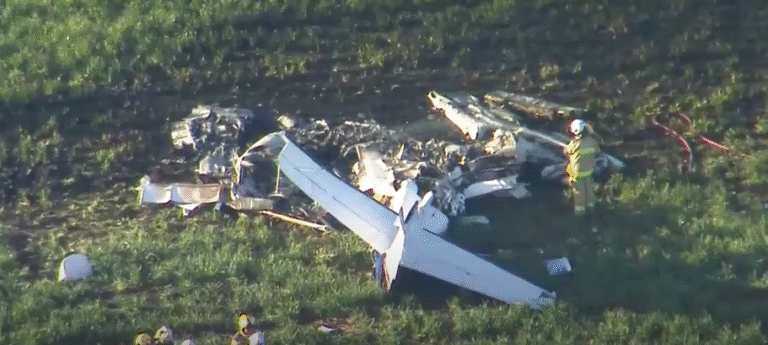
The pilot then maneuvered the aircraft towards the runway and prepared for a water landing. The aircraft struck the water, substantially damaging its fuselage, left wing, left aileron and engine mount.
After the aircraft was recovered from Lake Wausau, investigators examined its fuel system and cockpit controls.
The inspection found:
- The left main fuel tank was empty.
- The right main tank and both auxiliary fuel tanks were full of fuel.
- All fuel-tank caps were secure.
- The electric fuel-boost pump switch was in the OFF position.
- The fuel selector valve was positioned to the right main fuel tank.
- The throttle, mixture and propeller controls were nearly fully forward.
These findings document the aircraft’s condition after the accident. The NTSB has not yet issued a final determination establishing the complete sequence of events that led to the loss of engine power.
Earlier on 12 September, the pilot flew the aircraft from Langlade County Airport in Antigo, Wisconsin, to La Crosse Regional Airport. The aircraft departed Antigo with 70 gallons of fuel distributed across four tanks: 25 gallons in each main tank and 10 gallons in each auxiliary tank.
The pilot did not refuel at La Crosse before departing for Wausau. He told investigators that he had selected the left main fuel tank for both flight legs, except for a brief period when he selected the auxiliary tanks during cruise flight before returning to the left tank.
The flight from La Crosse to Wausau departed at approximately 8:15 p.m. local time. During the approach to Wausau, the pilot noticed the elevated exhaust gas temperature and switched to the right main tank. Despite advancing the engine controls, power was not restored.
The NTSB report records the pilot’s explanation to his aviation mechanic following the accident: “the loss of engine power was due to his delay in switching fuel tanks and not turning on the electric fuel boost pump.”
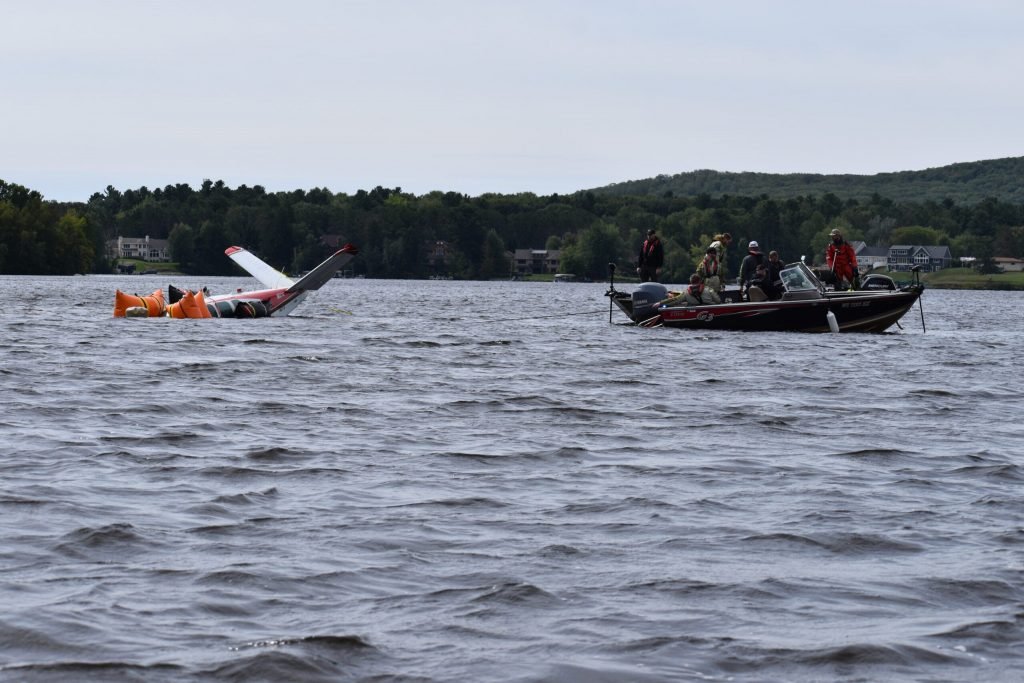
The aircraft landed in Lake Wausau after the pilot was unable to restore engine power. Both the occupants managed to exit the aircraft and reach shallow water. They called 911 and were rescued by a Wausau Fire Department airboat shortly after the accident.
Both men sustained minor injuries. The aircraft remained in the water until recovery crews removed it on 14 September, with the recovery operation involving divers and other personnel. It was subsequently secured in a hangar for examination.
The NTSB’s preliminary findings identify the pilot’s reported fuel-management errors and document the condition of the fuel tanks, selector valve and boost-pump switch after the accident. However, preliminary reports are subject to change as an investigation progresses.
The report does not constitute a final probable-cause determination. Further investigative work may clarify the circumstances surrounding the engine-power loss and the emergency landing.