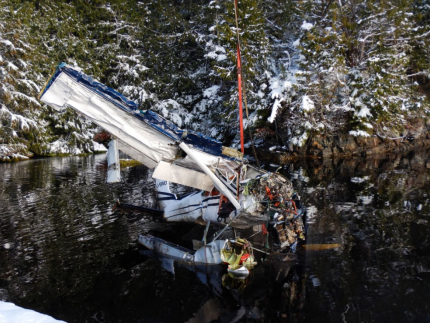
Strachan Bay, Canada: The Transportation Safety Board of Canada (TSB) has released its final investigation report into the fatal crash of an Air Cab Cessna A185E at Strachan Bay, British Columbia, finding that low-level wind shear, mechanical turbulence and an incomplete assessment of local weather risks contributed to the loss of control.
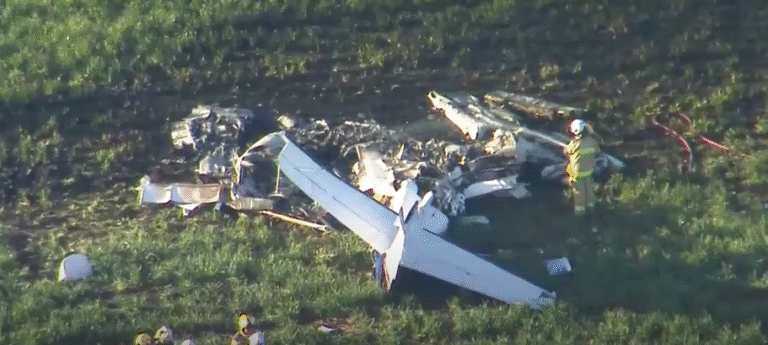
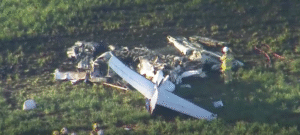
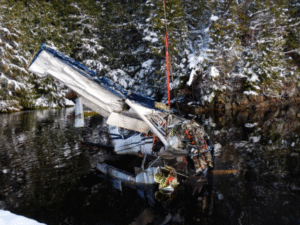
The accident occurred on 23 November 2022, when Cessna A185E C-FBMO, operated by C.B.E. Construction Ltd. as Air Cab, departed a logging camp at Strachan Bay for Port Hardy Water Aerodrome with one pilot and two passengers. The aircraft climbed to about 100 feet above sea level before turning left, banking rapidly and pitching nose-down into the water. All three occupants were killed. The aircraft was destroyed.
The TSB officially released Air Transportation Safety Investigation Report A22P0115 on 15 October 2026. The Board said its investigation was conducted to advance transportation safety and was not intended to assign fault or determine civil or criminal liability.
The TSB found that a large regional pressure gradient had created conditions for low-level wind shear and mechanical turbulence around Strachan Bay. The Board’s formal finding states: “Given the large pressure gradient in the region at the time of the occurrence, low-level wind shear and mechanical turbulence were present in the Strachan Bay area.”
Investigators said the aircraft entered a left turn toward the north after takeoff. It was exposed to a tailwind and likely encountered descending vertical air, which restricted its ability to climb. While banking, the pilot may have increased the aircraft’s angle of attack to maintain altitude, increasing the load factor and stall speed. The TSB could not establish whether the turn itself was intentional or inadvertent.
The Board ultimately found: “During departure from Strachan Bay, while at a low altitude and for undetermined reasons, control of the aircraft was lost and the aircraft struck the water.”
The report said turbulence likely produced vertical gusts that temporarily and significantly reduced airspeed, increasing the angle of attack and potentially resulting in a wing stall. However, because the aircraft did not have a lightweight flight recording system, investigators did not have enough data to conclusively determine exactly why control was lost.
The pilot had already experienced moderate-to-severe turbulence and strong wind gusts while flying from Port Hardy to Strachan Bay. The weather forecast available earlier that day had indicated strong southeasterly winds, severe mechanical turbulence and the potential for low-level wind shear.
The TSB found that the pilot was qualified and had 470.5 hours of total flying time and 235.5 hours on the Cessna 185, but had limited experience with the specific weather hazards at Strachan Bay. He had not previously flown into the bay when strong southeasterly winds were present.
The Board concluded that the pilot’s limited knowledge of the local effects of the winds, despite experiencing severe conditions on the previous flight, affected his decision-making. Its formal finding states: “Despite encountering moderate-to-severe turbulence and strong wind gusts on the previous flight, the occurrence pilot had limited knowledge of, and familiarity with, the effects of the winds at Strachan Bay. As a result, his assessment of the risks, before his decision to take off, was likely incomplete.”
Strachan Bay had no weather observation station. The TSB found that important supplemental sources used by pilots in the region were also unavailable or incomplete at the time. The Sartine Island automatic weather station had several weather parameters suppressed, including both wind sensors, while the Herbert Island station was offline.
The Board found that coastal pilots can face significant gaps when aviation weather information is unavailable. It warned that “if supplemental weather information is not available to pilots before operating in coastal areas,” pilots may not recognize weather hazards and could operate in conditions hazardous to flight.
The TSB also found that Air Cab knew Strachan Bay was particularly challenging in southeasterly winds, but its company operations manual did not provide specific guidance to help pilots assess those localized hazards. Experienced Air Cab pilots used a local departure technique that kept the aircraft low and used surrounding terrain for protection from southeasterly winds. Investigators could not determine whether the accident pilot had been briefed on that technique.
The aircraft had departed Coal Harbour earlier in the day and flown to Port Hardy before carrying the two passengers to Strachan Bay. During that flight, it encountered moderate-to-severe turbulence and strong gusts.
After landing at Strachan Bay, the pilot spoke with the Air Cab president about the weather. Logging camp personnel offered him the opportunity to remain overnight because of the windy and turbulent conditions, but he declined.
The aircraft then prepared for departure. The wind was from the southeast at approximately 30 to 35 knots. Witnesses saw the aircraft climb to about 100 feet before turning left toward the northwest. It appeared to struggle, banked rapidly and pitched nose-down into the water. A fuel-fed fire broke out on the surface.
A logging camp employee launched a boat and searched the area but found no survivors. The Canadian Coast Guard was notified at 12:51, and a Coast Guard helicopter reached the site at 13:20. A larger search involving aircraft and vessels continued until the search was stopped at 18:03. The wreckage and bodies were located underwater on 25 November 2022 and recovered the following day.
The investigation also identified a broader series of regulatory and company-policy deficiencies. The TSB found that the aircraft had previously crashed into a log boom in July 2016, heavily damaging its right float before it rolled over and sank. Records did not contain entries documenting the occurrence or the repairs that were subsequently carried out. Transport Canada inspectors later identified undocumented repairs and other defects during an August 2022 inspection, with the aircraft returning to service on 23 September 2022 after further work.
The report also found discrepancies in the approved maintenance schedule, including the propeller overhaul interval and overdue inspection and recertification of the fire extinguisher, first-aid kit and survival kit. An airworthiness-directive inspection had also previously been extended 11 times through the use of tolerances, although it was not overdue at the time of the crash.
The aircraft had undergone six modifications under supplemental type certificates (STCs). These included wing extensions, a leading-edge cuff and floats. The TSB found that the performance information in the aircraft’s flight manual supplements did not account for the combined effects of the modifications. There was also no evidence in the technical records that the installer had conducted a compatibility assessment.
The Board said this created a broader safety issue because pilots could be unaware of the cumulative effect of multiple modifications on aircraft performance and handling.
The investigation found that the aircraft was overweight during the flight from Port Hardy to Strachan Bay because passenger and cargo weights were not properly recorded. For the accident flight, the aircraft was calculated to be below its maximum take-off weight, but the investigation could not determine the aircraft’s centre of gravity because the location of the cargo could not be confirmed.
The TSB also found that Air Cab’s aircraft journey log was routinely kept at the company office rather than onboard the aircraft, despite Canadian regulations requiring the log to be onboard for takeoff. Records showed that Transport Canada had previously issued Air Cab an administrative monetary penalty for operating without the journey log.
The investigation identified other non-compliances, including incomplete flight itineraries, delayed maintenance tasks, undocumented maintenance, overweight operations, missing weight-and-balance records and operations that did not follow company policies.
The TSB concluded that the problems extended beyond individual decisions. It found that Air Cab’s safety culture had not effectively identified or corrected unsafe practices.
The report states that “regulations were frequently broken and selectively adhered to” and that the company operated beyond regulatory boundaries in several areas without making the necessary changes. The Board also found that Air Cab’s internal quality-assurance programme did not identify the non-compliances.
The TSB further found that Transport Canada surveillance had not detected several deviations, including overweight operations, incomplete flight planning, missing weight-and-balance documentation and non-use of available shoulder harnesses.
Investigators said Transport Canada inspectors were also hindered because Air Cab’s president would stop operations when inspectors were scheduled to visit. The TSB said this made surveillance visits less effective and contributed to a strained relationship between the operator and regulator.
The Board’s risk finding was direct: “A degraded safety culture decreases the likelihood that unsafe practices will be identified and their associated risks will be mitigated.”
The TSB also identified factors that increased the severity of the outcome. The pilot and front-seat passenger were not wearing the available shoulder harnesses. The Board warned that failure to use available shoulder harnesses increases the risk of injury or death from flailing or contact with the aircraft structure.
The pilot and front-seat passenger were wearing inflatable personal flotation devices, but the rear-seat passenger was not. The TSB found that failing to wear an appropriate flotation device increases the risk of injury or death when a seaplane occupant must escape into the water.
Beyond the immediate causes, the final report identified 10 broader transportation-safety risks: inadequate supplemental coastal weather information; insufficient company guidance on interpreting limited weather information; failure to follow approved maintenance requirements; flight operations outside company policies and regulations; inadequate assessment of cumulative STC effects; insufficient regulatory surveillance; degraded safety culture; failure to identify and correct internal regulatory breaches; non-use of shoulder harnesses; and failure to wear appropriate flotation equipment.
The report also placed the accident within the TSB’s wider concerns about Canada’s air-taxi sector. The Board noted that air-taxi operators face remote operating environments, limited weather information and fewer regulatory defences than larger airline operations. It also reiterated its long-standing concern about safety management, noting that air-taxi operators are not currently required to have a formal safety management system.
Despite the investigation identifying multiple systemic issues, the TSB said it was not aware of any safety action taken following the occurrence. The report concludes the Board’s investigation into the crash.