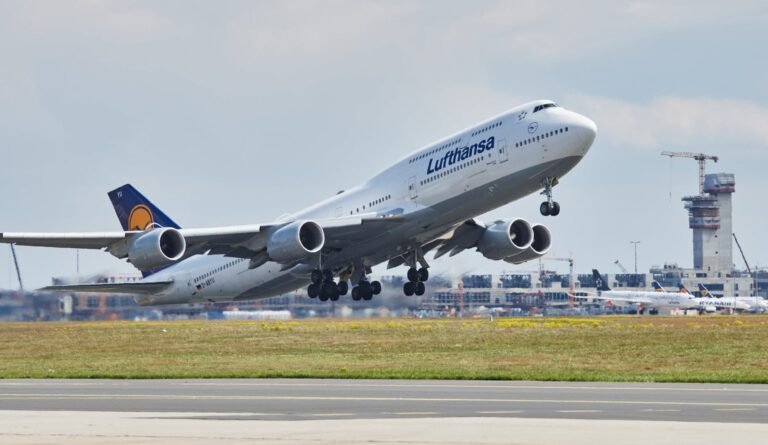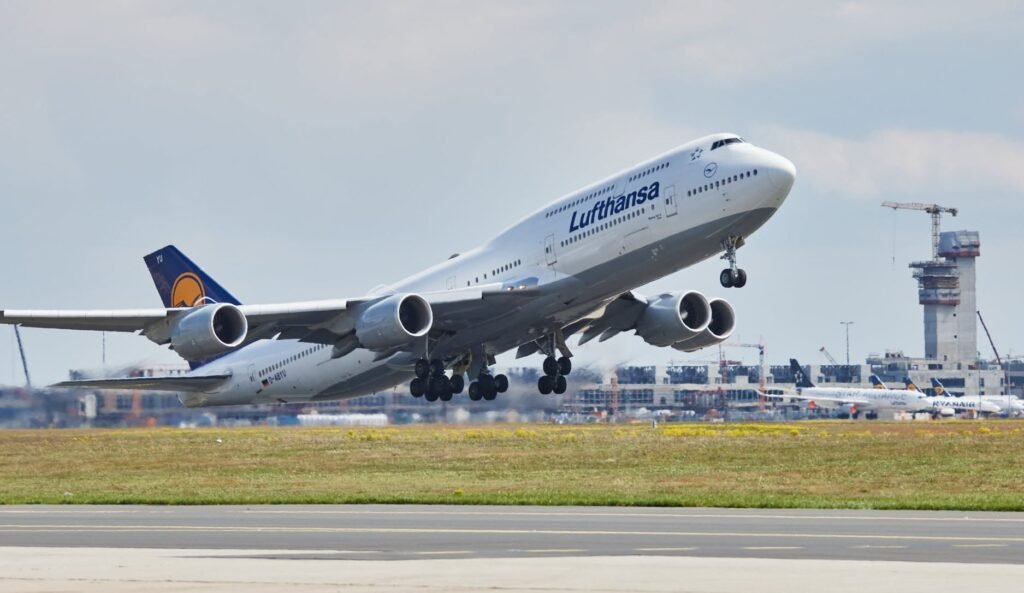
Lisbon, Portugal: The Portuguese Government selected Lufthansa Group on 14 October 2026 to acquire an initial 44.9% stake in TAP Air Portugal, completing the first phase of the flag carrier’s partial privatisation. The stake can rise by up to another 5% if TAP employees do not exercise their right to acquire the reserved shares, taking Lufthansa’s potential holding to 49.9%. The Portuguese state will retain 50.1% and majority control of TAP in this phase.
The decision was approved by the Council of Ministers on 14 October 2026 and announced by Prime Minister Luís Montenegro following the meeting in Lisbon. The Government said the transaction will generate €1.201 billion from the sale of up to 49.9% of TAP. Montenegro described Lufthansa as the best choice for the company’s future and said the process had been conducted with competitive discipline, demanding negotiations and transparency.
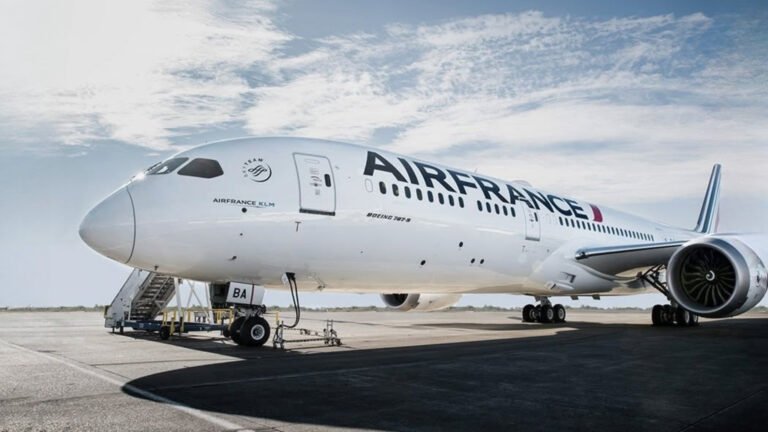
The Government said its decision was based on three principal elements: the technical proposal, contractual conditions and financial offer. Both Lufthansa and Air France-KLM significantly improved their proposals during the final negotiating stage, with the two bids converging on strategic and contractual terms. With the technical proposals and contractual conditions considered broadly similar, Portugal selected Lufthansa because its financial offer was higher and carried a lower degree of uncertainty.
According to the Government, Lufthansa’s proposal for up to 49.9% of TAP was up to 16% higher than Air France-KLM’s. The Government also said both bidders had submitted firm proposals for acquiring a majority of TAP in a possible second phase. That second phase would be subject to a separate process and is not part of the 14 October transaction approval.
The Government said the value achieved is above independent valuations conducted since 2023. Those valuations had placed TAP between €700 million and €1.7 billion. Portugal attributed the higher valuation to several changes, including a new management model separating the chairman and executive committee, greater management independence for TAP’s executive committee, completion of the European Commission-mandated restructuring plan, the decision on the new Luís de Camões Airport, clearer privatisation rules and TAP’s four consecutive years of profit.
The first-phase transaction has an EV/EBITDA multiple of 6.4x based on 2025 figures, which the Government said is about 80% higher than the 3.6x multiple associated with Apollo’s acquisition of easyJet.
Lufthansa’s proposed industrial plan calls for TAP’s fleet to grow to 117 aircraft by 2035 and 130 aircraft after 2035, representing an estimated €3 billion to €4 billion investment in TAP’s fleet. The plan also includes the potential transfer of up to eight Airbus A350-900 aircraft to TAP after 2030.
The Government said the Lufthansa integration would strengthen TAP’s position in Latin America, with the combined group expected to reach a 20% passenger share in the region. Lufthansa’s plan also includes strengthening TAP’s operation at Francisco Sá Carneiro Airport in Porto with eight aircraft based there.
Portugal said the agreement safeguards TAP’s brand and headquarters in Portugal, strengthens its Lisbon hub, and protects air links to the Azores and Madeira, the Portuguese diaspora and Portuguese-speaking markets. The strategy also covers Faro and the autonomous regions.
The Government said integration with Lufthansa would place TAP within a group that, on the combined figures presented, would be the largest European group by revenue and aircraft, and the second-largest in Europe by passengers. Globally, the combined group would rank fourth by revenue, sixth by passengers and sixth by aircraft, according to the Government’s presentation.
Lufthansa’s proposal includes approximately €300 million of investment in maintenance and engineering operations at Santa Maria da Feira, alongside 700 jobs. Lufthansa Technik is already developing a new facility there, and Lufthansa Group said its total direct workforce in Portugal could increase from more than 500 currently to more than 1,000 by 2030.
The Portuguese Government also cited plans for a pilot training school in Tancos, an innovation centre in Aveiro and a corporate services centre. Taken together with TAP’s projected growth, the Government estimates the package could generate approximately 5,500 direct and indirect jobs, including around 3,000 associated with TAP’s growth.
Lufthansa said separately on 14 October 2026 that its airlines already operate 353 weekly flights to six destinations in Portugal, representing a 75% increase in capacity compared with 2019. The group said it has been active in Portugal for more than 70 years.
Although the Portuguese state will remain the majority shareholder with 50.1%, Lufthansa will assume a significant role in TAP’s operational management under the agreed governance structure.
The Government’s terms provide for five of nine board members, including the chairman, to be appointed by the Portuguese state. Lufthansa will appoint three executive directors, while one executive director will be indicated by the Portuguese state.
The Government said the contractual arrangements were designed to protect the state’s position while allowing the private partner to take responsibility for the airline’s operational management.
Lufthansa also submitted a proposal for a potential second phase covering the majority of TAP’s remaining capital. The Portuguese Government said that proposal would provide an additional €1.351 billion, bringing the direct total valuation of TAP to €2.552 billion if the second phase is completed.
The proposed €1.351 billion consists of €863 million in cash and a €488 million share exchange, equivalent to approximately 5% of the combined Lufthansa-TAP entity. Under that structure, Portugal could become the second-largest shareholder of the combined group.
The Government said it expects the second phase to be prepared shortly, with completion targeted for by the beginning of 2028, while its detailed announcement specifies an assumption of completion by July 2028 for the financial structure described. This remains a separate process and should not be presented as an executed transaction.
Portugal said the broader objective is to recover the more than €3.2 billion in public funds injected into TAP over the past decade. The Government believes that recovery could be achieved through the possible second-stage transaction, future dividends and the future value of Portugal’s stake in Lufthansa.
The TAP privatisation process entered its final competitive stage earlier in 2026. On 23 April 2026, Portugal’s Council of Ministers formally invited Air France-KLM and Lufthansa to submit binding offers. The Government said the two industrial plans were closely matched and that the selection would consider price, industrial strategy, connectivity and the buyer’s financial capacity.
The Government’s strategic requirements included strengthening connectivity with Portugal’s autonomous regions, overseas Portuguese communities and Portuguese-speaking countries; expanding airport operations, particularly in Porto; developing maintenance and engineering activities in Portugal; investing in the fleet; delivering a 10-year growth plan; and meeting sustainability objectives.
Air France-KLM submitted its final offer for up to 49.9% of TAP on 30 September 2026, proposing Lisbon as its exclusive Southern European hub and outlining plans covering passenger operations, cargo, loyalty and MRO. Delta Air Lines and SkyTeam supported that proposal.
Portugal ultimately selected Lufthansa, with the Government saying its financial proposal was up to 16% higher and less uncertain than Air France-KLM’s.
Lufthansa Group welcomed Portugal’s decision on 14 October 2026. Lufthansa CEO Carsten Spohr described TAP as a strong and profitable airline, a long-standing Star Alliance partner and an important carrier on South Atlantic routes. He said the deal would support TAP’s growth while strengthening Lufthansa’s position in the South Atlantic.
Lufthansa confirmed that its offer is €1.025 billion for the initial 44.9% stake. The amount could rise to up to €1.2 billion for 49.9%, reflecting the possible acquisition of the employee-reserved shares and a ticking fee.
The company said it is now working with the Portuguese Government and Parpública to finalise the transaction documents. Completion remains subject to approval by the relevant authorities.
For Portugal, the transaction marks the completion of the first phase of TAP’s privatisation while preserving state control for now. For Lufthansa, it adds a carrier with a major South Atlantic network and gives the group another strategic platform for expansion into Latin America and North America.