News
Civil Aviation
Pilot Training
Flight School Analysis
Aviation Jobs
Training
Services
About Us
Contact Us

Sydney Airport Faces Fourth Safety Incident In Less Than A Month As ATSB Launches Probe

Picture of Aviation Today News Desk

Aviation Today News Desk

Sydney, Australia: The Australian Transport Safety Bureau (ATSB) on Friday, August 21, 2026, confirmed an investigation into a fourth ground-safety incident at Sydney Airport within just over three weeks, involving two Qantas aircraft that received potentially conflicting taxi instructions on August 18. The investigation, AO-2026-091, concerns an Airbus A321, registration VH-OGA, operating Qantas Flight QF405 to Melbourne, and a Boeing 737-838, registration VH-VXL, operating Qantas Flight QF589 from the Gold Coast. The ATSB's latest announcement said investigators will interview the air traffic controllers and flight crews involved, examine recorded data and collect other relevant evidence. The agency has not yet determined a cause or contributing factor and said a final report will be released after the investigation is completed. The August 18 event occurred at about 8:09 a.m. Australian Eastern Standard Time. After landing on Runway 34R, Qantas Boeing 737-838, QF589 taxied west on Taxiway Lima with clearance to turn right at Taxiway Bravo. At the same time, Qantas Airbus A321-271NY, QF405 was taxiing south on Taxiway Charlie after being cleared to turn right onto Taxiway Lima. As the A321 approached the taxiway, its crew saw the Boeing 737 approaching from the left and stopped the aircraft, allowing the 737 to pass. The ATSB classified the occurrence as an incident, with the aviation occurrence categories listed as failure to pass traffic and information/procedural error. There were no injuries or aircraft damage. The ATSB said there was “no immediate risk of collision” because QF405 braked normally before stopping. It nevertheless opened an investigation to understand the potential conflicting instructions given to the two crews. Airservices Australia said it reported the potential traffic conflict to safety authorities on Tuesday, August 18, and Qantas said its aircraft had been cleared to proceed in accordance with air traffic control instructions and that it would support the investigation. The latest event is the fourth Sydney Airport safety incident being investigated by the ATSB since July 27. Importantly, the ATSB has not found a common cause or fault in any of the four incidents at this stage. All four investigations remain active or pending, meaning claims that staffing shortages, training problems or the new Sydney Basin airspace changes caused the incidents would go beyond what the safety bureau has established so far. Airservices Australia has said the incidents involve different circumstances and that each is being examined on its individual facts. The first incident occurred on July 27, 2026, and is recorded by the ATSB as AO-2026-086 “Breakdown of coordination involving Bombardier DHC-8, VH-QOC, and Boeing 737, VH-XZG, at Sydney Airport.” The occurrence took place at 8:14 a.m. AEST and involved QantasLink Flight QLK424D, travelling from Canberra to Sydney, and Qantas Flight QFA124, travelling from Queenstown, New Zealand, to Sydney. ATC cleared the Boeing 737 to cross Runway 34L from Runway 25 while the QantasLink DHC-8 was still in its landing roll on Runway 34L. Controllers detected the developing conflict and alerted both crews, after which the 737 stopped beyond the runway holding point. The ATSB has classified the investigation as an active short occurrence investigation, with completion anticipated in Q4 2026. The second incident occurred on August 9 at about 7:20 a.m. and involved Jetstar Flight JQ402, an Airbus A320-232 registered VH-VQJ, and a Qatar Airways Boeing 777-300ER, registered A7-BEU, which was being towed by a tug. The ATSB's investigation number is AO-2026-087, titled “Taxiing proximity event involving Airbus A320-232, VH-VQJ and Boeing 777, A7-BEU, at Sydney Airport.” As the Jetstar aircraft taxied before departure for the Gold Coast, its crew saw the Qatar 777 in close proximity on a crossing taxiway. Both aircraft stopped abruptly, and a Jetstar cabin crew member was reported to have suffered a minor injury. No aircraft damage was reported. The incident triggered immediate scrutiny of ground operations. The Australian Transport Minister, Catherine King, said a ground controller and the tug operator were stood down for mandatory drug and alcohol testing, describing it as standard policy while the ATSB investigation was under way. “As is policy, the ground controller and tug operator have been stood down for mandatory drug & alcohol testing,” the minister's statement said. No passengers were injured, while the Jetstar crew member was assessed by paramedics. Only about three hours later, on the morning of August 9, Sydney Airport recorded its third incident in the sequence. The ATSB investigation, AO-2026-090, is titled “Runway incursion and rejected take-off involving Boeing 737-8SA, VH-IJQ, and Boeing 737-838, VH-XZH.” The aircraft were Virgin Australia Flight VA555, scheduled from Sydney to Perth, and Qantas Flight QF728, scheduled from Sydney to Ayers Rock Airport. At around 10 a.m., ATC cleared the Virgin Australia 737, registered VH-IJQ, for a full-length departure from Runway 34L. As the Virgin crew applied thrust, they saw the Qantas 737, registered VH-XZH, begin crossing the runway from Taxiway Lima. The Qantas crew reported that it had also received clearance from ATC to cross. The Virgin crew reduced thrust and stopped on the runway, while ATC simultaneously cancelled the take-off clearance. After the Qantas aircraft cleared the runway, the Virgin 737 was cleared to depart. The ATSB classified the occurrence as an incident involving information/procedural error, loss of separation, rejected take-off and runway incursion. No injuries or aircraft damage were recorded. The four incidents have also intensified scrutiny of Sydney's air traffic-control workforce and the major airspace changes introduced ahead of the opening of Western Sydney International Airport. CASA implemented the new Sydney Basin airspace arrangements on July 9, creating new controlled airspace around Western Sydney International and changing the structure around Sydney Kingsford Smith, Bankstown and Camden airports. CASA said the changes were designed to integrate the airports while maintaining capacity, efficiency and aircraft separation. Reuters reported that the ATSB had received a June report from an air traffic controller warning that staff at Sydney Airport were not adequately prepared for complex airspace and procedural changes linked to the opening of Western Sydney International Airport. The report cited concerns over limited training time and the volume of new material. CASA later found that Airservices Australia had implemented appropriate training, procedures and operational support arrangements. The sequence has also prompted warnings from aviation safety specialists. Retired commercial pilot and former ATSB safety investigator Geoff Klouth said the repeated events should be addressed quickly. “We've been very fortunate that there haven't been collisions, but it doesn't mean it won't happen in the future,” he said, warning that the consequences of a future failure could be catastrophic. For now, however, the official position remains that there is no established common cause behind the four incidents. The ATSB is examining each occurrence separately while also looking for common contributing factors. The July 27 coordination breakdown, the August 9 Jetstar-Qatar taxiing event, the August 9 Virgin-Qantas runway incursion and rejected take-off, and the August 18 Qantas taxiing conflict are all still under investigation. Until the ATSB releases its findings, staffing shortages, training pressures, airspace redesign and procedural errors should be treated as areas of concern or investigation rather than confirmed causes.
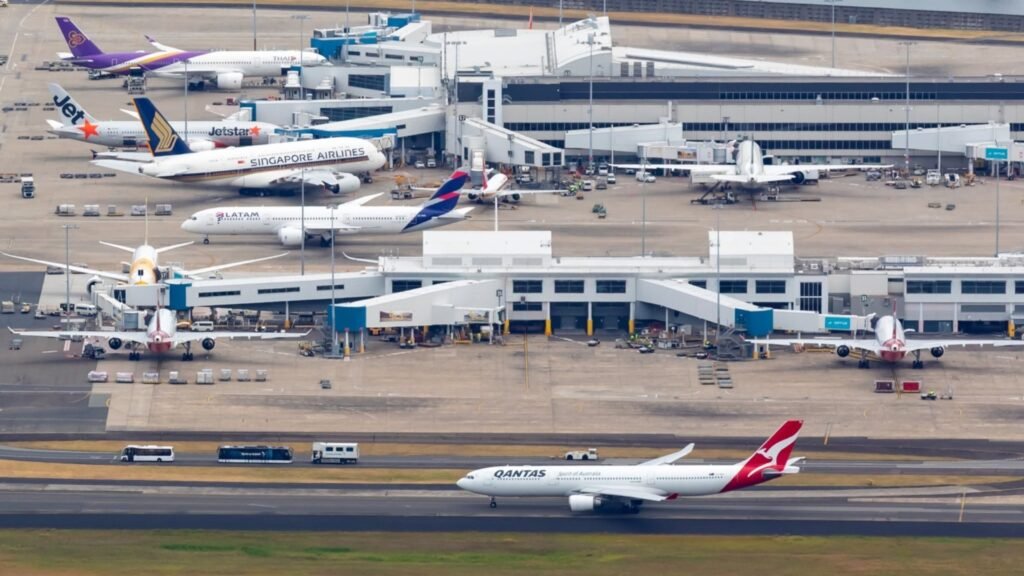
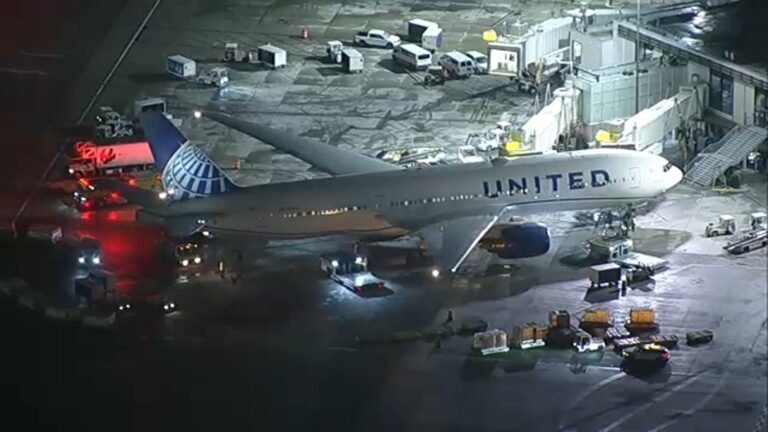
Image: Sydney Airport

Sydney, Australia: The Australian Transport Safety Bureau (ATSB) on Friday, August 21, 2026, confirmed an investigation into a fourth ground-safety incident at Sydney Airport within just over three weeks, involving two Qantas aircraft that received potentially conflicting taxi instructions on August 18. The investigation, AO-2026-091, concerns an Airbus A321, registration VH-OGA, operating Qantas Flight QF405 to Melbourne, and a Boeing 737-838, registration VH-VXL, operating Qantas Flight QF589 from the Gold Coast. 

The ATSB’s latest announcement said investigators will interview the air traffic controllers and flight crews involved, examine recorded data and collect other relevant evidence. The agency has not yet determined a cause or contributing factor and said a final report will be released after the investigation is completed.

The August 18 event occurred at about 8:09 a.m. Australian Eastern Standard Time. After landing on Runway 34R, Qantas Boeing 737-838,  QF589 taxied west on Taxiway Lima with clearance to turn right at Taxiway Bravo. At the same time, Qantas Airbus A321-271NY, QF405 was taxiing south on Taxiway Charlie after being cleared to turn right onto Taxiway Lima. As the A321 approached the taxiway, its crew saw the Boeing 737 approaching from the left and stopped the aircraft, allowing the 737 to pass. The ATSB classified the occurrence as an incident, with the aviation occurrence categories listed as failure to pass traffic and information/procedural error. There were no injuries or aircraft damage.

The ATSB said there was “no immediate risk of collision” because QF405 braked normally before stopping. It nevertheless opened an investigation to understand the potential conflicting instructions given to the two crews. Airservices Australia said it reported the potential traffic conflict to safety authorities on Tuesday, August 18, and Qantas said its aircraft had been cleared to proceed in accordance with air traffic control instructions and that it would support the investigation.

The latest event is the fourth Sydney Airport safety incident being investigated by the ATSB since July 27. Importantly, the ATSB has not found a common cause or fault in any of the four incidents at this stage. All four investigations remain active or pending, meaning claims that staffing shortages, training problems or the new Sydney Basin airspace changes caused the incidents would go beyond what the safety bureau has established so far. Airservices Australia has said the incidents involve different circumstances and that each is being examined on its individual facts.

The first incident occurred on July 27, 2026, and is recorded by the ATSB as AO-2026-086 “Breakdown of coordination involving Bombardier DHC-8, VH-QOC, and Boeing 737, VH-XZG, at Sydney Airport.” The occurrence took place at 8:14 a.m. AEST and involved QantasLink Flight QLK424D, travelling from Canberra to Sydney, and Qantas Flight QFA124, travelling from Queenstown, New Zealand, to Sydney. ATC cleared the Boeing 737 to cross Runway 34L from Runway 25 while the QantasLink DHC-8 was still in its landing roll on Runway 34L. Controllers detected the developing conflict and alerted both crews, after which the 737 stopped beyond the runway holding point. The ATSB has classified the investigation as an active short occurrence investigation, with completion anticipated in Q4 2026.

The second incident occurred on August 9 at about 7:20 a.m. and involved Jetstar Flight JQ402, an Airbus A320-232 registered VH-VQJ, and a Qatar Airways Boeing 777-300ER, registered A7-BEU, which was being towed by a tug. The ATSB’s investigation number is AO-2026-087, titled “Taxiing proximity event involving Airbus A320-232, VH-VQJ and Boeing 777, A7-BEU, at Sydney Airport.” As the Jetstar aircraft taxied before departure for the Gold Coast, its crew saw the Qatar 777 in close proximity on a crossing taxiway. Both aircraft stopped abruptly, and a Jetstar cabin crew member was reported to have suffered a minor injury. No aircraft damage was reported.

The incident triggered immediate scrutiny of ground operations. The Australian Transport Minister, Catherine King, said a ground controller and the tug operator were stood down for mandatory drug and alcohol testing, describing it as standard policy while the ATSB investigation was under way. “As is policy, the ground controller and tug operator have been stood down for mandatory drug & alcohol testing,” the minister’s statement said. No passengers were injured, while the Jetstar crew member was assessed by paramedics.

Only about three hours later, on the morning of August 9, Sydney Airport recorded its third incident in the sequence. The ATSB investigation, AO-2026-090, is titled “Runway incursion and rejected take-off involving Boeing 737-8SA, VH-IJQ, and Boeing 737-838, VH-XZH.” The aircraft were Virgin Australia Flight VA555, scheduled from Sydney to Perth, and Qantas Flight QF728, scheduled from Sydney to Ayers Rock Airport.

At around 10 a.m., ATC cleared the Virgin Australia 737, registered VH-IJQ, for a full-length departure from Runway 34L. As the Virgin crew applied thrust, they saw the Qantas 737, registered VH-XZH, begin crossing the runway from Taxiway Lima. The Qantas crew reported that it had also received clearance from ATC to cross. The Virgin crew reduced thrust and stopped on the runway, while ATC simultaneously cancelled the take-off clearance. After the Qantas aircraft cleared the runway, the Virgin 737 was cleared to depart. The ATSB classified the occurrence as an incident involving information/procedural error, loss of separation, rejected take-off and runway incursion. No injuries or aircraft damage were recorded.

The four incidents have also intensified scrutiny of Sydney’s air traffic-control workforce and the major airspace changes introduced ahead of the opening of Western Sydney International Airport. CASA implemented the new Sydney Basin airspace arrangements on July 9, creating new controlled airspace around Western Sydney International and changing the structure around Sydney Kingsford Smith, Bankstown and Camden airports. CASA said the changes were designed to integrate the airports while maintaining capacity, efficiency and aircraft separation.

Reuters reported that the ATSB had received a June report from an air traffic controller warning that staff at Sydney Airport were not adequately prepared for complex airspace and procedural changes linked to the opening of Western Sydney International Airport. The report cited concerns over limited training time and the volume of new material. CASA later found that Airservices Australia had implemented appropriate training, procedures and operational support arrangements. 

The sequence has also prompted warnings from aviation safety specialists. Retired commercial pilot and former ATSB safety investigator Geoff Klouth said the repeated events should be addressed quickly. “We’ve been very fortunate that there haven’t been collisions, but it doesn’t mean it won’t happen in the future,” he said, warning that the consequences of a future failure could be catastrophic.

For now, however, the official position remains that there is no established common cause behind the four incidents. The ATSB is examining each occurrence separately while also looking for common contributing factors. The July 27 coordination breakdown, the August 9 Jetstar-Qatar taxiing event, the August 9 Virgin-Qantas runway incursion and rejected take-off, and the August 18 Qantas taxiing conflict are all still under investigation. Until the ATSB releases its findings, staffing shortages, training pressures, airspace redesign and procedural errors should be treated as areas of concern or investigation rather than confirmed causes.

Leave a Comment

Subscribe to our Newsletter

Recent News

Aviation Today Perspectives