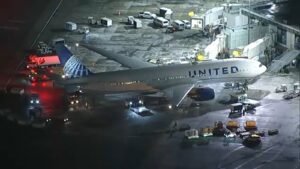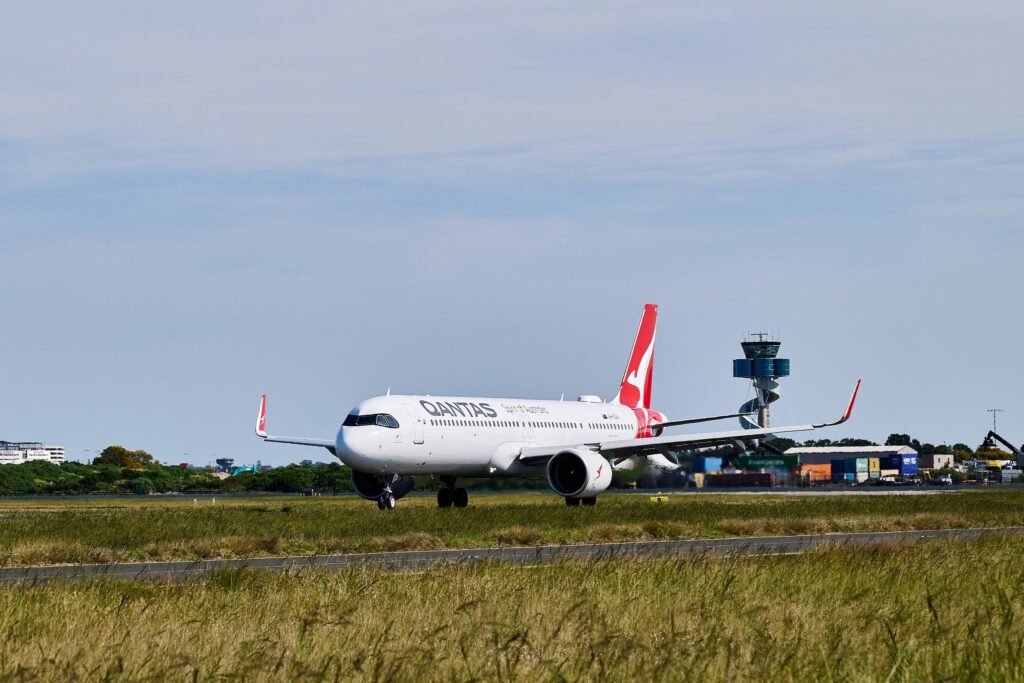
Sydney, Australia: The Australian Transport Safety Bureau (ATSB) has launched an investigation into a serious runway incursion involving two Qantas-operated aircraft at Sydney Airport after an air traffic control clearance resulted in one aircraft being instructed to cross an active runway while another was still landing. The incident occurred on 27 July 2026 at approximately 08:14 local time, and although no collision occurred, the safety watchdog has classified it as a breakdown in coordination and opened a formal investigation.
According to the ATSB, the occurrence involved Qantas Flight QF124, a Boeing 737-800 registered VH-XZG, which had arrived from Queenstown, New Zealand, and QantasLink Flight QLK424D, a De Havilland Canada Dash 8 Q400 registered VH-QOC, arriving from Canberra, Australian Capital Territory.
Preliminary information released by the ATSB states that after landing on Runway 25, the Boeing 737 was instructed by air traffic control to taxi and cross Runway 34L. At the same time, the Dash 8 Q400 had been cleared to land on Runway 34L and was still completing its landing roll along the active runway.
As the Boeing approached the runway crossing point, air traffic controllers recognised the developing conflict. The ATSB said the 737 crew stopped the aircraft before entering Runway 34L, while the Dash 8 continued its landing roll on the runway. Because the Boeing halted short of the runway, the two aircraft remained separated and no collision occurred.
No injuries or aircraft damage were reported, and both aircraft subsequently continued normal ground operations. The ATSB has not released the number of passengers or crew on board either flight.
The safety bureau has opened investigation AO-2026-086 to determine the factors that led to the runway incursion. Investigators will examine the sequence of air traffic control clearances, coordination between controllers, recorded radio communications, surveillance data, aircraft movements, human factors and operational procedures. The investigation will also assess whether any broader systemic issues contributed to the occurrence.
In its initial investigation notice, the ATSB described the event as involving a breakdown of coordination between aircraft movements on intersecting runways. The agency noted that evidence collection is underway, including interviews with relevant personnel and analysis of operational data. A final report is expected before the end of 2026, although the timeline may change depending on investigative findings.
The incident has renewed attention on staffing pressures within Australia’s air traffic control system. Recent media reports have highlighted controller shortages and increased workload at Sydney Airport, with industry representatives raising concerns over staffing levels. Airservices Australia has acknowledged workforce challenges and said it is recruiting and training additional controllers, while noting that qualification training takes several years before recruits can work independently in complex airspace.
Airservices Australia confirmed it is cooperating fully with the ATSB investigation and said safety remains its highest priority. The organisation has not provided further comment while the independent investigation is ongoing.
Qantas also confirmed it is assisting the ATSB and stated that both flight crews were operating in accordance with air traffic control instructions issued during the event.