New Delhi, India: GE Aerospace plans to nearly double its annual spending on Indian suppliers to approximately $400 million by 2030 from around $200 million in 2025, as it prepares for rising aircraft demand and expanding maintenance requirements in India. The company announced the supply-chain expansion on 12 October 2026 alongside the release of Powering Progress: GE Aerospace’s Economic Impact in India, a report compiled by Ernst & Young (EY) examining its more than four decades of operations in the country.
GE Aerospace expects to deliver more than 3,200 additional engines to Indian customers over the next nine to 10 years, according to the report published by News Karnataka on 23 October. The outlook reflects the company’s position in India’s commercial aviation market, where GE Aerospace and its joint-venture partners had more than 1,400 commercial engines in service as of December 2025.
Vikram Rai, CEO of GE Aerospace South Asia, said: “India’s commercial aviation growth is one of the fastest in the world, and today’s report shows that our commitment here goes far beyond selling engines. It’s in the components machined in Pune, the innovation in Bengaluru, and our trusted customers, who are building the next generation of India’s aerospace industry. As India works towards its Viksit Bharat ambitions, doubling our spend to grow the supply chain ecosystem will help meet the growing demand.”
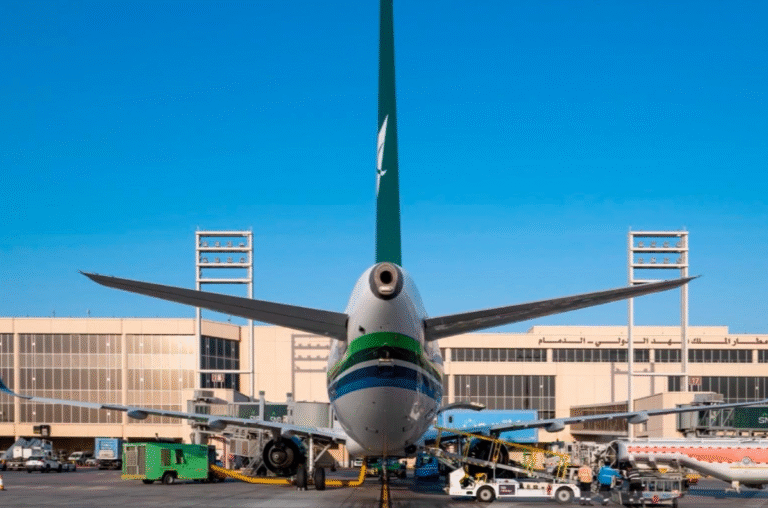
The company’s announcement comes as India expands its airline fleets, airport infrastructure and domestic passenger network. Government estimates annual domestic passenger traffic to reach 1.1 billion by 2040, compared with 340 million in the financial year 2025–26. The number of airports is projected to increase from 163 to more than 350 by 2047.
GE Aerospace’s report estimates that India and South Asia will require 3,300 additional aircraft, equivalent to 6,600 engines, by 2044. Separately, the company said GE Aerospace and its partners are expected to power most of the approximately 1,500 new aircraft already on order with Indian carriers.
GE Aerospace and its partners already power a majority of commercial airline operations in India. The company said the existing fleet has supported Indian carriers in achieving an average passenger load factor of 88.2% and aircraft utilisation of 12 to 14 hours per day, figures it described as higher than global levels.
India’s domestic commercial airlines generated approximately $19 billion in revenue in FY2026, according to the GE Aerospace report. The wider aviation ecosystem supports an estimated 370,000 direct jobs.
A major part of the anticipated demand comes from new aircraft orders. In July 2026, IndiGo announced a memorandum of understanding with CFM International for more than 1,000 LEAP-1A engines to power 510 Airbus A320neo-family aircraft. GE Aerospace and Safran Aircraft Engines each hold a 50% stake in CFM International.
GE Aerospace described the IndiGo agreement as the largest single order ever placed for LEAP engines and a record for CFM International. The arrangement also included support for establishing IndiGo’s planned engine maintenance, repair and overhaul (MRO) facility.
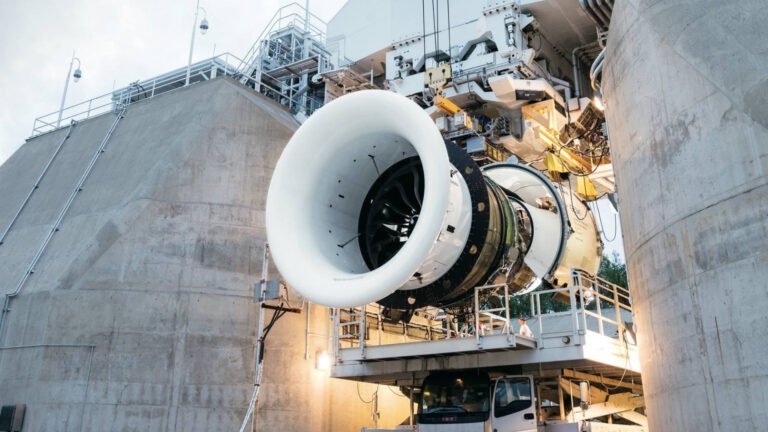
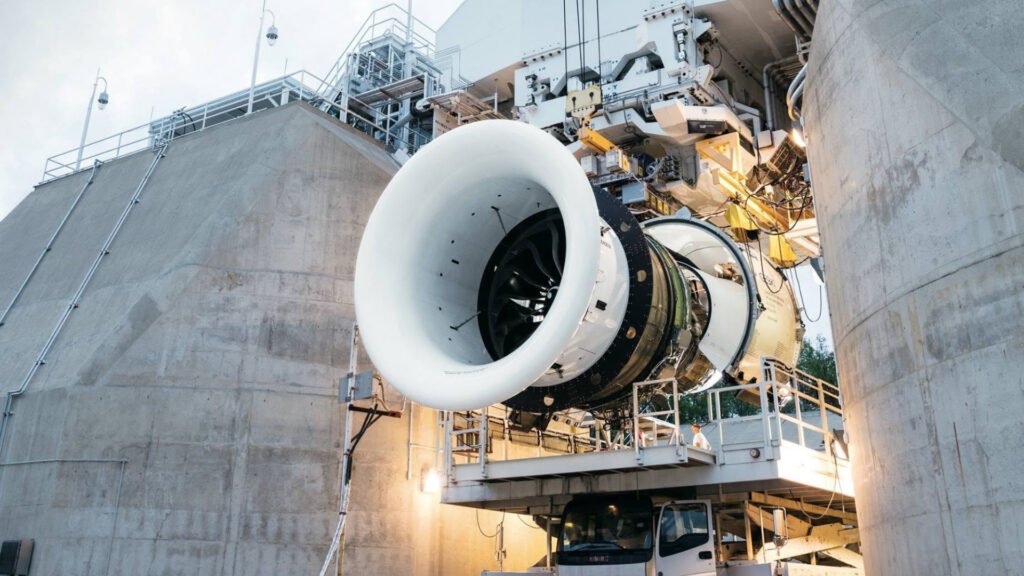
The LEAP engine powers aircraft in the Airbus A320neo family and Boeing 737 MAX family. As Indian airlines introduce more aircraft and increase flight frequencies, engine availability, spare-parts supply and maintenance capacity are expected to become increasingly important to operations.
GE Aerospace estimates that the approximately 1,500 aircraft already on order with Indian carriers that are expected to use its engines or those of its partners represent an opportunity worth more than $5.5 billion for India’s MRO industry.
GE Aerospace’s manufacturing operations in Pune are central to its plans to expand Indian sourcing. The company established its flagship facility with an initial investment of $200 million. Since 2024, it has invested nearly $55 million to expand automation, strengthen precision-manufacturing capabilities and develop its workforce.
The Pune facility is supported by a network of 17 major domestic suppliers, including small and medium-sized enterprises. GE Aerospace spent approximately $200 million on its Indian supply chain in 2025 and plans to raise that amount to around $400 million annually by 2030.
The proposed increase is intended to support rising production requirements while strengthening India’s contribution to the company’s global aerospace supply chain. Indian suppliers manufacture components for commercial engine programmes, while domestic engineering teams contribute to product development, research and digital technologies.
The company also highlighted its workforce-development efforts at Pune. Since 2015, approximately 5,000 production associates have graduated from the facility’s apprenticeship programme, which enrols between 400 and 500 new apprentices annually.
GE Aerospace’s Bengaluru Technology Centre, established in 2000 with an investment of $200 million, supports engineering, research, development and digital operations. The company described it as one of the first research and engineering centres of its kind outside the United States.
The centre has secured more than 1,000 aviation patents and contributed to the design, development and certification of the GE9X, which GE Aerospace identifies as the world’s most powerful jet engine. Engineers based in Bengaluru hold key design responsibilities for the GE90, GP7200, GEnx and GE9X programmes.
The centre also contributes to CFM International’s Revolutionary Innovation for Sustainable Engines (RISE) technology demonstration programme, which aims to improve fuel efficiency by 20% while meeting customer expectations for durability. RISE is a technology demonstration programme rather than an engine offered for commercial sale.
GE Aerospace said its digital technology team uses artificial intelligence to support global supply-chain, MRO and sales operations. Its collaboration with academic institutions, including a joint innovation programme with IIT Madras that produced a locally designed and built Micro Turbomachine, is another part of its effort to develop India’s aerospace engineering capabilities.
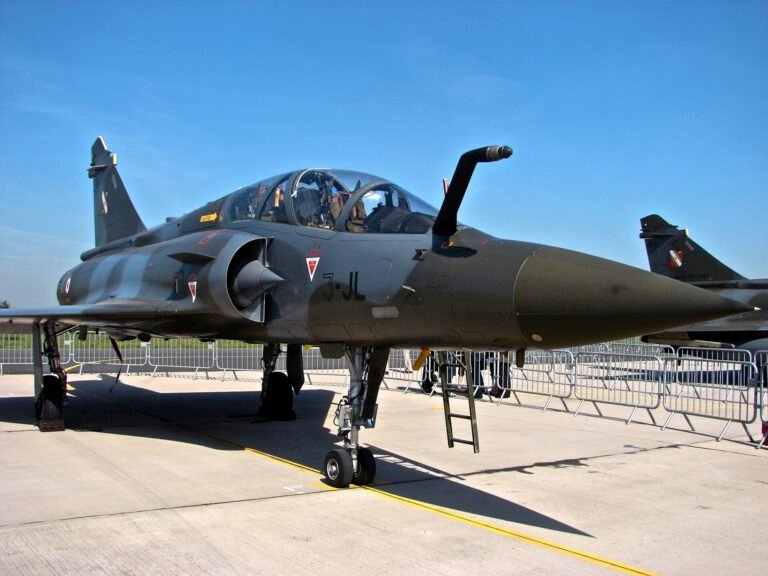
GE Aerospace’s Indian operations also support the country’s defence self-reliance objectives. The company has worked with Hindustan Aeronautics Limited (HAL) since 1986 on LM2500 naval engines and F404-IN20 engines for India’s Tejas Mk1 light combat aircraft.
GE Aerospace said the F404 platform has more than 4,000 engines deployed across 16 countries. In 2023, the company signed a memorandum of understanding covering the potential domestic manufacture of F414 engines for the Tejas Mk2 programme. That arrangement remains subject to final agreements and approvals.
The company has also signed a five-year Performance Based Logistics contract with the Indian Air Force for Apache helicopter engines and a separate agreement to establish an in-country depot facility for F404-IN20 engines.
GE Aerospace’s defence engines and systems also support the Indian Navy’s aircraft carriers and frigates, according to the company’s India overview.
The planned increase in supplier spending, projected engine deliveries and expansion of maintenance activity form part of GE Aerospace’s wider strategy to support India’s growing aviation market. The company said its presence in the country spans more than 40 years across commercial aviation, defence, manufacturing, engineering and workforce development.
Globally, GE Aerospace reported an installed base of approximately 50,000 commercial and 30,000 military aircraft engines, supported by a workforce of approximately 57,000 employees.
The projected growth in India’s aircraft fleet could create additional demand for precision-engineered components, skilled manufacturing workers, engine inspections, repairs, spare parts and technical services. Realising that potential will depend on suppliers’ ability to meet stringent aviation requirements for quality, durability, reliability and traceability, as well as investment in infrastructure and specialised skills.
GE Aerospace’s announcement sets out a clear spending target through 2030, while its engine-delivery outlook points to sustained demand over the following decade. Together, the plans underline India’s growing importance not only as an aviation market but also as a manufacturing, engineering and maintenance base for the global aerospace industry.