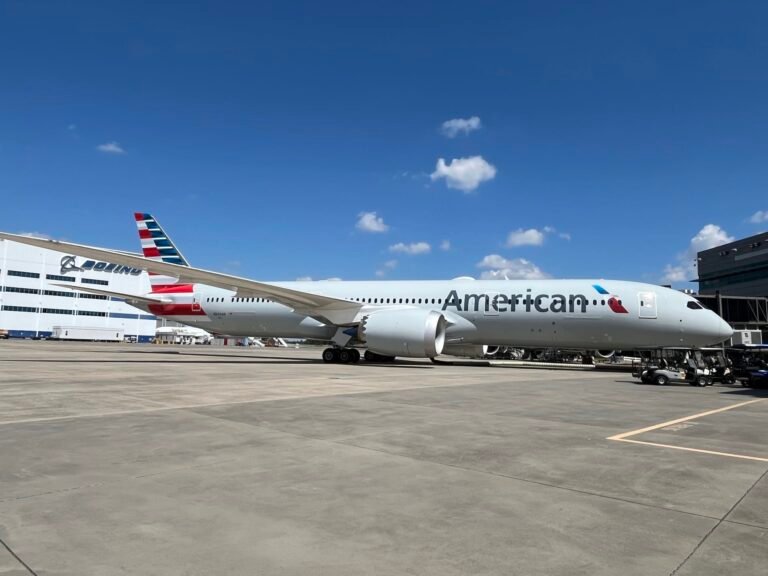
Fort Worth, United States: American Airlines Group has forecast a full-year loss for 2026 after a sharp increase in jet-fuel prices overwhelmed record third-quarter revenue, with the carrier warning that elevated fuel costs will also slow its network growth in 2027.
In its financial results released on Thursday, October 22, 2026, American reported third-quarter operating revenue of $16.335 billion, up 19.3% from $13.691 billion a year earlier. The company said the increase was the strongest year-over-year revenue growth in its history excluding the post-pandemic recovery years. However, aircraft fuel and related taxes climbed 67.5% to $4.635 billion, an increase of about $1.9 billion from the third quarter of 2025.
The fuel increase was driven primarily by prices rather than additional flying. America’s average aircraft fuel price, including related taxes, rose 62.7% to $3.85 per gallon from $2.37, while fuel consumption increased only 3.0% to 1.204 billion gallons. Total operating expenses rose 19.8% to $16.220 billion, leaving operating income at $115 million, down from $151 million a year earlier.
American reported a GAAP net loss of $269 million, or $0.41 per diluted share, compared with a $114 million loss, or $0.17 per diluted share, in the third quarter of 2025. On an adjusted basis, the carrier reported a $182 million loss, or $0.28 per diluted share, compared with an adjusted loss of $111 million, or $0.17 per diluted share, a year earlier. The company said the adjusted loss was only $71 million worse than the previous year despite the $1.9 billion increase in fuel expense.
“American delivered record third-quarter revenue and the strongest year-over-year revenue growth in my career, with premium performance leading the way,” American Airlines CEO Robert Isom said.
“The investments we are making across the four pillars of our commercial strategy are working,” Isom said, adding that the company expects another quarter of record revenue growth. “While historically high fuel prices significantly impacted our financial results, our focus remains on restoring profitability and building a stronger American for the long term.”
American’s passenger revenue rose 19.5% to $14.900 billion, while cargo revenue increased 29.1% to $274 million and other revenue climbed 15.2% to $1.161 billion.
Premium revenue grew 22.9%, while Main Cabin revenue increased 19.5%. Premium passenger unit revenue rose 18.5%, compared with 14.4% for Main Cabin. Premium products currently generate roughly half of America’s ticket revenue from approximately 30% of seats, and the airline expects premium seats on narrowbody aircraft to reach 40% in the coming years through its retrofit programme.
Managed corporate revenue increased 27.6%, marking the sixth consecutive quarter of double-digit growth. AAdvantage enrolments rose 27.4%, while spending on American’s co-branded Citi credit cards increased by nearly 10% year over year.
Total unit revenue increased 14.5%, with domestic passenger unit revenue up 13.6% and international passenger unit revenue up 16.4%. Within international markets, Latin America increased 21.1%, the Atlantic increased 14.5% and the Pacific increased 11.3%.
American carried 67.265 billion revenue passenger miles during the quarter, up 1.0%, while available seat miles increased 4.2% to 80.680 billion. The passenger load factor consequently fell 2.6 percentage points to 83.4%. Yield increased 18.3% to 22.15 cents, while passenger revenue per available seat mile increased 14.6% to 18.47 cents.
The fuel shock has now forced American to abandon its earlier full-year earnings range, which had allowed for either a profit or loss.
The airline now expects 2026 adjusted loss per diluted share of 1.00-1.60, compared with its previous guidance range of $0.65 profit to $0.65 loss per diluted share.
For the fourth quarter, American expects an adjusted loss of 0.50-1.10 per diluted share and total revenue growth of 19.5%-22.5%. Available seat miles are expected to increase 5.5%-6.5%, while CASM excluding net special items, fuel and profit sharing is expected to rise 2.5%-3.5%.
The carrier’s fuel assumptions are considerably more severe. Based on the forward fuel curve on October 19, 2026, American expects to pay approximately $4.70 per gallon in Q4, nearly double its Q4 2025 price. At that level, the airline expects fuel expenses to rise by approximately $2.8 billion year over year.
American has consequently warned that 2027 network growth will slow from 2026 levels. The carrier had already signalled in September that sustained high fuel prices could require capacity adjustments. At a Morgan Stanley investor conference on September 16, 2026, Isom said that if fuel prices remained at then-current levels, the company would need to make adjustments to its capacity planning. CFO Devon May said American Airlines was growing capacity in Q4 but pulling back somewhat in December and expected 2027 growth to be lower than previously anticipated.
The airline is attempting to offset the fuel shock through a combination of revenue growth, productivity improvements and selective capacity management.
American expects to achieve nearly $1 billion in annual run-rate savings and more than $900 million in working-capital improvements by the end of 2026 through its multi-year re engineering programme. CASM-ex increased only 3.0% year over year in Q3, which the company described as the best unit-cost performance among the network carriers.
“We remain focused on the factors that drive the most value,” CFO Devon May said. “Our long-term focus on efficiency supported industry-leading unit cost results in the quarter.”
American ended September with $11.8 billion of total available liquidity and more than $26 billion of unencumbered assets and first-lien capacity. The company continues to target 3.0x net debt to EBITDAR, while working to reduce debt and interest expense.
America’s total departures increased 3.7% to 585,000 during Q3, comprising 304,000 mainline and 281,000 regional departures. The carrier ended the quarter with 1,624 aircraft, including 1,037 mainline and 587 regional aircraft.
Its workforce reached 141,100 full-time equivalent employees, up 3.1% from 136,900 a year earlier.
Domestic passenger revenue increased 20.2% to $10.489 billion, while international passenger revenue rose 17.7% to $4.411 billion. Latin America passenger revenue increased 20.7%, Atlantic revenue rose 15.6% and Pacific revenue increased 18.5%.
For the first nine months of 2026, American reported operating revenue of $46.982 billion, up 15.6% from $40.634 billion. Operating income declined 48.7% to $521 million, while the company recorded a $702 million pre-tax loss and a $580 million net loss, compared with a $12 million net profit in the first nine months of 2025.
American is continuing to invest in its commercial strategy rather than relying solely on cost reductions.
On October 8, 2026, the airline announced that it would expand its Starlink programme from more than 500 aircraft to its entire mainline fleet of more than 1,000 aircraft. Installations are scheduled to begin in early 2027.
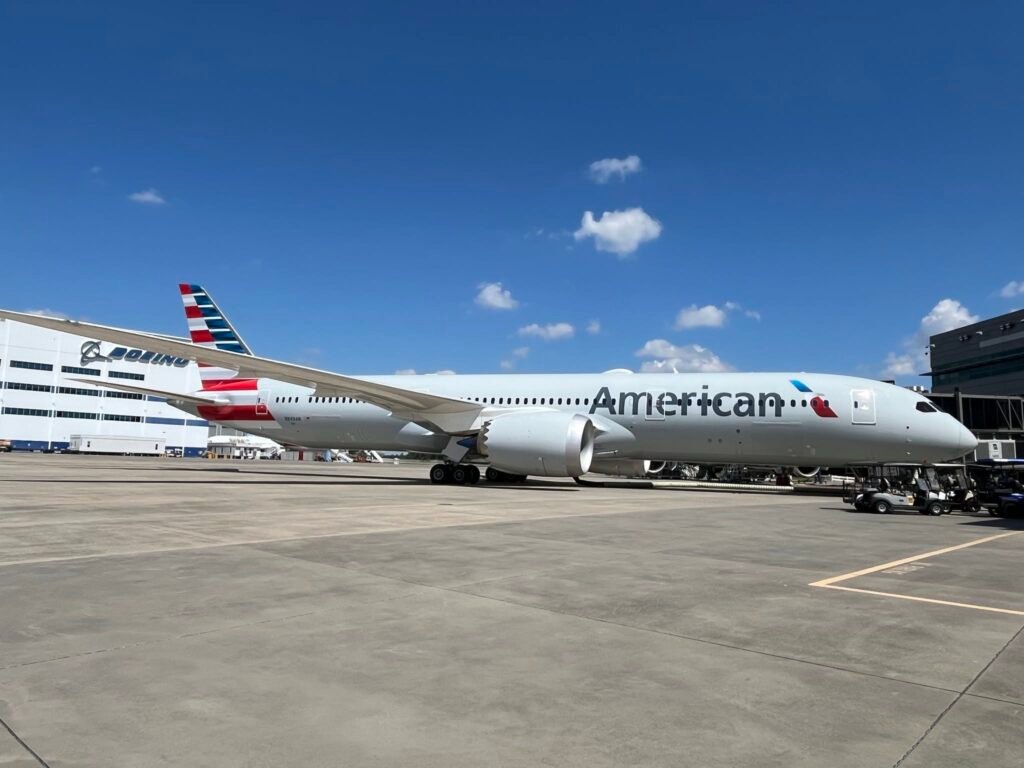
The airline’s mainline fleet currently includes more than 500 Airbus narrowbodies, more than 400 Boeing narrowbodies and more than 130 Boeing widebodies, for a total of more than 1,030 aircraft. American expects to take delivery of more than 300 new mainline aircraft in the coming years.
The company is also expanding its premium offering, Admirals Club and premium lounge network, while planning seatback entertainment on narrowbody aircraft, including new deliveries beginning in 2028.
American’s revised outlook comes amid a broader fuel-cost squeeze across US airlines. Delta Air Lines, Southwest Airlines and American Airlines had lowered their 2026 earnings expectations, while United Airlines projected weaker-than-expected fourth-quarter profitability.
US airfares had risen by nearly 23% year over year in the seven months through September, according to Labor Department data, but the increases have not fully offset the fuel shock. Reuters reported that US carriers are therefore reassessing capacity and limiting growth to preserve pricing power and margins.