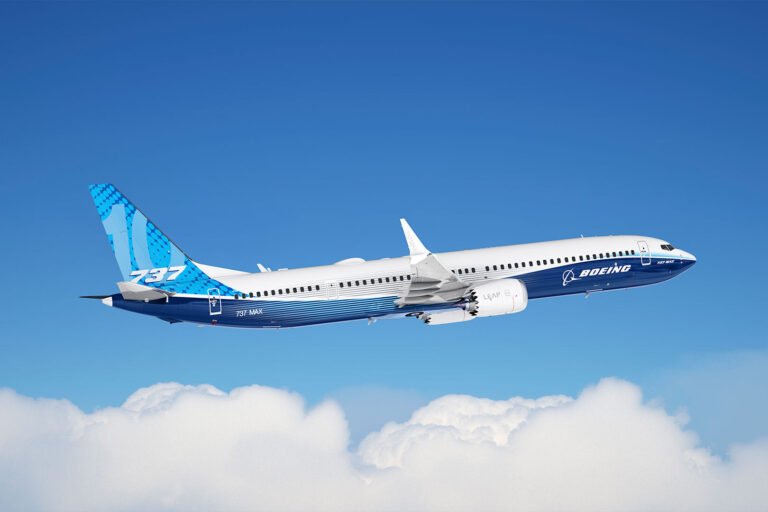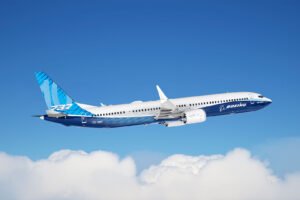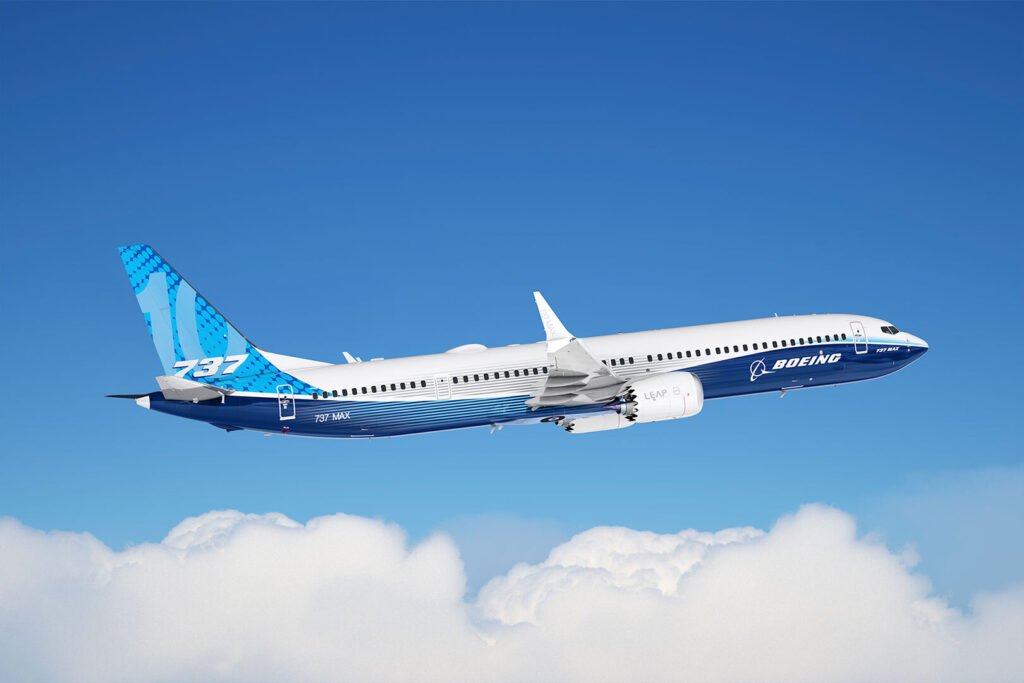
Washington, United States: The US Federal Aviation Administration (FAA) has issued certification for Boeing’s 737 MAX 10, the largest variant of the 737 MAX family, authorising production and clearing the way for deliveries to domestic and international airlines following years of regulatory review. In an official statement dated 20 October 2026, the FAA confirmed that it had issued an amended type certificate and an updated Production Limitation Record for the aircraft.
The FAA said the amended type certificate confirms that the aircraft complies with applicable design and safety requirements, while the updated Production Limitation Record authorises production. The agency also confirmed that the approval followed extensive reviews and required Boeing to incorporate safety improvements addressing provisions of the Aircraft Certification, Safety, and Accountability Act (ACSAA) and recommendations from the National Transportation Safety Board (NTSB).
US Transportation Secretary Sean P. Duffy said, “After extensive safety reviews including thousands of hours of test flights – the team at the FAA is ready to approve this critical aircraft for sale.” He described the decision as “a major win for American manufacturing and our nation’s status as a global aviation powerhouse.”
FAA Administrator Bryan Bedford said, “The FAA’s decision follows a thorough review of the aircraft’s design and safety requirements.” He added, “We will continue to hold Boeing to the highest safety standards as the company begins production of the 737 MAX-10.”
A central element of the certification was the requirement to introduce safety improvements to the aircraft’s flight-control system, including an enhanced angle-of-attack sensor. The angle-of-attack measurement indicates the relationship between the wing and the oncoming airflow, while aircraft pitch describes the nose-up or nose-down attitude. The FAA said the required changes address provisions of the ACSAA and NTSB recommendations.
The Boeing 737 MAX 10’s certification took more than nine years from its launch in June 2017, as technical challenges and post-crash safety requirements prolonged the approval process. The Lion Air Flight JT610 crash on 29 October 2018, which killed 189 people, and the Ethiopian Airlines Flight ET302 crash on 10 March 2019, which killed 157, led to a global grounding of the 737 MAX fleet and intensified scrutiny of Boeing’s aircraft design and certification procedures. The MAX 10 completed its first flight on 18 June 2021, but subsequent regulatory requirements under the Aircraft Certification, Safety, and Accountability Act, enacted in December 2020, added further work, including enhanced safety systems and an improved angle-of-attack sensor.
The programme also faced a technical obstacle involving the engine anti-ice system, which could cause overheating under certain conditions and required further engineering work and testing. The Alaska Airlines 737 MAX 9 door-plug incident on 5 January 2024 further intensified scrutiny of Boeing’s manufacturing quality and safety oversight, although it involved a different variant. By July 2026, Boeing had completed most of the MAX 10’s flight-testing programme, reporting more than 2,060 flight hours and 972 test flights, but certification reviews and safety assessments remained.
A final delay occurred on 28 September 2026, when FAA Administrator Bryan Bedford said certification would be held until the agency had assessed a flight-management computer software issue that could affect automated vertical guidance during a go-around. On 2 October 2026, the FAA’s Corrective Action Review Board concluded that the fault did not pose a safety concern because pilots retained control and cockpit indications remained clear. Following the completion of its remaining reviews, the FAA announced certification on 20 October 2026, issuing an amended type certificate and an updated Production Limitation Record authorising production.
Boeing’s separate announcement on 20 October said the 737-10 certification programme included more than 2,000 flight hours, approximately 1,000 hours of ground testing, nearly 1,000 test flights, extensive safety assessments and design reviews. The company also said the certification involved tens of thousands of pages of documentation and numerous formal meetings with the FAA. These programme figures were provided by Boeing rather than specified in the FAA’s certification announcement.
The 737-10 is designed to accommodate up to 230 passengers in a maximum-density configuration. Boeing says it will typically seat 185 to 210 passengers in a two-class layout and offer a range of up to 3,100 nautical miles (5,740 km). The manufacturer also claims a 20% reduction in fuel use and carbon dioxide emissions compared with the aircraft’s predecessor-generation technology.
Boeing reported that more than 30 customers worldwide had ordered 1,555 737-10 aircraft as of the certification announcement, representing more than 30% of the 737 MAX programme’s current order book. The manufacturer said certification would allow deliveries to begin in the coming months.
The certification completes the principal 737 MAX variant lineup, which includes the 737-7, 737-8, 737-8-200, 737-9 and 737-10. Boeing said customers had placed 7,350 orders for the wider 737 MAX family, with nearly 2,500 aircraft delivered by the end of September 2026.
The approval comes after a prolonged certification process and renewed scrutiny of Boeing’s aircraft safety and production standards. The 737-10 is also a key part of Boeing’s competition with Airbus in the higher-capacity single-aisle aircraft market, particularly against the A321neo.
The FAA’s announcement confirms the US certification decision and production authorisation. Separate approvals from other aviation regulators remain relevant to international operations and deliveries, meaning the FAA decision should not be interpreted as automatic approval for service in every jurisdiction.