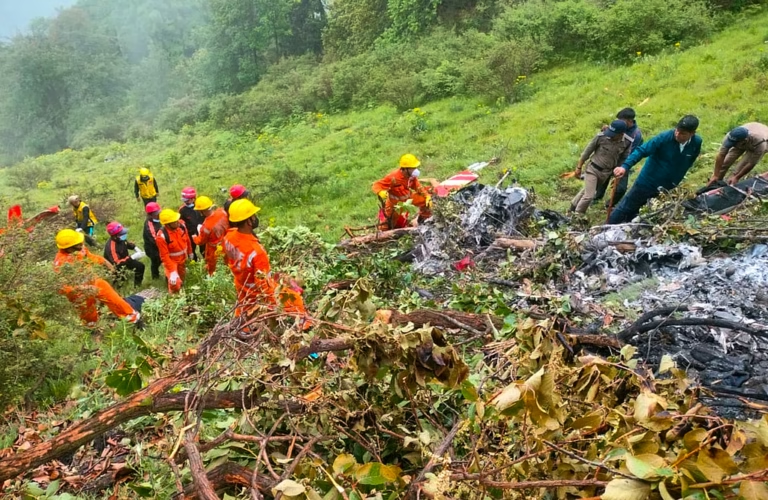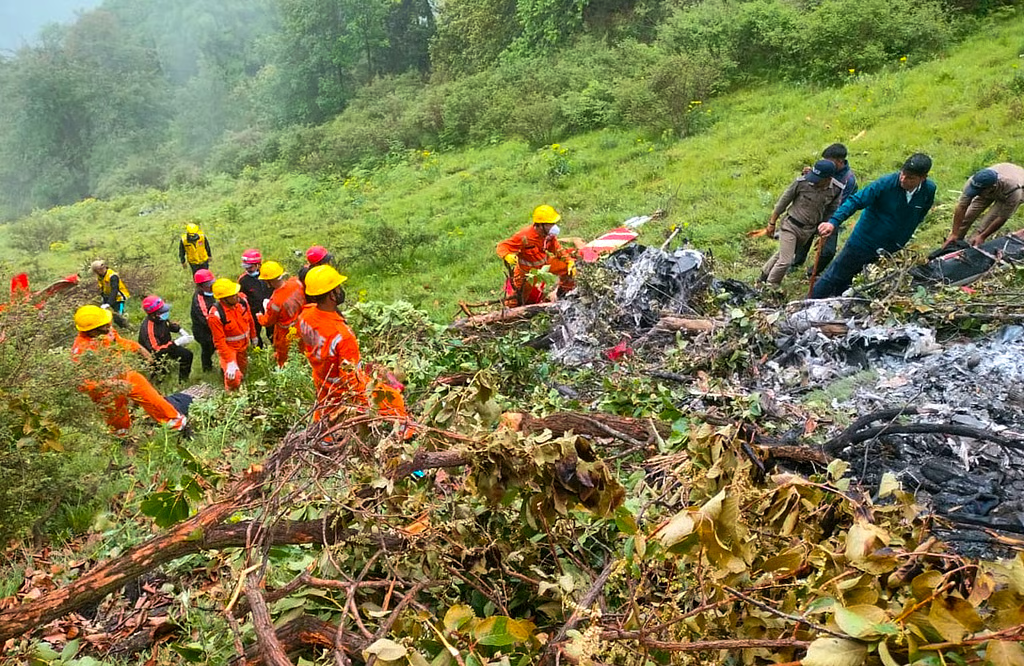
Uttarakhand, India: India’s Aircraft Accident Investigation Bureau (AAIB) has identified rapidly descending clouds, the decision to continue flying on the same route and altitude, and limited experience operating in the Kedarnath valley as contributing factors in the fatal crash of an Aryan Aviation Bell 407 helicopter near Gaurikund, Uttarakhand, on 15 June 2025. The final investigation report, dated 13 October 2026, recommends that pilots complete at least 50 hours of supervised hill-flying sorties with an experienced pilot before undertaking single-pilot operations in the valley for the first time.
The helicopter, registered VT-BKA, was operating a passenger shuttle from Kedarnath to Guptkashi when it struck terrain near the valley exit. All seven people aboard the pilot and six passengers died. The aircraft caught fire on impact and was destroyed.
According to the AAIB, the pilot had observed cloud cover lowering near the valley exit and reported the deteriorating conditions over the radio. A pilot flying behind the helicopter advised against flying above the clouds and recommended exiting below them. VT-BKA nevertheless continued along the standard route at 9,000 feet, the altitude prescribed by the operating procedure for the return leg.
The investigation found that the clouds built up and descended rapidly towards the helicopter’s flight path. The pilot attempted to navigate through the cloud-obstructed area but lost visual references and became disoriented. The final recorded radio call was, “9200, unable to see ahead turning right”. The AAIB concluded that the pilot probably attempted to turn back towards Kedarnath without visual cues before the helicopter struck terrain to the right of its flight path.
The AAIB found no evidence that an aircraft technical defect contributed to the accident. The helicopter’s registration, airworthiness and airworthiness-review documents were valid, no outstanding defect had been reported before the flight, and maintenance records showed that the aircraft had been maintained in accordance with the prescribed procedures.
The pilot held the required commercial helicopter licence and met the minimum regulatory requirements for the operation. However, the report said the pilot had begun flying in the Kedarnath valley only on 2 May 2025, at the start of that year’s Char Dham operating season. The AAIB highlighted the valley’s rapidly changing weather and challenging terrain, saying that single-pilot operations in such conditions require specialised skills and adequate experience.
The investigation also identified limitations in the weather-information arrangements available to operators. At the time of the accident, the helipads in the valley did not have dedicated meteorological facilities providing a complete picture of local conditions. An automated weather instrument at Kedarnath supplied information including wind and visibility but did not provide cloud information. Operators also relied on CCTV feeds at the valley entry point, Rudra Point near Lincholi and the Kedarnath helipad to assess cloud cover and visibility.
The AAIB’s examination of the footage showed clouds building near the valley exit and descending towards the return flight path. The investigation concluded that the crew did not adequately assess the rapidly approaching clouds and continued into deteriorating conditions instead of deviating or turning back in time.
The final report recommends that the Directorate General of Civil Aviation (DGCA) consider introducing a minimum of 50 hours of dual sorties with an experienced pilot in hill operations before releasing a pilot for single-pilot hill flying in the valley or region for the first time.
The AAIB also recommended formal DGCA oversight of the control centre established at Sitapur to manage helicopter traffic in the Kedarnath valley. It called on the Uttarakhand Civil Aviation Development Authority (UCADA) to arrange recording of radio-telephone communications between the control centre and flight crews, enabling their use in audits, surveillance and future safety investigations.
The report notes that DGCA amended its Operations Circular 02 of 2023 in September 2025 following a series of helicopter accidents in the Char Dham sector during May and June that year. The revised framework provided for a control centre at Sitapur, supported by air traffic control and meteorological personnel. However, the AAIB found that provisions for DGCA oversight and recording the communications had not been included.