London, United Kingdom: British low-cost carrier easyJet has agreed in principle to a sweetened takeover proposal from the U.S.-based investment firm Castlelake, valuing the airline at up to £5.5 billion (US$7.3 billion). If completed, the transaction would take one of Europe’s largest budget airlines private and mark one of the aviation sector’s biggest deals in recent years.
The latest proposal values easyJet at 690 pence per share, representing a 73% premium over the airline’s closing share price on 29 May 2026, the day Castlelake publicly disclosed its interest under UK takeover rules. The easyJet board said the revised proposal is at a level that it would be minded to recommend to shareholders if a firm offer is made, marking a significant shift after previously rejecting four lower bids.
The agreement follows more than a month of negotiations. Castlelake initially revealed its interest in late May before progressively increasing its offers from 560p, 600p, 625p, and 650p per share, all of which were rejected by easyJet’s board as materially undervaluing the airline. After rejecting the fourth proposal, the airline granted Castlelake limited access to commercial information, allowing the investor to conduct due diligence and improve its offer.
Under the UK Takeover Code, Castlelake must submit a firm intention to make an offer by 3 August 2026, or withdraw unless an extension is granted by the UK’s takeover regulator. The current agreement is therefore not yet a binding acquisition.
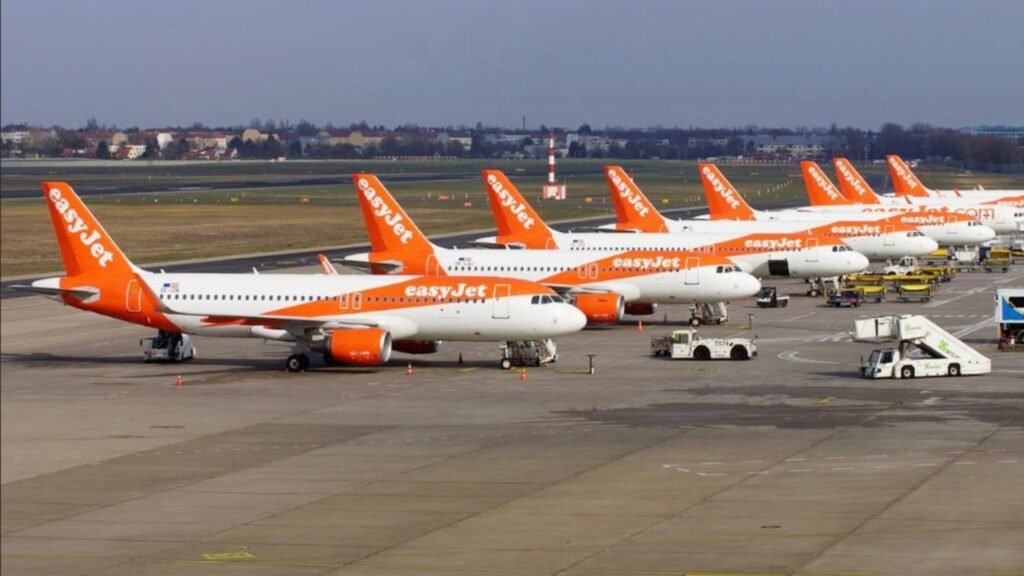
The takeover would be one of the most significant ownership changes in European aviation. Headquartered at London Luton Airport, easyJet operates one of Europe’s largest short-haul networks, serving more than 150 airports across the continent with a fleet of over 360 Airbus aircraft, comprising the Airbus A319, A320, A320neo and A321neo families. The airline is also a major customer of Airbus with a substantial outstanding aircraft order book supporting its long-term fleet renewal programme. Analysts believe these aircraft assets, together with valuable airport slots, are among the primary attractions for Castlelake.
Industry analysts note that Castlelake is not a traditional airline operator but is a major aviation investor with extensive interests in aircraft leasing and aviation finance. The Minneapolis-based investment firm manages approximately US$38 billion in assets, leases aircraft to airlines including Qantas and Etihad Airways, and previously participated in the restructuring of Scandinavian Airlines (SAS). Analysts believe Castlelake’s expertise in aircraft financing makes easyJet’s fleet, aircraft order book and airport slot portfolio particularly attractive.
Beyond its fleet, easyJet owns some of Europe’s most valuable take-off and landing slots, particularly at capacity-constrained airports including London Gatwick, Paris Charles de Gaulle, Paris Orly and Geneva, assets that would be extremely difficult to replicate under current airport capacity restrictions. The airline’s rapidly expanding easyJet Holidays business is also viewed as an important strategic asset capable of generating higher-margin revenue.
One of the biggest hurdles facing the transaction is compliance with European Union airline ownership rules, which require EU airlines to remain majority owned and effectively controlled by EU nationals. To satisfy those regulations, Castlelake has proposed a structure in which it would own 49% of the acquisition vehicle while the remaining 51% would be held by European investors. The consortium includes former easyJet Chief Operating Officer and former Malaysia Airlines CEO Peter Bellew and aviation executive Mark Breen, former CEO of Arajet.
Despite the board’s support for the latest proposal, investors continue to price in execution risk. Following the announcement, easyJet shares climbed around 10%, reaching their highest level in almost four years. However, the stock continued trading well below the proposed 690p offer price, reflecting uncertainty surrounding financing, regulatory approvals, shareholder backing and the possibility of competing bids.
Analysts at JPMorgan and other investment firms have said that while the revised proposal significantly improves the likelihood of a successful transaction, important details regarding funding arrangements and governance remain undisclosed. Some market observers have also suggested that rival airline groups could still emerge, although regulatory constraints would make any acquisition by another major European airline difficult. Lufthansa has been mentioned as a potential suitor but is currently focused on other acquisitions, while Wizz Air has also been cited, though analysts question whether it has the financial capacity for such a purchase.
The position of easyJet founder Stelios Haji-Ioannou, whose family controls approximately 15% of the airline, is expected to be closely watched. He has not publicly indicated whether he intends to support the proposal, and his stance could prove influential during the shareholder approval process.
The proposed acquisition comes against a challenging backdrop for the airline industry. Higher jet fuel prices, geopolitical tensions affecting energy markets, and softer consumer demand have weighed on airline profitability in recent months. easyJet had previously argued that earlier takeover proposals were “highly opportunistic”, contending that its share price had been temporarily depressed by market conditions and did not reflect the company’s medium-term earnings potential or strategic value.
If completed, the acquisition would represent one of the largest private equity investments in European commercial aviation and could reshape the competitive landscape among the continent’s low-cost carriers, including Ryanair, Wizz Air and easyJet. The coming weeks are expected to determine whether Castlelake can secure regulatory clearance, financing and shareholder approval before the August deadline