News
Civil Aviation
Pilot Training
Flight School Analysis
Aviation Jobs
Training
Services
About Us
Contact Us

Air France, Airbus Found Guilty Of Manslaughter In 2009 AF447 Crash That Killed 228

Picture of Aviation Today News Desk

Aviation Today News Desk

Paris, France: A Paris appeals court has found Air France and Airbus guilty of corporate manslaughter over the 2009 crash of Air France Flight 447, overturning a previous acquittal and marking a major turning point in one of the aviation industry’s longest-running criminal cases. The ruling, delivered on May 21, 2026, comes nearly 17 years after the Airbus A330 operating the Rio de Janeiro-Paris service crashed into the Atlantic Ocean, killing all 228 people onboard. The tragedy remains the deadliest accident in Air France’s history and the worst crash involving an Airbus A330 aircraft. The appeals court imposed the maximum corporate manslaughter fine permitted under French law €225,000 each on both companies. Although financially minor for two global aviation giants, the verdict carries significant symbolic and legal weight after years of investigations, trials, appeals, and pressure from victims’ families. Flight AF447 departed Rio de Janeiro on June 1, 2009, bound for Paris Charles de Gaulle Airport with 216 passengers and 12 crew members onboard. During cruise over the Atlantic Ocean, the aircraft encountered severe weather and icing conditions at high altitude. Investigators later determined that ice crystals blocked the aircraft’s pitot tube sensors responsible for measuring airspeed causing inconsistent speed readings and forcing the autopilot to disconnect. According to the final investigation, the pilots reacted incorrectly after the sensor failure. The aircraft entered a high-altitude aerodynamic stall from which the crew failed to recover before the Airbus plunged into the ocean. Cockpit recordings later revealed confusion inside the flight deck as the pilots struggled to understand the aircraft’s condition during the final minutes of the flight. The court concluded that both Air France and Airbus bore criminal responsibility for the disaster. Judges ruled that Airbus had prior knowledge of recurring pitot tube icing issues affecting A330 aircraft but failed to respond quickly enough to eliminate the risk. Prosecutors argued that the manufacturer underestimated the seriousness of the known defect despite earlier incidents involving unreliable airspeed indications. Air France, meanwhile, was criticized for inadequate pilot training regarding high-altitude manual handling, stall recovery procedures, and unreliable airspeed scenarios. The court found that pilots had not received sufficient preparation to manage the type of emergency that unfolded aboard AF447. The judgment reverses a 2023 lower-court acquittal in which both companies had escaped criminal liability despite widespread criticism from victims’ families and aviation experts. Under the French legal system, the appeals process allowed the entire case to be retried from the beginning. Families of victims welcomed the ruling as long-overdue recognition of corporate accountability, though many described the fines as merely symbolic. Several relatives said the decision represented moral justice after years of legal frustration, while others argued true accountability would require criminal action against individual executives rather than corporations alone. Brazilian victims’ association leader Nelson Faria Marinho said justice was still incomplete, arguing that no senior officials had personally faced criminal consequences despite the scale of the disaster. The case also reignited debate within the aviation industry over the balance between pilot error and systemic corporate responsibility. During proceedings, lawyers representing Airbus and Air France repeatedly emphasized that the immediate cause of the crash was the crew’s inability to recover the aircraft from stall conditions. Prosecutors, however, maintained that the pilots were placed in an avoidable situation because of failures in design risk management and operational training. The wreckage of AF447 was not fully located until 2011 after an extensive deep-sea search operation nearly 4,000 meters below the Atlantic Ocean surface. Recovery of the flight data recorder and cockpit voice recorder proved crucial in reconstructing the sequence of events that led to the crash. The disaster triggered major changes across the global aviation industry. Airlines and regulators revised pilot training programs to place greater emphasis on manual flying skills, high-altitude stall recovery, and automation management. Manufacturers also introduced modifications to pitot tube systems and operational procedures following the accident. Both Airbus and Air France are expected to challenge the verdict before France’s highest appeals court, potentially extending legal proceedings even further. Airbus has already confirmed plans to appeal, while Air France had not publicly commented immediately after the judgment.
Image: The Pioneer

Paris, France: A Paris appeals court has found Air France and Airbus guilty of corporate manslaughter over the 2009 crash of Air France Flight 447, overturning a previous acquittal and marking a major turning point in one of the aviation industry’s longest-running criminal cases.

The ruling, delivered on May 21, 2026, comes nearly 17 years after the Airbus A330 operating the Rio de Janeiro-Paris service crashed into the Atlantic Ocean, killing all 228 people onboard. The tragedy remains the deadliest accident in Air France’s history and the worst crash involving an Airbus A330 aircraft.

The appeals court imposed the maximum corporate manslaughter fine permitted under French law  €225,000 each on both companies. Although financially minor for two global aviation giants, the verdict carries significant symbolic and legal weight after years of investigations, trials, appeals, and pressure from victims’ families.

Flight AF447 departed Rio de Janeiro on June 1, 2009, bound for Paris Charles de Gaulle Airport with 216 passengers and 12 crew members onboard. During cruise over the Atlantic Ocean, the aircraft encountered severe weather and icing conditions at high altitude. Investigators later determined that ice crystals blocked the aircraft’s pitot tube sensors responsible for measuring airspeed causing inconsistent speed readings and forcing the autopilot to disconnect.

According to the final investigation, the pilots reacted incorrectly after the sensor failure. The aircraft entered a high-altitude aerodynamic stall from which the crew failed to recover before the Airbus plunged into the ocean.

Cockpit recordings later revealed confusion inside the flight deck as the pilots struggled to understand the aircraft’s condition during the final minutes of the flight. The court concluded that both Air France and Airbus bore criminal responsibility for the disaster.

Judges ruled that Airbus had prior knowledge of recurring pitot tube icing issues affecting A330 aircraft but failed to respond quickly enough to eliminate the risk. Prosecutors argued that the manufacturer underestimated the seriousness of the known defect despite earlier incidents involving unreliable airspeed indications.

Air France, meanwhile, was criticized for inadequate pilot training regarding high-altitude manual handling, stall recovery procedures, and unreliable airspeed scenarios. The court found that pilots had not received sufficient preparation to manage the type of emergency that unfolded aboard AF447.

The judgment reverses a 2023 lower-court acquittal in which both companies had escaped criminal liability despite widespread criticism from victims’ families and aviation experts. Under the French legal system, the appeals process allowed the entire case to be retried from the beginning.

Families of victims welcomed the ruling as long-overdue recognition of corporate accountability, though many described the fines as merely symbolic. Several relatives said the decision represented moral justice after years of legal frustration, while others argued true accountability would require criminal action against individual executives rather than corporations alone.

Brazilian victims’ association leader Nelson Faria Marinho said justice was still incomplete, arguing that no senior officials had personally faced criminal consequences despite the scale of the disaster.

The case also reignited debate within the aviation industry over the balance between pilot error and systemic corporate responsibility. During proceedings, lawyers representing Airbus and Air France repeatedly emphasized that the immediate cause of the crash was the crew’s inability to recover the aircraft from stall conditions. Prosecutors, however, maintained that the pilots were placed in an avoidable situation because of failures in design risk management and operational training.

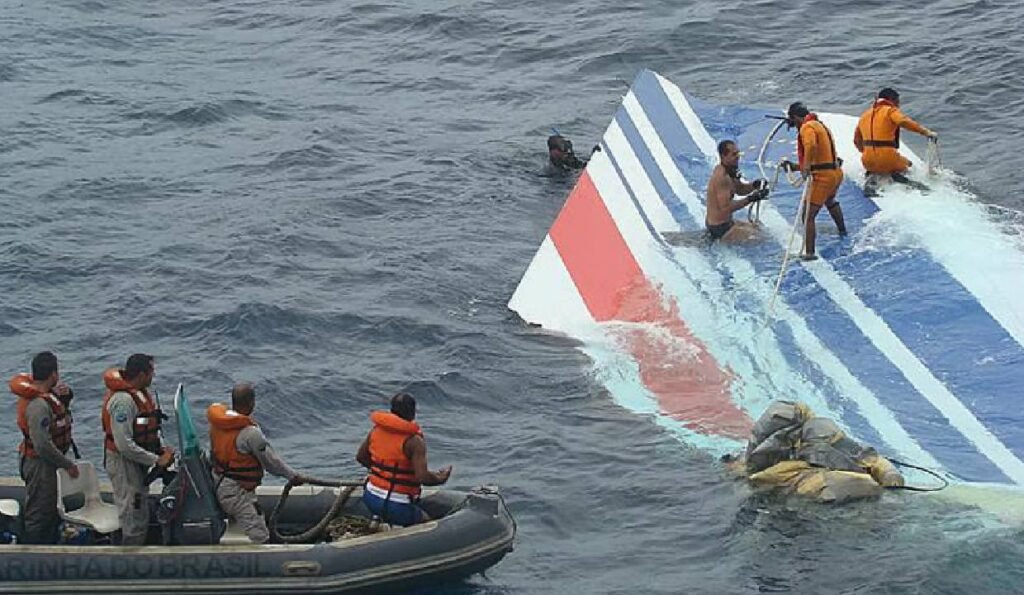
The wreckage of AF447 was not fully located until 2011 after an extensive deep-sea search operation nearly 4,000 meters below the Atlantic Ocean surface. Recovery of the flight data recorder and cockpit voice recorder proved crucial in reconstructing the sequence of events that led to the crash.

The disaster triggered major changes across the global aviation industry. Airlines and regulators revised pilot training programs to place greater emphasis on manual flying skills, high-altitude stall recovery, and automation management. Manufacturers also introduced modifications to pitot tube systems and operational procedures following the accident.

Both Airbus and Air France are expected to challenge the verdict before France’s highest appeals court, potentially extending legal proceedings even further. Airbus has already confirmed plans to appeal, while Air France had not publicly commented immediately after the judgment.

Leave a Comment

Subscribe to our Newsletter

Recent News