News
Civil Aviation
Pilot Training
Flight School Analysis
Aviation Jobs
Training
Services
About Us
Contact Us

Two U.S. Navy EA-18G Growlers Collide Mid-Air During Idaho Air Show; All 4 Survived

Picture of Aviation Today News Desk

Aviation Today News Desk

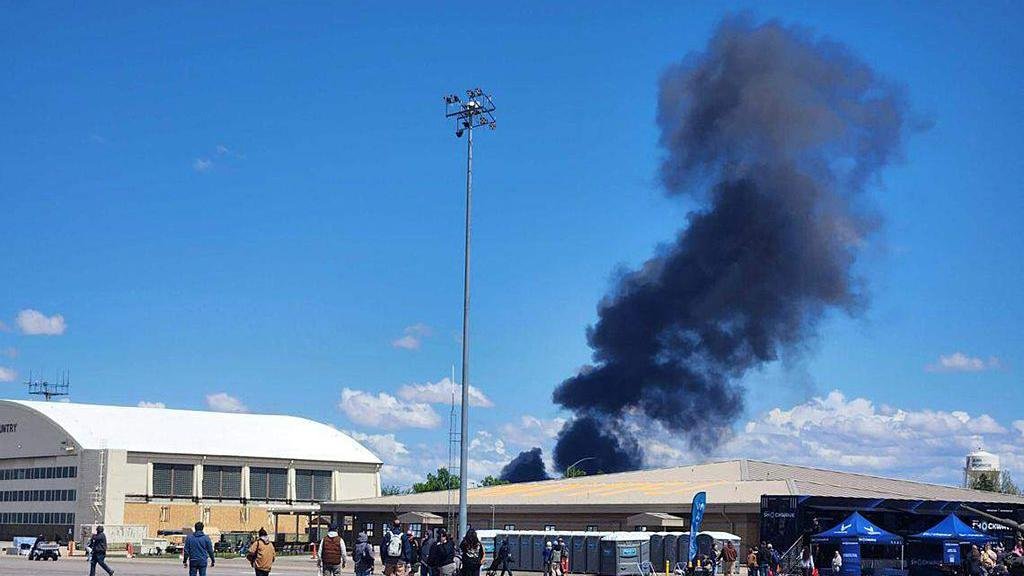
Two U.S. Navy EA-18G Growlers Collide Mid-Air During Idaho Air Show; All 4 Survived SEO DES: Mountain Home Air Force Base was locked down after the mid-air collision as officials canceled the air show and secured the crash site perimeter SOCIAL: Two U.S. Navy EA-18G Growler jets collided mid-air during the Gunfighter Skies Air Show near Mountain Home Air Force Base in Idaho on Sunday. All four crew members safely ejected before the aircraft crashed. The jets belonged to VAQ-129 and were performing an aerial demonstration when the collision occurred. Emergency crews responded immediately, while authorities locked down the base and launched an investigation. No civilian injuries were reported, and investigators are examining flight data and communications to determine the cause of the rare mid-air accident. Idaho, United States: Two U.S. Navy EA-18G Growler electronic warfare aircraft collided mid-air during an aerial demonstration at the Gunfighter Skies Air Show near Mountain Home Air Force Base in Idaho on Sunday, forcing all four crew members to eject before the jets crashed to the ground. The collision occurred at approximately 12:10 p.m. Mountain Daylight Time, around two miles from the air base during the final day of the two-day air show, according to U.S. Navy officials. The aircraft involved belonged to Electronic Attack Squadron 129 (VAQ-129), based at Naval Air Station Whidbey Island in Washington state. U.S. Pacific Fleet spokesperson Cmdr. Amelia Umayam confirmed that both aircraft were participating in a scheduled aerial demonstration when the incident took place. She said all four aircrew members ejected safely and survived the crash. “The incident is under investigation. More information will be released as it becomes available,” Umayam said. Videos recorded by spectators and widely circulated online captured the dramatic moment the two Growlers made contact in the air before spiraling downward. Footage showed debris falling from the aircraft as parachutes opened seconds later, confirming the successful ejection of the crews. Witnesses at the venue reported seeing four parachutes descending near the crash site. Emergency response teams, including firefighting crews and rescue helicopters, rushed to the area shortly after impact. The crash reportedly sparked a brush fire near State Highway 167, which authorities later closed for several days to secure the wreckage area and support the investigation. Mountain Home Air Force Base was temporarily locked down following the collision, while officials canceled the remainder of the air show. Local law enforcement and emergency management agencies established a large safety perimeter around the crash site. The EA-18G Growler is the U.S. Navy’s primary airborne electronic attack aircraft and is derived from the Boeing F/A-18 Super Hornet platform. The aircraft is designed for radar jamming, electronic surveillance and suppression of enemy air defenses. Each Growler typically carries a crew of two: a pilot and an electronic warfare officer. The aircraft involved were part of the Navy’s “Vikings” Growler demonstration team, one of the featured attractions at the Gunfighter Skies Air Show. The event marked the return of the air show after an eight-year gap. The last edition in 2018 ended in tragedy after a hang glider pilot was killed in a separate crash incident. The crews may have remained in controlled flight briefly after impact, giving them enough time to coordinate successful ejections. No civilian injuries or spectator casualties were reported. Investigators from the U.S. Navy are expected to examine flight data, maintenance records, pilot communications and video footage to determine the exact cause of the collision. While no official cause has been identified.
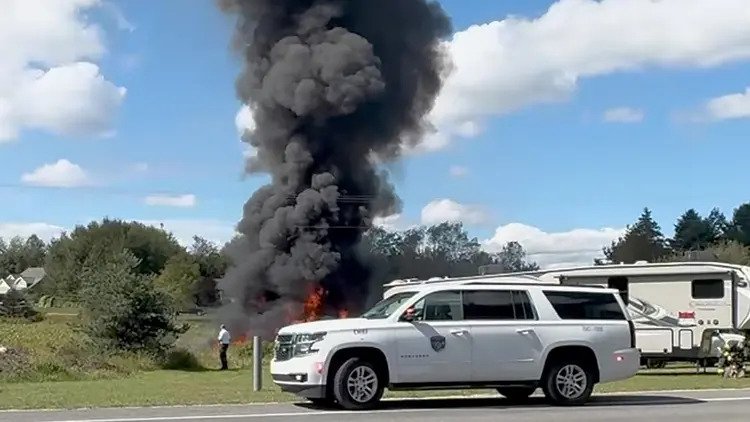
Image: Gulf News

Idaho, United States: Two U.S. Navy EA-18G Growler electronic warfare aircraft collided mid-air during an aerial demonstration at the Gunfighter Skies Air Show near Mountain Home Air Force Base in Idaho on Sunday, forcing all four crew members to eject before the jets crashed to the ground.

The collision occurred at approximately 12:10 p.m. Mountain Daylight Time, around two miles from the air base during the final day of the two-day air show, according to U.S. Navy officials. The aircraft involved belonged to Electronic Attack Squadron 129 (VAQ-129), based at Naval Air Station Whidbey Island in Washington state.

U.S. Pacific Fleet spokesperson Cmdr. Amelia Umayam confirmed that both aircraft were participating in a scheduled aerial demonstration when the incident took place. She said all four aircrew members ejected safely and survived the crash.

“The incident is under investigation. More information will be released as it becomes available,” Umayam said.

Videos recorded by spectators and widely circulated online captured the dramatic moment the two Growlers made contact in the air before spiraling downward. Footage showed debris falling from the aircraft as parachutes opened seconds later, confirming the successful ejection of the crews. Witnesses at the venue reported seeing four parachutes descending near the crash site.

Emergency response teams, including firefighting crews and rescue helicopters, rushed to the area shortly after impact. The crash reportedly sparked a brush fire near State Highway 167, which authorities later closed for several days to secure the wreckage area and support the investigation.

Mountain Home Air Force Base was temporarily locked down following the collision, while officials canceled the remainder of the air show. Local law enforcement and emergency management agencies established a large safety perimeter around the crash site.

The EA-18G Growler is the U.S. Navy’s primary airborne electronic attack aircraft and is derived from the Boeing F/A-18 Super Hornet platform. The aircraft is designed for radar jamming, electronic surveillance and suppression of enemy air defenses. Each Growler typically carries a crew of two: a pilot and an electronic warfare officer.

The aircraft involved were part of the Navy’s “Vikings” Growler demonstration team, one of the featured attractions at the Gunfighter Skies Air Show. The event marked the return of the air show after an eight-year gap. The last edition in 2018 ended in tragedy after a hang glider pilot was killed in a separate crash incident.

The crews may have remained in controlled flight briefly after impact, giving them enough time to coordinate successful ejections. No civilian injuries or spectator casualties were reported.

Investigators from the U.S. Navy are expected to examine flight data, maintenance records, pilot communications and video footage to determine the exact cause of the collision. While no official cause has been identified.

Leave a Comment

Subscribe to our Newsletter

Recent News