News
Civil Aviation
Pilot Training
Flight School Analysis
Aviation Jobs
Training
Services
About Us
Contact Us

Singapore Airlines Profit Drops 57.4% Amid Air India Losses & Missing Vistara Merger Gain

Picture of Aviation Today News Desk

Aviation Today News Desk

Singapore: Singapore Airlines (SIA) Group reported a sharp 57.4 per cent decline in annual net profit for the financial year ended March 31, 2026, as mounting losses at Air India and the absence of a one-time accounting gain from the Vistara merger weighed heavily on the carrier’s bottom line. The airline group posted a net profit of SGD 1.184 billion for FY2025/26, down from SGD 2.778 billion recorded a year earlier. Despite the steep fall in earnings, SIA’s core airline operations remained strong, with the group posting record revenue and higher operating profit driven by sustained passenger demand and network expansion. According to SIA’s earnings report, the biggest factor behind the profit decline was the absence of the SGD 1.098 billion non-cash accounting gain booked in November 2024 following the completion of the Air India-Vistara merger. The previous year’s results had been significantly boosted by that one-off gain after SIA’s stake in Vistara was converted into a 25.1 per cent shareholding in the enlarged Air India Group. At the same time, SIA swung from reporting profits from associated companies last year to posting a SGD 846 million share of losses in FY26, mainly due to Air India’s worsening financial performance. The airline said this year’s accounts reflected a full year of Air India losses, compared to only four months in the previous financial year after the merger completion. Financial disclosures from Singapore Airlines indicated that Air India Group, comprising Air India and Air India Express, recorded losses of approximately SGD 3.56 billion, equivalent to around USD 2.8 billion or more than ₹26,000 crore during FY2025/26. Some reports estimated the losses could be even higher at nearly ₹28,300 crore depending on accounting adjustments and currency conversion methods. The losses mark Air India’s largest annual financial setback since the Tata Group reacquired the airline in 2022. Air India has not yet officially released its standalone FY26 financial statements. Singapore Airlines attributed Air India’s financial pressure to multiple operational and geopolitical challenges, including elevated jet fuel prices, Middle East airspace restrictions, supply-chain disruptions, aircraft delivery delays, and the continued closure of Pakistani airspace for Indian airlines. These factors forced Air India to reroute several long-haul flights, increasing fuel burn and operating costs. The impact of the Iran conflict and the closure of the Strait of Hormuz also emerged as a major concern for SIA itself. The airline warned that higher jet fuel prices resulting from the conflict are expected to weigh more heavily on earnings in the coming fiscal year because fuel costs are reflected on a lagged basis. Air India recently announced significant reductions to its international operations between June and August 2026, including suspending services on several overseas routes and reducing frequencies to destinations in Europe and North America. Routes affected include Delhi-Chicago, Mumbai-New York, and Delhi-Shanghai, while services to Paris, Milan, and Rome are also being reduced. Despite the financial turbulence, Singapore Airlines reiterated its long-term commitment to Air India and described the investment as a “core component” of its multi-hub strategy. The group said its partnership with Tata Sons provides direct access to one of the world’s fastest-growing aviation markets while complementing SIA’s Singapore hub operations. SIA stated that Air India continues to make progress in its fleet renewal and aircraft retrofit programme, customer experience initiatives, and operational performance improvements despite the difficult environment. While net profit fell sharply, Singapore Airlines’ operational performance remained resilient. Group revenue rose five per cent year-on-year to a record SGD 20.55 billion, supported by strong passenger demand, higher yields, and robust travel flows across Asia and Europe. Operating profit climbed 39 per cent to approximately SGD 2.52 billion, and the airline carried a record 42.4 million passengers during the year. The airline also maintained expansion plans despite industry pressures. Reuters reported that SIA intends to continue adding capacity and launching new services, including flights connecting Singapore and Madrid via Barcelona, while increasing frequencies to Manchester, Milan, Munich, and London Gatwick.
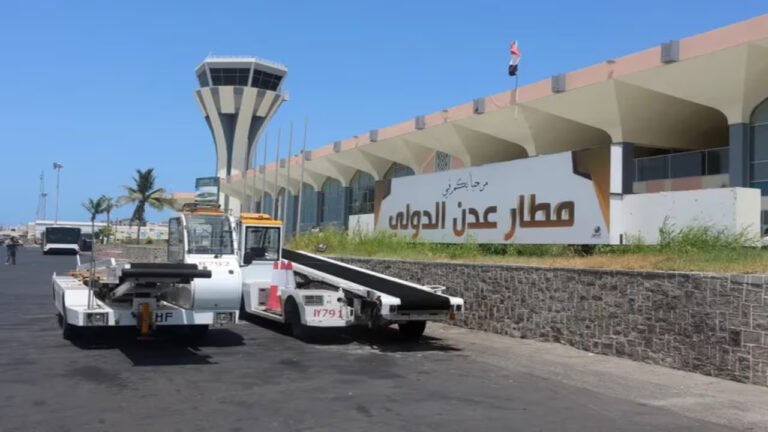
Image: Singapore Airlines

Singapore: Singapore Airlines (SIA) Group reported a sharp 57.4 per cent decline in annual net profit for the financial year ended March 31, 2026, as mounting losses at Air India and the absence of a one-time accounting gain from the Vistara merger weighed heavily on the carrier’s bottom line.

The airline group posted a net profit of SGD 1.184 billion for FY2025/26, down from SGD 2.778 billion recorded a year earlier. Despite the steep fall in earnings, SIA’s core airline operations remained strong, with the group posting record revenue and higher operating profit driven by sustained passenger demand and network expansion.

According to SIA’s earnings report, the biggest factor behind the profit decline was the absence of the SGD 1.098 billion non-cash accounting gain booked in November 2024 following the completion of the Air India-Vistara merger. The previous year’s results had been significantly boosted by that one-off gain after SIA’s stake in Vistara was converted into a 25.1 per cent shareholding in the enlarged Air India Group.

At the same time, SIA swung from reporting profits from associated companies last year to posting a SGD 846 million share of losses in FY26, mainly due to Air India’s worsening financial performance. The airline said this year’s accounts reflected a full year of Air India losses, compared to only four months in the previous financial year after the merger completion.

Financial disclosures from Singapore Airlines indicated that Air India Group, comprising Air India and Air India Express, recorded losses of approximately SGD 3.56 billion, equivalent to around USD 2.8 billion or more than ₹26,000 crore during FY2025/26. Some reports estimated the losses could be even higher at nearly ₹28,300 crore depending on accounting adjustments and currency conversion methods.

The losses mark Air India’s largest annual financial setback since the Tata Group reacquired the airline in 2022. Air India has not yet officially released its standalone FY26 financial statements.

Singapore Airlines attributed Air India’s financial pressure to multiple operational and geopolitical challenges, including elevated jet fuel prices, Middle East airspace restrictions, supply-chain disruptions, aircraft delivery delays, and the continued closure of Pakistani airspace for Indian airlines. These factors forced Air India to reroute several long-haul flights, increasing fuel burn and operating costs.

The impact of the Iran conflict and the closure of the Strait of Hormuz also emerged as a major concern for SIA itself. The airline warned that higher jet fuel prices resulting from the conflict are expected to weigh more heavily on earnings in the coming fiscal year because fuel costs are reflected on a lagged basis.

Air India recently announced significant reductions to its international operations between June and August 2026, including suspending services on several overseas routes and reducing frequencies to destinations in Europe and North America. Routes affected include Delhi-Chicago, Mumbai-New York, and Delhi-Shanghai, while services to Paris, Milan, and Rome are also being reduced.

Despite the financial turbulence, Singapore Airlines reiterated its long-term commitment to Air India and described the investment as a “core component” of its multi-hub strategy. The group said its partnership with Tata Sons provides direct access to one of the world’s fastest-growing aviation markets while complementing SIA’s Singapore hub operations.

SIA stated that Air India continues to make progress in its fleet renewal and aircraft retrofit programme, customer experience initiatives, and operational performance improvements despite the difficult environment.

While net profit fell sharply, Singapore Airlines’ operational performance remained resilient. Group revenue rose five per cent year-on-year to a record SGD 20.55 billion, supported by strong passenger demand, higher yields, and robust travel flows across Asia and Europe. Operating profit climbed 39 per cent to approximately SGD 2.52 billion, and the airline carried a record 42.4 million passengers during the year.

The airline also maintained expansion plans despite industry pressures. Reuters reported that SIA intends to continue adding capacity and launching new services, including flights connecting Singapore and Madrid via Barcelona, while increasing frequencies to Manchester, Milan, Munich, and London Gatwick.


Leave a Comment

Subscribe to our Newsletter

Recent News