
Gauteng, South Africa: South Africa’s aviation safety authorities have raised fresh concerns over the state of general aviation and pilot training operations after a sharp rise in fatal accidents and fatalities during the 2025/26 financial year, despite an overall decline in total accidents.
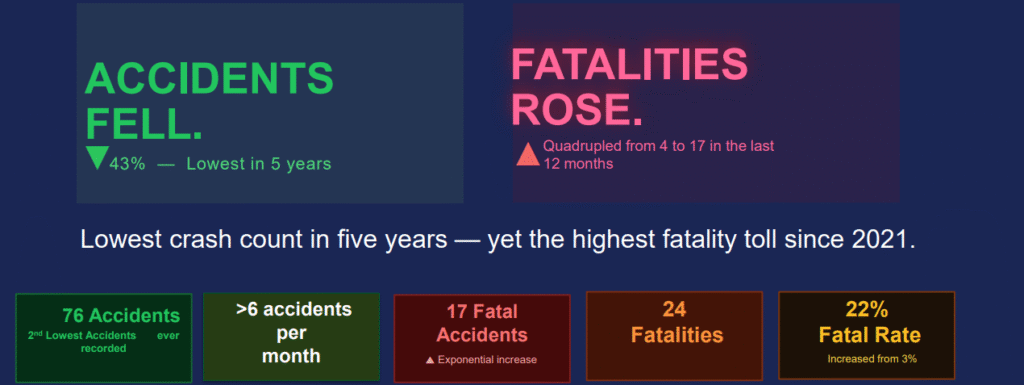
Data presented by the Accident and Incident Investigations Division (AIID) of the South African Civil Aviation Authority at the NAC 2026 conference in Gauteng revealed that while total accidents fell to 76, the second-lowest figure ever recorded fatal accidents surged from four to 17 within a year, with fatalities climbing to 24, the highest toll since 2021.
The findings paint a troubling picture for Africa’s flight training and general aviation environment, where safety experts say human factors, weak operational oversight and weather-related decision-making failures continue to expose student pilots and low-hour aviators to elevated risk.
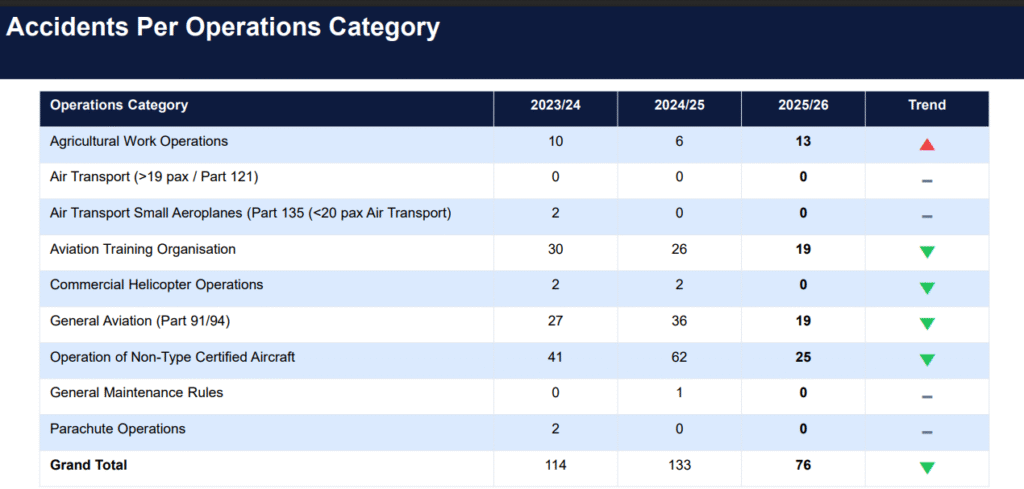
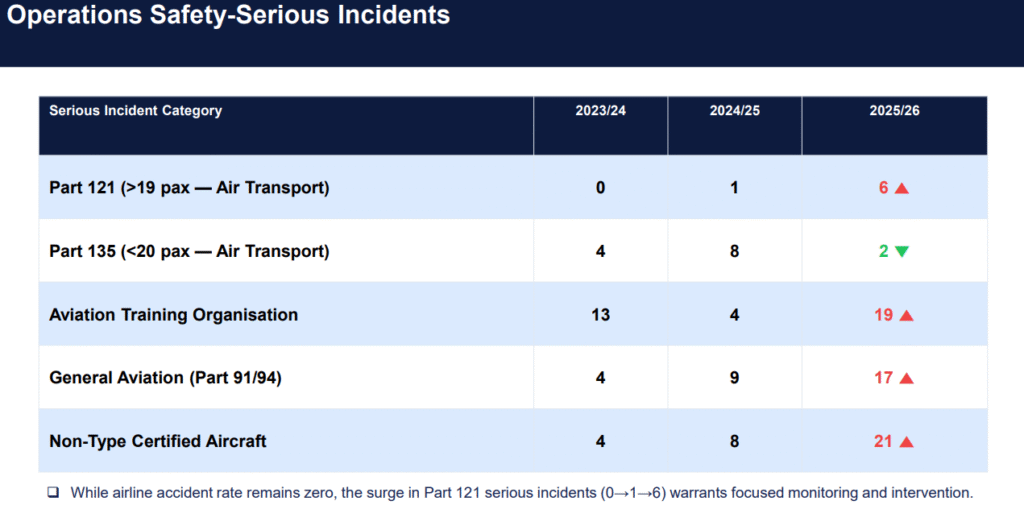
According to the AIID data, Aviation Training Organisations (ATOs) recorded 19 accidents during 2025/26, down from 26 the previous year and 30 in 2023/24. However, training-related serious incidents rose dramatically from four in 2024/25 to 19 in 2025/26, signalling growing operational stress within the sector.
The report identified flight crew and pilot actions as the leading causal factor in 55% of accidents investigated, reinforcing concerns about pilot judgment, risk assessment and airmanship standards.
AIID Executive Themba Thabethe warned that the industry’s declining accident numbers should not obscure the underlying severity of recent crashes, particularly in general aviation and training environments where fatal outcomes are rising disproportionately.
The presentation highlighted that South Africa averaged more than six accidents per month during the reporting period, while the fatal accident rate increased sharply from 3% to 22%.
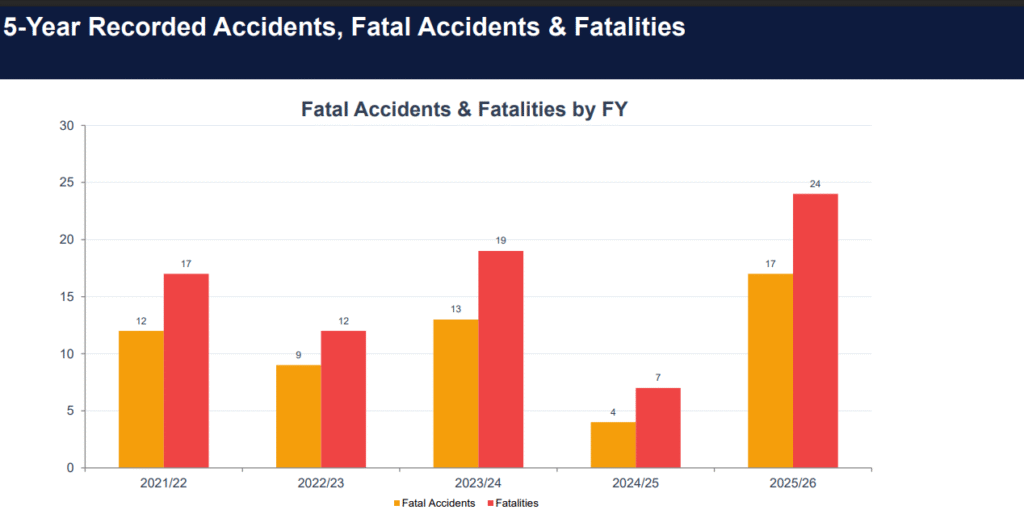
Investigators said the most persistent safety threats remain concentrated in general aviation, non-type certified aircraft and training operations segments that dominate pilot development pipelines across Africa.
The report also showed that non-type certified aircraft and general aviation categories continued to represent the highest-risk operational areas.
A series of recent accident case studies presented by AIID revealed recurring patterns involving deteriorating weather, continuation bias, inadequate safety management oversight and pilots pressing into instrument meteorological conditions despite warnings.
On 9 June 2025 an accident involving a Piper PA-28-180 operating under Part 91 rules ended in a crash landing near Greytown after pilots departed despite severe weather warnings issued for KwaZulu-Natal. A related aircraft in the formation flight was destroyed, killing three people, including a student pilot. Investigators identified spatial disorientation and poor go/no-go decision-making as central factors.
Another fatal October 2025 accident involving a Sling 2 aircraft operated by an ATO highlighted concerns surrounding student-level endorsements and weather risk assessment after the pilot encountered deteriorating conditions over mountainous terrain in KwaZulu-Natal. The pilot was killed after the aircraft crashed near Boston in the Midlands.
AIID said the investigations demonstrated “cross-cutting lessons” affecting the wider training environment, including poor pre-flight risk culture, inadequate Safety Management Systems (SMS) oversight and pilots continuing flights incrementally into worsening conditions instead of diverting.
The authority further noted that visual meteorological conditions at departure often created a false sense of security for inexperienced pilots, particularly in terrain-heavy regions where weather conditions deteriorate rapidly.
While the airline sector maintained a zero fatal accident rate, investigators cautioned that serious incidents involving larger commercial operations under Part 121 regulations increased from one to six cases during the year, warranting “focused monitoring and intervention.”
The report nevertheless contrasted the challenges facing general aviation with South Africa’s strong airline safety record. The country has not experienced a fatal airline accident on its soil in more than 59 years, while no fatal accident involving a South African airline operator has occurred in over 39 years.
International benchmarking presented by AIID showed South Africa’s fatal accident average of approximately 11% remains broadly comparable with Australia and Canada. However, investigators stressed that the sharp rise in fatal accidents during 2025/26 demands “absolute improvement.”
Safety officials said the data highlights a critical challenge facing Africa’s aviation growth ambitions: expanding pilot training capacity while maintaining robust operational discipline and oversight standards.
The AIID concluded that sustained accident reduction will depend on strengthening Safety Management Systems across general aviation and training operations, improving pilot decision-making and continuing aggressive implementation of safety recommendations.