News
Civil Aviation
Pilot Training
Flight School Analysis
Aviation Jobs
Training
Services
About Us
Contact Us

Pilot & Co-Pilot Arrested After Probe Finds Errors In Bolivian Military Plane Crash

Picture of Aviation Today News Desk

Aviation Today News Desk

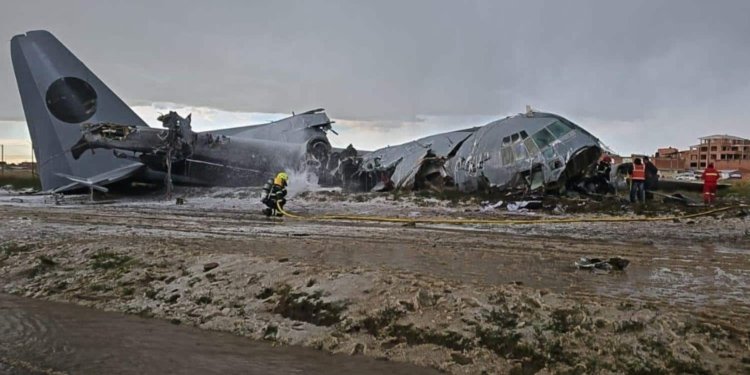
El Alto, Bolivia: Bolivian authorities have arrested the pilot and co-pilot of a Bolivian Air Force Lockheed C-130H Hercules following an official investigation that concluded the February 2026 crash near La Paz was preventable and largely linked to operational errors during landing. The aircraft crashed on February 27, 2026, while attempting to land at El Alto International Airport, after completing a domestic flight from Santa Cruz. During landing in adverse weather, the aircraft failed to decelerate on the runway, veered off the surface, breached the airport perimeter, and ploughed into a busy roadway, striking multiple vehicles before breaking apart in a densely populated area. The crash resulted in 24 fatalities and at least 43 injuries, with the majority of victims on the ground. Among the dead were civilians, including passengers in public transport vehicles hit by the aircraft. Several crew members were also injured, making it one of Bolivia’s deadliest aviation disasters in recent decades. Initial reports had indicated a lower death toll, but the number rose significantly as rescue teams recovered victims from the wreckage and surrounding impact zone. The situation on the ground quickly descended into chaos after it emerged that the aircraft was transporting a large consignment of newly printed banknotes for the Central Bank of Bolivia. The impact scattered currency across the crash site, drawing crowds of civilians who rushed to collect the money. Authorities deployed police and military units, including the use of tear gas, to secure the area and allow emergency responders to operate. Officials later declared the banknotes invalid, as they had not yet entered circulation, and subsequently destroyed recovered cash. A formal investigation by the Bolivian Air Force, the findings of which were released on April 30, 2026, identified a chain of operational failures rather than a single-point cause. Investigators determined that adverse weather conditions, including a wet runway and reduced braking efficiency, were contributing factors but not the primary cause. Instead, the report placed significant emphasis on pilot handling during the landing phase. According to the findings, the aircraft executed an improper landing sequence, touching down with the nose gear before the main landing gear, a critical procedural error that compromised braking effectiveness and aircraft stability. This technique reduced aerodynamic drag and delayed the full deployment of braking systems, significantly increasing stopping distance on an already wet runway. The report further highlighted inadequate coordination and communication with air traffic control, which may have affected situational awareness during the final approach and landing rollout. Investigators also pointed to failure to execute a go-around despite unstable landing conditions, a decision that could have prevented the accident altogether. Additionally, the probe noted that standard landing protocols and safety margins were not maintained, particularly given the weather conditions. The combination of these factors resulted in a runway excursion at high speed, leaving the crew unable to regain control before the aircraft exited the airfield boundary. Crucially, investigators concluded that the crash was preventable, stating that proper adherence to established landing procedures and timely decision-making would likely have avoided the accident. Based on these findings, Bolivian prosecutors issued arrest warrants for the pilot and co-pilot on April 30, with both taken into custody on May 1, 2026, following questioning. The two are currently being held in pre-trial detention and face charges of involuntary manslaughter, with authorities alleging that negligent handling of the aircraft and failure to follow standard operating procedures directly contributed to the loss of life.
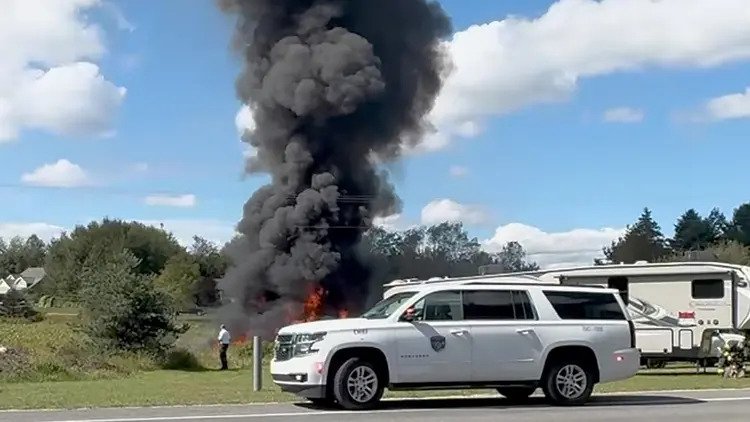
Image: WION

El Alto, Bolivia: Bolivian authorities have arrested the pilot and co-pilot of a Bolivian Air Force Lockheed C-130H Hercules following an official investigation that concluded the February 2026 crash near La Paz was preventable and largely linked to operational errors during landing.

The aircraft crashed on February 27, 2026, while attempting to land at El Alto International Airport, after completing a domestic flight from Santa Cruz. During landing in adverse weather, the aircraft failed to decelerate on the runway, veered off the surface, breached the airport perimeter, and ploughed into a busy roadway, striking multiple vehicles before breaking apart in a densely populated area.

The crash resulted in 24 fatalities and at least 43 injuries, with the majority of victims on the ground. Among the dead were civilians, including passengers in public transport vehicles hit by the aircraft. Several crew members were also injured, making it one of Bolivia’s deadliest aviation disasters in recent decades. Initial reports had indicated a lower death toll, but the number rose significantly as rescue teams recovered victims from the wreckage and surrounding impact zone.

The situation on the ground quickly descended into chaos after it emerged that the aircraft was transporting a large consignment of newly printed banknotes for the Central Bank of Bolivia. The impact scattered currency across the crash site, drawing crowds of civilians who rushed to collect the money. Authorities deployed police and military units, including the use of tear gas, to secure the area and allow emergency responders to operate. Officials later declared the banknotes invalid, as they had not yet entered circulation, and subsequently destroyed recovered cash.

A formal investigation by the Bolivian Air Force, the findings of which were released on April 30, 2026, identified a chain of operational failures rather than a single-point cause. Investigators determined that adverse weather conditions, including a wet runway and reduced braking efficiency, were contributing factors but not the primary cause. Instead, the report placed significant emphasis on pilot handling during the landing phase.

According to the findings, the aircraft executed an improper landing sequence, touching down with the nose gear before the main landing gear, a critical procedural error that compromised braking effectiveness and aircraft stability. This technique reduced aerodynamic drag and delayed the full deployment of braking systems, significantly increasing stopping distance on an already wet runway.

The report further highlighted inadequate coordination and communication with air traffic control, which may have affected situational awareness during the final approach and landing rollout. Investigators also pointed to failure to execute a go-around despite unstable landing conditions, a decision that could have prevented the accident altogether.

Additionally, the probe noted that standard landing protocols and safety margins were not maintained, particularly given the weather conditions. The combination of these factors resulted in a runway excursion at high speed, leaving the crew unable to regain control before the aircraft exited the airfield boundary.

Crucially, investigators concluded that the crash was preventable, stating that proper adherence to established landing procedures and timely decision-making would likely have avoided the accident.

Based on these findings, Bolivian prosecutors issued arrest warrants for the pilot and co-pilot on April 30, with both taken into custody on May 1, 2026, following questioning. The two are currently being held in pre-trial detention and face charges of involuntary manslaughter, with authorities alleging that negligent handling of the aircraft and failure to follow standard operating procedures directly contributed to the loss of life.

Leave a Comment

Subscribe to our Newsletter

Recent News