News
Civil Aviation
Pilot Training
Flight School Analysis
Aviation Jobs
Training
Services
About Us
Contact Us

IATA: Air Cargo Demand Surges 11.2% In February As Global Trade Momentum Strengthens

Picture of Aviation Today News Desk

Aviation Today News Desk

Montreal, Canada: Global air cargo markets extended their strong start to 2026, with demand rising sharply in February, reflecting sustained recovery in global trade flows, improving industrial activity, and resilient supply chain demand. According to the latest data released by the International Air Transport Association, total air cargo demand measured in cargo tonne-kilometers (CTK) increased by 11.2% year-on-year, marking a significant acceleration compared to January’s already solid performance. The February growth builds on a positive start to the year, when demand rose 5.6% year-on-year in January, highlighting strengthening momentum across global freight markets. Capacity, measured in available cargo tonne-kilometers (ACTK), also expanded in February, reflecting airlines’ efforts to match rising demand, though supply growth continued to lag behind demand in several regions. IATA attributed the strong February performance to multiple macroeconomic and industry factors: Global trade expansion continued to support cargo volumes, with goods trade showing steady growth in late 2025. Manufacturing activity improved, with Purchasing Managers’ Index (PMI) levels remaining around or above the 50-point expansion threshold, indicating strengthening industrial output. E-commerce and time-sensitive shipments remained key contributors to sustained cargo demand. Jet fuel prices showed relative easing earlier in the year, providing some operational relief to airlines. Despite the strong growth, IATA cautioned that the operating environment remains complex, shaped by geopolitical tensions, shifting trade policies, and supply chain uncertainties. IATA Director General Willie Walsh noted that while air cargo continues to demonstrate resilience, global supply chain disruptions and geopolitical developments particularly in the Middle East could weigh on performance in the coming months. Air cargo growth in February remained uneven across regions, continuing trends observed in January: Asia-Pacific maintained its position as the primary growth engine, supported by strong export activity and manufacturing demand. Europe recorded steady gains, reflecting improving intra-regional and international trade flows. Middle East carriers continued to benefit from strategic hub positioning, though capacity expansion remained high. Africa again posted the fastest growth rates, albeit from a smaller base. North America lagged behind, with some markets continuing to face demand softness and trade-related challenges. The February surge reinforces expectations of continued growth in 2026, following a record performance in 2025, when global air cargo demand rose 3.4% year-on-year, reaching historic volume levels. IATA projects that airlines could carry over 71 million tonnes of cargo in 2026, supported by structural drivers such as e-commerce expansion and demand for high-value, time-critical goods. However, the association emphasized that growth may not be linear. Trade policy uncertainty, geopolitical risks, and capacity constraints are expected to remain key variables influencing the market trajectory. February’s double-digit growth underscores the resilience and strategic importance of air cargo in the global logistics ecosystem. While demand fundamentals remain strong, the industry continues to operate in a volatile environment where geopolitical developments and economic shifts could quickly reshape supply-demand dynamics.
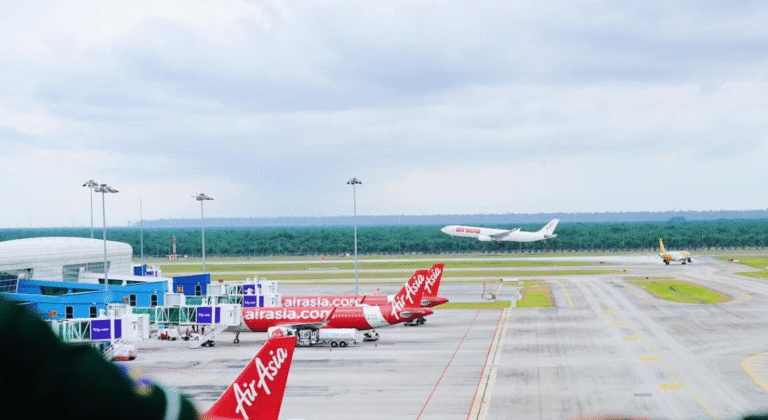
Image: Cathay Pacific

Montreal, Canada: Global air cargo markets extended their strong start to 2026, with demand rising sharply in February, reflecting sustained recovery in global trade flows, improving industrial activity, and resilient supply chain demand.

According to the latest data released by the International Air Transport Association, total air cargo demand measured in cargo tonne-kilometers (CTK) increased by 11.2% year-on-year, marking a significant acceleration compared to January’s already solid performance.

The February growth builds on a positive start to the year, when demand rose 5.6% year-on-year in January, highlighting strengthening momentum across global freight markets.

Capacity, measured in available cargo tonne-kilometers (ACTK), also expanded in February, reflecting airlines’ efforts to match rising demand, though supply growth continued to lag behind demand in several regions.

IATA attributed the strong February performance to multiple macroeconomic and industry factors:

  • Global trade expansion continued to support cargo volumes, with goods trade showing steady growth in late 2025.
  • Manufacturing activity improved, with Purchasing Managers’ Index (PMI) levels remaining around or above the 50-point expansion threshold, indicating strengthening industrial output.
  • E-commerce and time-sensitive shipments remained key contributors to sustained cargo demand.
  • Jet fuel prices showed relative easing earlier in the year, providing some operational relief to airlines.

Despite the strong growth, IATA cautioned that the operating environment remains complex, shaped by geopolitical tensions, shifting trade policies, and supply chain uncertainties.

IATA Director General Willie Walsh noted that while air cargo continues to demonstrate resilience, global supply chain disruptions and geopolitical developments particularly in the Middle East could weigh on performance in the coming months.

Air cargo growth in February remained uneven across regions, continuing trends observed in January:

  • Asia-Pacific maintained its position as the primary growth engine, supported by strong export activity and manufacturing demand.
  • Europe recorded steady gains, reflecting improving intra-regional and international trade flows.
  • Middle East carriers continued to benefit from strategic hub positioning, though capacity expansion remained high.
  • Africa again posted the fastest growth rates, albeit from a smaller base.
  • North America lagged behind, with some markets continuing to face demand softness and trade-related challenges.

The February surge reinforces expectations of continued growth in 2026, following a record performance in 2025, when global air cargo demand rose 3.4% year-on-year, reaching historic volume levels.

IATA projects that airlines could carry over 71 million tonnes of cargo in 2026, supported by structural drivers such as e-commerce expansion and demand for high-value, time-critical goods.

However, the association emphasized that growth may not be linear. Trade policy uncertainty, geopolitical risks, and capacity constraints are expected to remain key variables influencing the market trajectory.

February’s double-digit growth underscores the resilience and strategic importance of air cargo in the global logistics ecosystem. While demand fundamentals remain strong, the industry continues to operate in a volatile environment where geopolitical developments and economic shifts could quickly reshape supply-demand dynamics.

Leave a Comment

Subscribe to our Newsletter

Recent News