News
Civil Aviation
Pilot Training
Flight School Analysis
Aviation Jobs
Training
Services
About Us
Contact Us

Air India Flight To San Francisco Returns To Delhi After Mid-Air Technical Malfunction

Picture of Aviation Today News Desk

Aviation Today News Desk

Delhi, India: An Air India Boeing 777-300ER operating flight AI173 from Delhi to San Francisco was forced to return to Delhi after suffering a technical malfunction mid-flight, remaining airborne for more than eight hours before landing safely at Indira Gandhi International Airport. The incident occurred on May 27 and involved approximately 230 passengers onboard the long-haul flight bound for the United States. According to airline officials and flight-tracking data, the aircraft had already spent over three hours in the air and entered Chinese airspace when the crew decided to discontinue the journey and return to Delhi in accordance with safety procedures. Initial reports stated that the issue involved the aircraft’s Traffic Collision Avoidance System (TCAS), a critical airborne safety system designed to prevent mid-air collisions by enabling aircraft to electronically detect and communicate with nearby traffic. The system operates independently of ground-based air traffic control and is considered mandatory for certain long-haul international operations, including trans-Pacific and North Atlantic routes. While Air India did not officially disclose the exact nature of the malfunction in its initial public statement, it is suspected that the aircraft experienced problems linked to the TCAS equipment during the flight. Some aviation reports and social media aviation monitoring pages further claimed that both TCAS channels onboard the aircraft became unavailable, though the airline has not publicly confirmed those specific details. Flight-tracking platforms showed the Boeing 777-300ER reversing course while over Chinese airspace before commencing the lengthy return sector to Delhi. Due to the aircraft’s weight, fuel load, and operational requirements for a safe landing, the jet remained airborne for several additional hours before touchdown. Air India confirmed that the aircraft landed safely and would undergo a detailed technical inspection in line with the carrier’s maintenance and safety protocols. The airline also stated that alternative arrangements were made for affected passengers, including hotel accommodation, refreshments, rebooking support, and rescheduling options. “The aircraft landed safely and will undergo technical inspection in line with Air India’s safety standards,” the airline said in its statement while expressing regret over the inconvenience caused to passengers. No injuries were reported during the incident, and passengers were safely deboarded after the aircraft’s arrival back in Delhi.
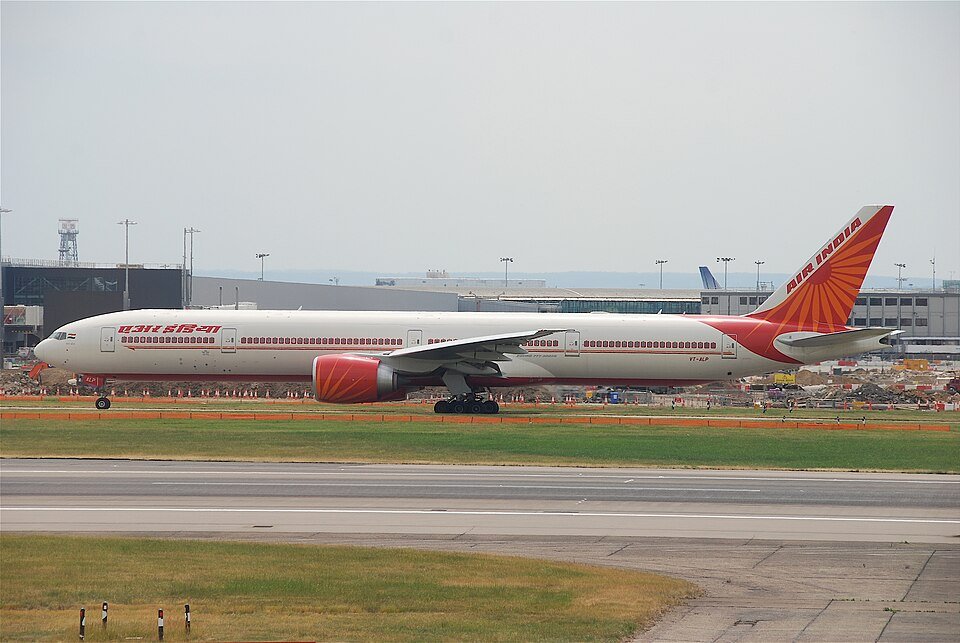
Image: Aero Icarus (Flickr)

Delhi, India: An Air India Boeing 777-300ER operating flight AI173 from Delhi to San Francisco was forced to return to Delhi after suffering a technical malfunction mid-flight, remaining airborne for more than eight hours before landing safely at Indira Gandhi International Airport.

The incident occurred on May 27 and involved approximately 230 passengers onboard the long-haul flight bound for the United States. According to airline officials and flight-tracking data, the aircraft had already spent over three hours in the air and entered Chinese airspace when the crew decided to discontinue the journey and return to Delhi in accordance with safety procedures.

Initial reports stated that the issue involved the aircraft’s Traffic Collision Avoidance System (TCAS), a critical airborne safety system designed to prevent mid-air collisions by enabling aircraft to electronically detect and communicate with nearby traffic. The system operates independently of ground-based air traffic control and is considered mandatory for certain long-haul international operations, including trans-Pacific and North Atlantic routes.

While Air India did not officially disclose the exact nature of the malfunction in its initial public statement, it is suspected that the aircraft experienced problems linked to the TCAS equipment during the flight. Some aviation reports and social media aviation monitoring pages further claimed that both TCAS channels onboard the aircraft became unavailable, though the airline has not publicly confirmed those specific details.

Flight-tracking platforms showed the Boeing 777-300ER reversing course while over Chinese airspace before commencing the lengthy return sector to Delhi. Due to the aircraft’s weight, fuel load, and operational requirements for a safe landing, the jet remained airborne for several additional hours before touchdown.

Air India confirmed that the aircraft landed safely and would undergo a detailed technical inspection in line with the carrier’s maintenance and safety protocols. The airline also stated that alternative arrangements were made for affected passengers, including hotel accommodation, refreshments, rebooking support, and rescheduling options.

“The aircraft landed safely and will undergo technical inspection in line with Air India’s safety standards,” the airline said in its statement while expressing regret over the inconvenience caused to passengers. No injuries were reported during the incident, and passengers were safely deboarded after the aircraft’s arrival back in Delhi.


Leave a Comment

Subscribe to our Newsletter

Recent News