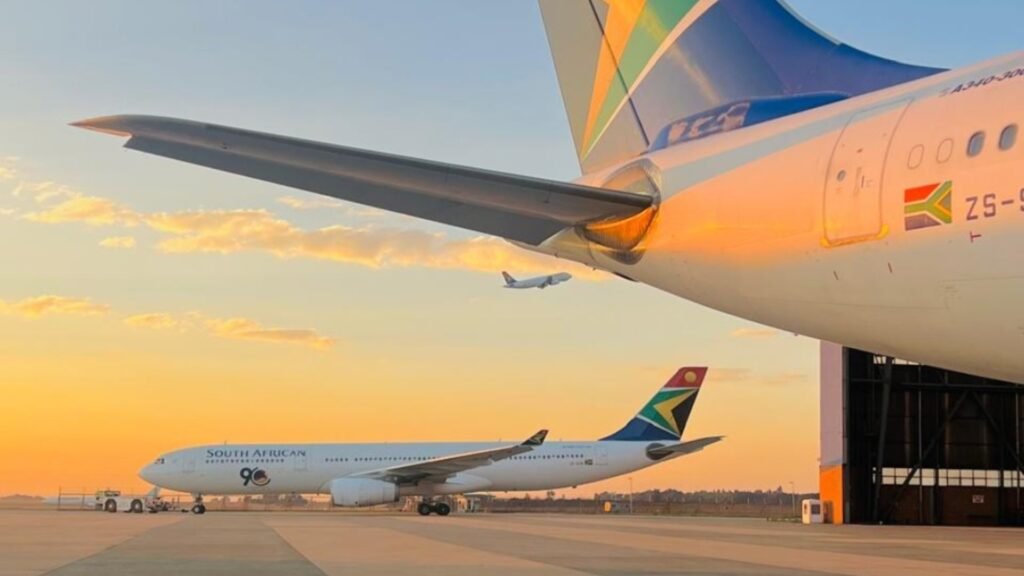
Cape Town, South Africa: South African Airways (SAA) is facing mounting scrutiny after allegations emerged that the airline delayed reporting a serious fuel emergency involving two flights at Cape Town International Airport, prompting calls for a Parliamentary inquiry into aviation safety oversight in South Africa.
The controversy centres on SAA flights SA313 and SA327, which were affected by severe weather conditions over Cape Town on 11 May 2026. According to reports, the airline allegedly took eight days to notify the South African Civil Aviation Authority (SACAA) about the incidents, despite regulations requiring such events to be reported within 72 hours.
The issue has triggered criticism from South Africa’s opposition Democratic Alliance (DA), which has formally requested an urgent hearing before Parliament’s Portfolio Committee on Transport. The party said the delay raises concerns about SAA’s safety management systems, regulatory compliance, and transparency.
Chris Hunsinger, Democratic Alliance spokesperson on transport, said the incident reflects what he described as a broader pattern of failures within the country’s aviation oversight framework. He warned that repeated operational incidents, delayed reporting, and questions surrounding accountability were eroding public confidence in aviation safety.
According to aviation sources cited in local reports, flight SA313, operated by an Airbus A320 from Johannesburg to Cape Town, encountered severe weather during its arrival into Cape Town amid gale-force north-westerly winds, heavy rain, low cloud, and dangerous windshear conditions. The aircraft reportedly conducted a missed approach after receiving onboard windshear alerts.
Pilot and aviation analyst Duncan Gillespie stated that a second landing attempt at Cape Town would likely have left the aircraft without sufficient reserves to divert safely to its nominated alternate airport, George Airport. The aircraft subsequently diverted to George, but deteriorating weather conditions there allegedly prevented a safe landing.
The aircraft later continued to Gqeberha, where reports claim it landed with fuel reserves below internationally accepted minimum levels. Gillespie alleged the aircraft may have landed with less than 15 minutes of fuel remaining. Under international aviation regulations, commercial aircraft are generally expected to land with approximately 30 minutes of final reserve fuel, and crews are normally required to declare a fuel emergency if projected landing fuel falls below that threshold.
Questions have also been raised over whether the crew declared a formal “Mayday Fuel” emergency during the incident. Gillespie noted there was no visible indication on public flight-tracking systems that the aircraft had transmitted the emergency transponder code commonly associated with a Mayday declaration.
SAA spokesperson Mphilo Dlamini did not directly address questions regarding the alleged fuel emergency, remaining fuel levels after landing, or whether the crew had declared an emergency. Instead, the airline stated that severe weather conditions affected operations across the Western Cape on 11 May and maintained that SAA followed all required aviation safety procedures and reporting protocols.
The SACAA had also not publicly responded to detailed media questions at the time several reports were published.
The DA said it intends summoning SAA, SACAA, Air Traffic and Navigation Services (ATNS), and the Department of Transport before Parliament to explain the delayed reporting, oversight concerns, and broader operational issues affecting South African aviation. The party also highlighted ongoing problems within ATNS, including the suspension of 326 instrument flight procedures.
The DA further pointed to concerns over regulatory independence, arguing that SACAA investigates entities operating under the same government department, potentially creating conflicts of interest in aviation oversight.