News
Civil Aviation
Pilot Training
Flight School Analysis
Aviation Jobs
Training
Services
About Us
Contact Us

Air France Boeing 777 Paris–Chad Flight Returns To Paris After Mid-Air Emergency

Picture of Aviation Today News Desk

Aviation Today News Desk

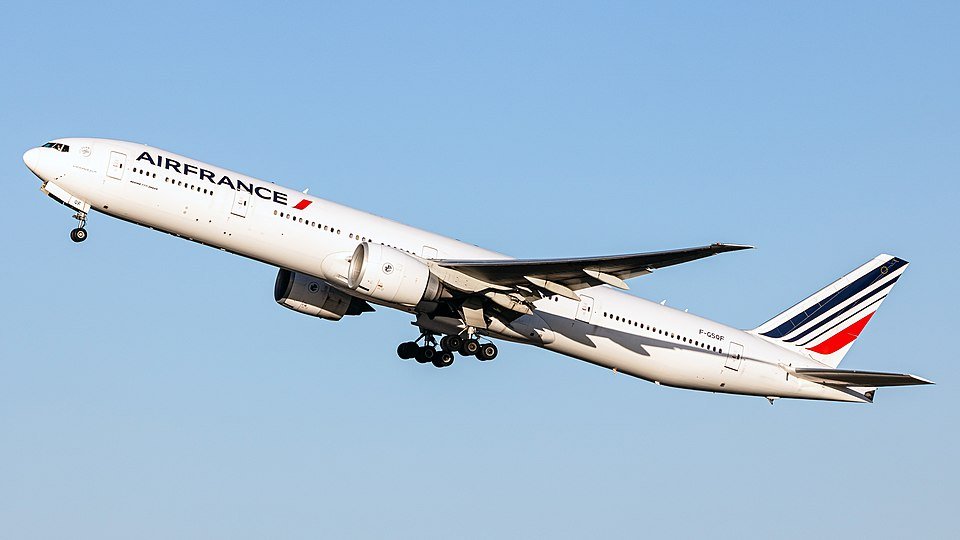
Air France Boeing 777 Paris–Chad Flight Returns To Paris After Mid-Air Emergency SEO DES: Issue occurred during cruise; crew handled it as priority returned to departure airport instead of diverting, reversing course under controlled conditions SOCIAL: An Air France Boeing 777 operating flight AF908 from Paris to N'Djamena declared a mid-air emergency over northern Spain due to a technical issue and returned to Paris as a precaution. The aircraft landed safely with no injuries reported. The crew opted to return to the departure airport instead of diverting, indicating the situation was controlled but required priority handling. The issue occurred during the cruise phase, after which the aircraft reversed course in line with standard safety procedures. The exact cause of the fault has not yet been disclosed by the airline. Image: JacobAviation (Wikimedia) Video: Air France Paris, France: An Air France long-haul flight bound for Chad was forced to return to Paris after the crew declared an emergency mid-flight, prompting a precautionary turnaround over Europe. Flight AF908, operated by a Boeing 777 and departing from Paris Charles de Gaulle Airport, was en route to N’Djamena when the crew reported a technical issue and initiated an emergency return. The aircraft had already progressed into cruise phase and was flying over northern Spain at the time of the declaration, according to flight tracking data and aviation monitoring sources. The flight crew elected to discontinue the journey and return to Paris rather than divert to a nearer alternate airport, indicating that while the issue warranted an emergency declaration, it remained manageable under controlled conditions. The aircraft landed safely back at its departure airport. No injuries have been reported among passengers or crew. At this stage, Air France has not released a detailed technical statement specifying the nature of the fault. Emergency declarations in such scenarios typically involve the use of a general transponder code (7700) and are standard protocol when crews encounter situations requiring priority handling. In long-haul operations, returning to the origin airport is often preferred if operational conditions such as fuel weight, weather, and maintenance support are more favorable than at alternate airports. Flight tracking data corroborates that the aircraft reversed course after reaching cruising altitude, aligning with standard safety procedures followed in similar incidents.

Image: JacobAviation (Wikimedia)

Paris, France: An Air France long-haul flight bound for Chad was forced to return to Paris after the crew declared an emergency mid-flight, prompting a precautionary turnaround over Europe.

Flight AF908, operated by a Boeing 777 and departing from Paris Charles de Gaulle Airport, was en route to N’Djamena when the crew reported a technical issue and initiated an emergency return. The aircraft had already progressed into cruise phase and was flying over northern Spain at the time of the declaration, according to flight tracking data and aviation monitoring sources.

The flight crew elected to discontinue the journey and return to Paris rather than divert to a nearer alternate airport, indicating that while the issue warranted an emergency declaration, it remained manageable under controlled conditions.

The aircraft landed safely back at its departure airport. No injuries have been reported among passengers or crew.

At this stage, Air France has not released a detailed technical statement specifying the nature of the fault. 

Emergency declarations in such scenarios typically involve the use of a general transponder code (7700) and are standard protocol when crews encounter situations requiring priority handling. 

In long-haul operations, returning to the origin airport is often preferred if operational conditions such as fuel weight, weather, and maintenance support are more favorable than at alternate airports.

Flight tracking data corroborates that the aircraft reversed course after reaching cruising altitude, aligning with standard safety procedures followed in similar incidents.


Leave a Comment

Subscribe to our Newsletter

Recent News

error: Unauthorized copying is not permitted