Washington, United States: The U.S. House of Representatives narrowly rejected a high-profile aviation safety bill on Tuesday, dealing a setback to efforts aimed at preventing another tragedy like the mid-air collision that killed 67 people over Washington, D.C., in January 2025. The legislation formally known as the ROTOR Act (Rotorcraft Operations Transparency and Oversight Reform) had passed the Senate unanimously in December 2025, but failed to secure the two-thirds majority required under fast-track procedures in the House, falling one vote short with a tally of 264-133.
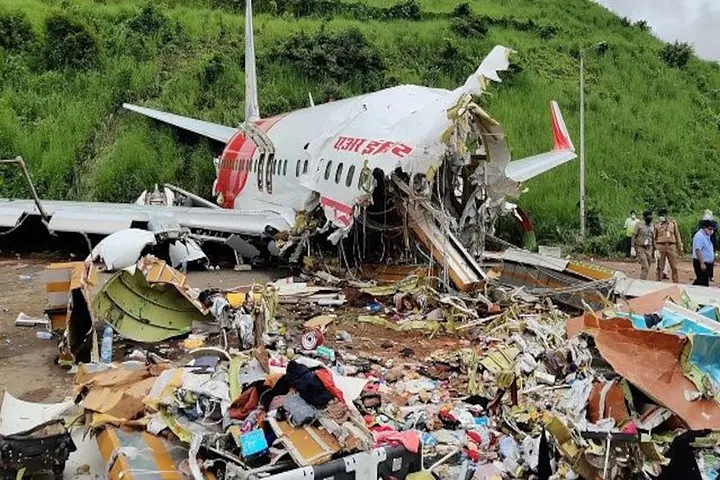
On January 29, 2025, a Bombardier CRJ700 regional airliner, operating as American Eagle Flight 5342 from Wichita, Kansas, collided with a U.S. Army Sikorsky UH-60 Black Hawk helicopter over the Potomac River as both aircraft approached Ronald Reagan Washington National Airport (DCA). All 67 people aboard both aircraft, 64 passengers and crew on the airliner and three on the helicopter were killed when the two collided at about 300 feet above the river.
The National Transportation Safety Board (NTSB) called the crash the deadliest U.S. aviation disaster since 2001 and the worst mid-air collision in recent memory, prompting urgent calls for enhanced safety measures.
Preliminary investigations in early 2025 had already revealed serious vulnerabilities in the congested airspace near Reagan National Airport. Extensive data showed more than 15,200 close-proximity incidents between helicopters and commercial aircraft in the period before the crash, including at least 85 where aircraft came unusually close vertically sometimes within 200 feet illustrating systemic risks in how helicopter and airplane traffic were managed.
On February 17, 2026, the NTSB released its final report, identifying multiple causal factors beyond air-traffic separation failures. The Federal Aviation Administration’s (FAA) placement of helicopter routes in close proximity to the commercial aircraft approach path. The FAA’s failure to regularly review and update helicopter routes, despite earlier safety recommendations.
The board concluded that had adequate automation and collision warning systems been universally equipped on both aircraft involved, the collision might have been avoided.

The ROTOR Act, sponsored in the Senate by Republican Sen. Ted Cruz and Democrat Sen. Maria Cantwell, was designed as a direct legislative response to the tragedy. The core provision would have required all aircraft both civilian and military (with limited exemptions for sensitive operations) flying in U.S. airspace around busy airports to be equipped with Automatic Dependent Surveillance-Broadcast (ADS-B) In and Out systems by 2031.
These systems allow aircraft to both transmit their position and receive traffic data from others, giving pilots real-time situational awareness. Under current rules, most aircraft must broadcast location data (“ADS-B Out”), but many do not have “ADS-B In” receivers to see others’ information.
According to the NTSB, ADS-B In could have provided the airliner’s flight crew with a collision alert as much as 59 seconds before the crash, and the helicopter crew with a warning 48 seconds before impact, potentially preventing the tragedy.
While the ROTOR Act had widespread public support and backing from victim families and major aviation unions, its fate in the House was complicated by last-minute opposition from the Pentagon.
In December, the Pentagon said it supported the legislation, sponsored by Senate Commerce Committee Chair Ted Cruz and the panel’s top Democrat, Maria Cantwell. But in a statement released on Monday, the Pentagon said the bill could create “significant unresolved budgetary burdens and operational security risks affecting national defense activities.”
The Defense Department withdrew its earlier support, citing concerns about budgetary burdens and potential operational security risks associated with requiring military aircraft to broadcast detailed positional data.
House Transportation Committee Chair Sam Graves (R-Mo.) and House Armed Services Committee Chair Mike Rogers (R-Ala.) opposed the Senate bill, calling it an “unworkable government mandate” that could impose technical and financial burdens on smaller operators.
They instead championed a competing legislative package known as the ALERT Act, which they say would address all 50 of the NTSB’s recommendations but does not mandate ADS-B In on all aircraft. Experts representing aviation safety advocates argue that the House proposal does not go far enough to avert future collisions.
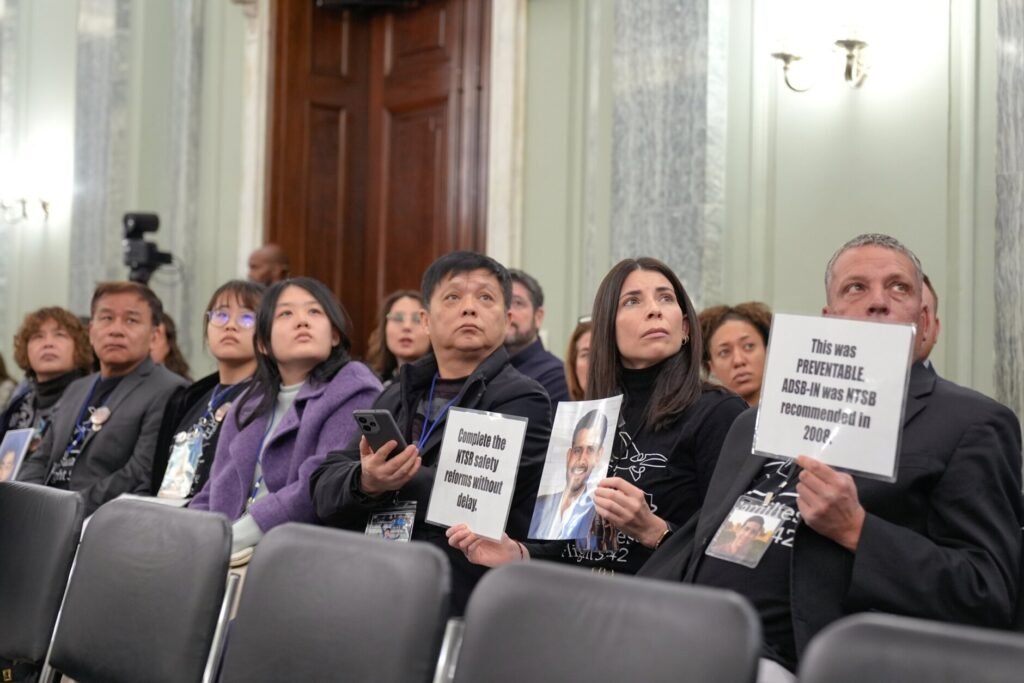
Relatives of Flight 5342 victims who watched Tuesday’s vote from the gallery expressed devastation at the bill’s failure but pledged to keep advocating for mandatory safety reforms. “We are devastated. Today, a majority of the House voted to pass the ROTOR Act. It was not enough,” said a statement from the Families of Flight 5342.
Sen. Cruz vowed to continue pursuing passage of the ROTOR Act in some form, asserting that it represents the most direct and effective way to ensure safety uniformity across U.S. airspace.
House leaders signaled their commitment to pursue alternative aviation safety legislation and said committee action on the broader House-crafted bill could begin as soon as next week.