News
Civil Aviation
Pilot Training
Flight School Analysis
Aviation Jobs
Training
Services
About Us
Contact Us

FAA Announces $16.5M Nationwide Airport Vehicle Transponder Plan After LaGuardia Crash

Picture of Aviation Today News Desk

Aviation Today News Desk

FAA Announces $16.5M Nationwide Airport Vehicle Transponder Plan After LaGuardia Crash SEO DES: Investigators found the fire truck lacked a transponder, preventing ASDE-X warnings before the crash that killed two pilots and injured dozens SOCIAL: The FAA will invest $16.5 million to equip around 1,900 airport vehicles at 264 U.S. airports with transponders following the deadly March 2026 Air Canada Express runway collision at New York’s LaGuardia Airport. Investigators found the airport fire truck involved lacked a transponder, preventing the ASDE-X safety system from detecting the vehicle and issuing a warning before the crash, which killed both pilots and injured dozens. The FAA says the new technology will improve runway safety, enhance surface tracking for controllers, and help prevent future runway incursions involving ground vehicles. Washington, United States: The Federal Aviation Administration (FAA) has announced a nationwide initiative to equip thousands of airport vehicles with transponders following the deadly March 2026 runway collision at New York’s LaGuardia Airport involving an Air Canada Express regional jet and an airport fire truck. The FAA said it will invest $16.5 million to install transponders on approximately 1,900 airport vehicles operating across 264 U.S. airports, aiming to strengthen runway safety and improve real-time surface tracking for air traffic controllers. The decision follows findings from the National Transportation Safety Board (NTSB) investigation into the March 22 collision between Air Canada Express Flight 8646, operated by Jazz Aviation, and a Port Authority fire truck at LaGuardia Airport. Investigators revealed that the fire truck involved in the accident was not equipped with a transponder, preventing the airport’s Advanced Surface Detection Equipment-X (ASDE-X) system from accurately tracking the vehicle and generating a collision warning for controllers. The Air Canada Express Bombardier CRJ900 had arrived from Montreal and was landing on Runway 4 when the fire truck crossed the active runway while responding to a separate emergency involving a United Airlines aircraft. Seconds before impact, controllers repeatedly instructed the vehicle to stop, but the aircraft collided with the truck during touchdown. Both pilots were killed, while dozens of passengers and crew members suffered injuries. According to preliminary NTSB findings, the ASDE-X runway safety system at LaGuardia failed to issue an automated alert warning controllers of the dangerous proximity between the aircraft and the vehicle. Investigators said the absence of a transponder on the fire truck was a significant factor in the system’s inability to detect and predict the vehicle’s movement. FAA Administrator Bryan Bedford said the deployment of transponder technology would help close critical gaps in airport surface surveillance and improve situational awareness for controllers operating at busy airports. The FAA added that airports can also use federal grant funding to install similar equipment on locally operated vehicles. More than 50 airports have already expressed interest in adopting the technology. The FAA’s plan covers vehicles operating at airports equipped with ASDE-X and related surface monitoring systems, which rely partly on transponder data to track aircraft and ground vehicles moving on runways and taxiways. Aviation safety experts have long advocated broader use of the technology to reduce runway incursions and prevent collisions involving airport vehicles. The Port Authority of New York and New Jersey had earlier confirmed plans to equip emergency response vehicles at LaGuardia, John F. Kennedy International Airport, and Newark Liberty International Airport with transponders following the accident.
Washington, United States: The Federal Aviation Administration (FAA) has announced a nationwide initiative to equip thousands of airport vehicles with transponders following the deadly March 2026 runway collision at New York’s LaGuardia Airport involving an Air Canada Express regional jet and an airport fire truck. The FAA said it will invest $16.5 million to install transponders on approximately 1,900 airport vehicles operating across 264 U.S. airports, aiming to strengthen runway safety and improve real-time surface tracking for air traffic controllers. The decision follows findings from the National Transportation Safety Board (NTSB) investigation into the March 22 collision between Air Canada Express Flight 8646, operated by Jazz Aviation, and a Port Authority fire truck at LaGuardia Airport. Investigators revealed that the fire truck involved in the accident was not equipped with a transponder, preventing the airport’s Advanced Surface Detection Equipment-X (ASDE-X) system from accurately tracking the vehicle and generating a collision warning for controllers. The Air Canada Express Bombardier CRJ900 had arrived from Montreal and was landing on Runway 4 when the fire truck crossed the active runway while responding to a separate emergency involving a United Airlines aircraft. Seconds before impact, controllers repeatedly instructed the vehicle to stop, but the aircraft collided with the truck during touchdown. Both pilots were killed, while dozens of passengers and crew members suffered injuries. According to preliminary NTSB findings, the ASDE-X runway safety system at LaGuardia failed to issue an automated alert warning controllers of the dangerous proximity between the aircraft and the vehicle. Investigators said the absence of a transponder on the fire truck was a significant factor in the system’s inability to detect and predict the vehicle’s movement. FAA Administrator Bryan Bedford said the deployment of transponder technology would help close critical gaps in airport surface surveillance and improve situational awareness for controllers operating at busy airports. The FAA added that airports can also use federal grant funding to install similar equipment on locally operated vehicles. More than 50 airports have already expressed interest in adopting the technology. The FAA’s plan covers vehicles operating at airports equipped with ASDE-X and related surface monitoring systems, which rely partly on transponder data to track aircraft and ground vehicles moving on runways and taxiways. Aviation safety experts have long advocated broader use of the technology to reduce runway incursions and prevent collisions involving airport vehicles. The Port Authority of New York and New Jersey had earlier confirmed plans to equip emergency response vehicles at LaGuardia, John F. Kennedy International Airport, and Newark Liberty International Airport with transponders following the accident.
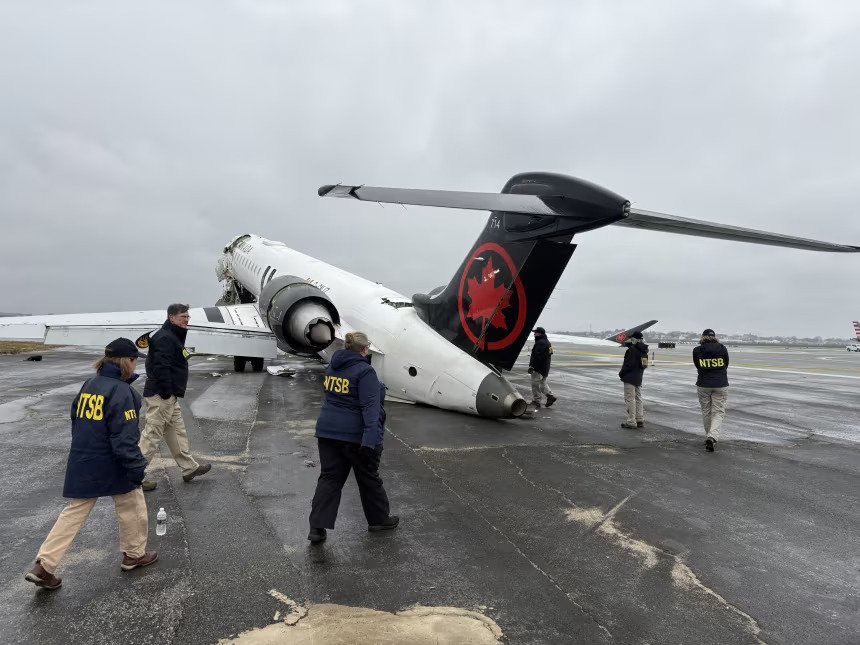
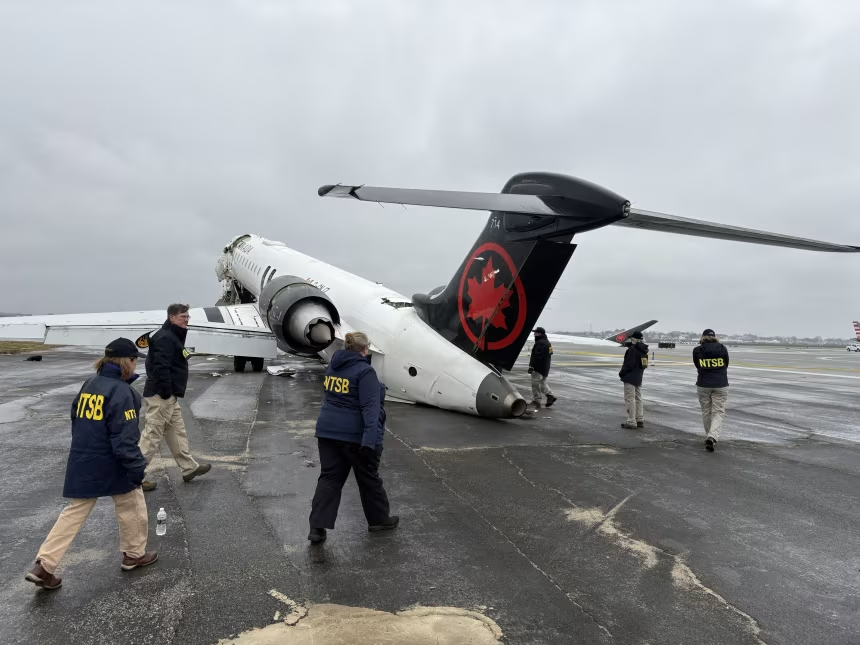
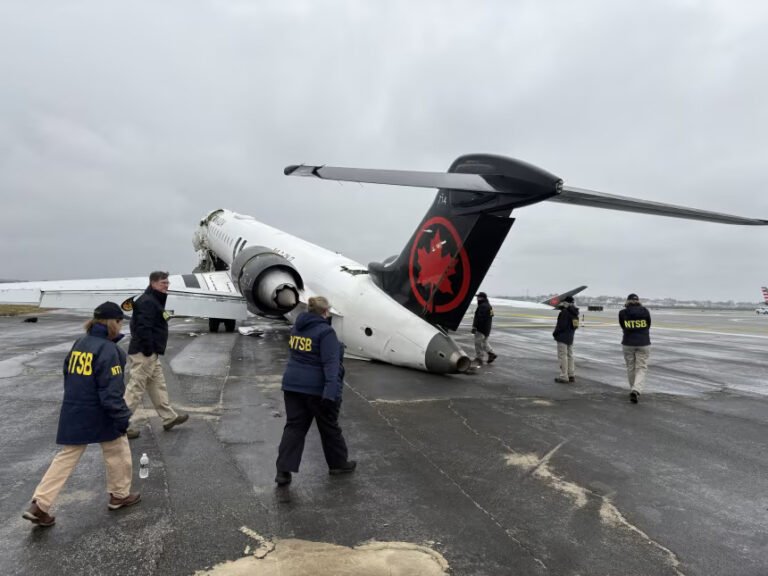
Image: NTSB

Washington, United States: The Federal Aviation Administration (FAA) has announced a nationwide initiative to equip thousands of airport vehicles with transponders following the deadly March 2026 runway collision at New York’s LaGuardia Airport involving an Air Canada Express regional jet and an airport fire truck.

The FAA said it will invest $16.5 million to install transponders on approximately 1,900 airport vehicles operating across 264 U.S. airports, aiming to strengthen runway safety and improve real-time surface tracking for air traffic controllers.

The decision follows findings from the National Transportation Safety Board (NTSB) investigation into the March 22 collision between Air Canada Express Flight 8646, operated by Jazz Aviation, and a Port Authority fire truck at LaGuardia Airport. Investigators revealed that the fire truck involved in the accident was not equipped with a transponder, preventing the airport’s Advanced Surface Detection Equipment-X (ASDE-X) system from accurately tracking the vehicle and generating a collision warning for controllers.

The Air Canada Express Bombardier CRJ900 had arrived from Montreal and was landing on Runway 4 when the fire truck crossed the active runway while responding to a separate emergency involving a United Airlines aircraft. Seconds before impact, controllers repeatedly instructed the vehicle to stop, but the aircraft collided with the truck during touchdown. Both pilots were killed, while dozens of passengers and crew members suffered injuries.

According to preliminary NTSB findings, the ASDE-X runway safety system at LaGuardia failed to issue an automated alert warning controllers of the dangerous proximity between the aircraft and the vehicle. Investigators said the absence of a transponder on the fire truck was a significant factor in the system’s inability to detect and predict the vehicle’s movement.

FAA Administrator Bryan Bedford said the deployment of transponder technology would help close critical gaps in airport surface surveillance and improve situational awareness for controllers operating at busy airports. The FAA added that airports can also use federal grant funding to install similar equipment on locally operated vehicles. More than 50 airports have already expressed interest in adopting the technology.

The FAA’s plan covers vehicles operating at airports equipped with ASDE-X and related surface monitoring systems, which rely partly on transponder data to track aircraft and ground vehicles moving on runways and taxiways. Aviation safety experts have long advocated broader use of the technology to reduce runway incursions and prevent collisions involving airport vehicles.

The Port Authority of New York and New Jersey had earlier confirmed plans to equip emergency response vehicles at LaGuardia, John F. Kennedy International Airport, and Newark Liberty International Airport with transponders following the accident.

Leave a Comment

Subscribe to our Newsletter

Recent News