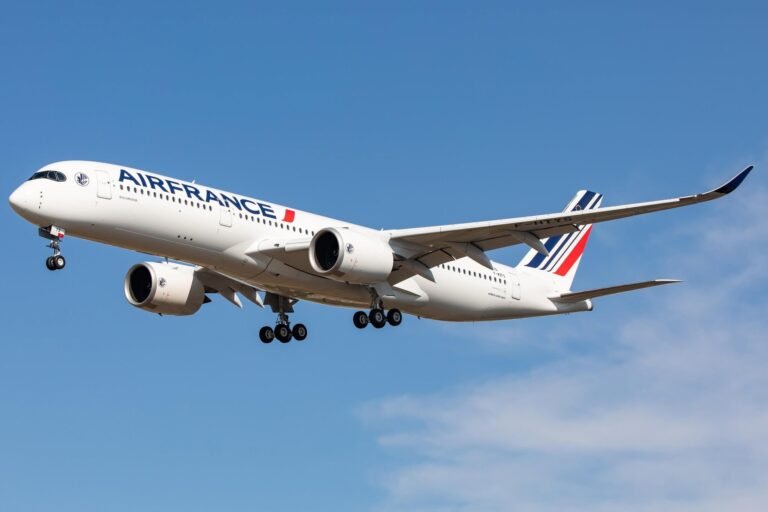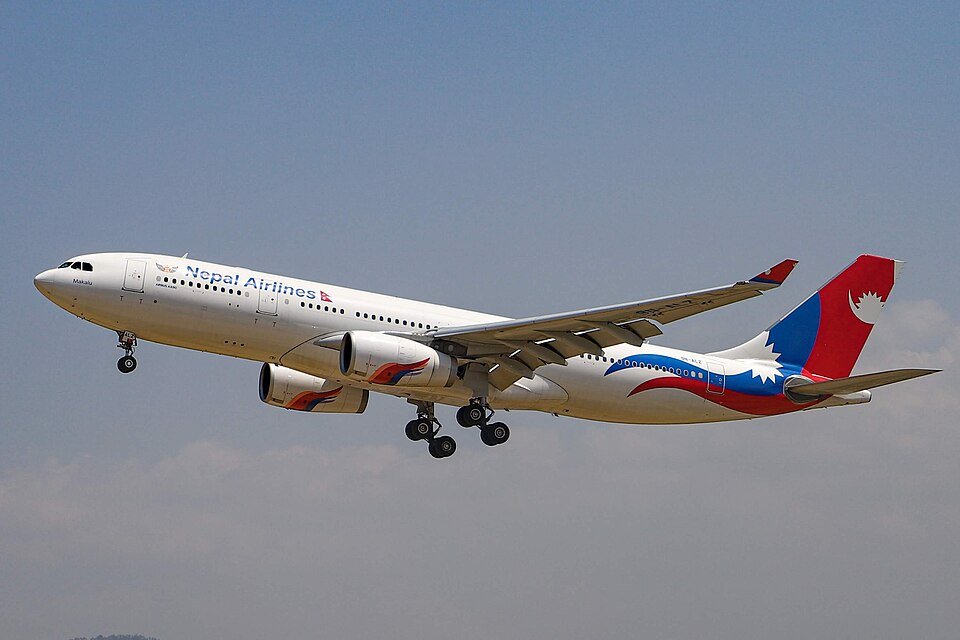
Kathmandu, Nepal: Nepal Airlines Corporation (NAC) is facing a major operational and financial crisis after both of its Airbus A330-200 widebody aircraft, Annapurna and Makalu, were grounded simultaneously in Japan and Italy, disrupting international flights during Nepal’s peak travel season and pushing estimated losses towards US$6.55 million.
The two 274-seat A330s form the backbone of Nepal Airlines’ international widebody operation. Makalu, registration 9N-ALZ, was sent to Atitech S.p.A. in Italy on 9 August 2026 for a scheduled C-check, which was expected to take about 20 days and initially had a planned return date of 31 August. The aircraft, however, remained in Italy after engineers discovered an engine-related defect during the maintenance process.
NAC spokesperson Devendra Pun said, “It is difficult to state the exact date when the aircraft will return, but the process to bring it back will move forward after a week.”
The C-check involved detailed inspection and maintenance of the aircraft’s structure, engines, electrical and hydraulic systems, cabin and safety systems. During the inspection, engineers found a serious problem involving the thrust-reverser assembly at the rear of the engine.
According to NAC, the defect requires the engine to be removed for off-wing repair, rather than being repaired while installed on the aircraft.
Pun said, “Whenever a problem is detected in an aircraft engine, no action can be taken without consulting the aircraft engine manufacturer. This is a mandatory condition set by the manufacturer.”
NAC has consulted Rolls-Royce over the technical problem. Mahesh Marita, head of NAC’s Engineering Department, said, “Rolls-Royce has sent documentation regarding permission for repairs, and we are currently deliberating on it.”
NAC’s preliminary estimate for the repair could reach about US$4 million. The carrier has considered several options, including leasing an engine, swapping or repairing the existing engine, or procuring another engine, but technical approval is required before proceeding.
The problem is a thrust-reverser system defect detected during final testing after the C-check, and reported that a replacement component could cost about US$2.7 million. It also reported that repair could take three to four days once the required technical approval and documentation are completed.
A tourism ministry official said, “Safran has given approval, but the repair has not been completed.” The official said technical details were expected to be provided and that the aircraft could then potentially be repaired within three to four days.
The differing reports indicate that the overall repair decision and final cost had not been settled as of 22 September.
Before Makalu could return from Italy, Nepal Airlines lost the use of its second A330. Annapurna flew from Kathmandu to Narita on 13 September and was scheduled to return to Nepal on 14 September. During checks before the return flight, engineers discovered damage involving its engine.
The aircraft was due to depart Narita at 10:30am local time and arrive in Kathmandu at 3pm, with 226 passengers scheduled to travel.
The forward inlet cowl of one engine was heavily damaged and that the damage exceeded the limits permitted by the aircraft maintenance manual. NAC suspects the damage may have occurred during takeoff from Kathmandu and was subsequently detected during the pre-flight inspection in Japan.
Mahesh Marita said, “The extent of damage exceeds specified manual parameters. Nothing can be finalized until the aircraft manufacturer grants repair approval.”
NAC subsequently wrote to Rolls-Royce seeking technical guidance, as of 22 September, Rolls-Royce had not yet responded. Devendra Pun said, “We must first await the manufacturer’s technical opinion, after which management will decide how to proceed with repairs.” He added, “Engineers are currently conducting damage evaluations.”
NAC has been examining several options, including local repair, leasing equipment or components, or purchasing replacement parts. The repair estimate for Annapurna has also been put at around Rs610 million, although NAC had not completed the full damage assessment.
According to the report, engineers initially found damage to a blade on Engine No. 2. The initial assessment put the damage at about 25 mm, but a detailed inspection reportedly found it closer to 30 mm. The damaged blade was subsequently replaced, but another technical issue remained, requiring further coordination with the engine manufacturer.
A tourism ministry official said, “We need to coordinate with Rolls-Royce to resolve another technical problem, so it could take a few more days before the aircraft returns.” The reports also said Nepal Airlines was examining whether the aircraft could potentially be permitted to operate for a limited number of cycles while a permanent repair was arranged.
The grounding of Annapurna immediately disrupted Nepal Airlines’ Kathmandu-Narita service. Nepal Airlines issued several cancellation notices as engineers continued working on the aircraft. On 17 September, the carrier cancelled the Kathmandu-Narita flight for 17, 18 and 20 September, and the return Narita-Kathmandu services for 18, 19 and 21 September. The airline said its engineering teams were working to restore the aircraft and that additional time was required to ensure passenger safety. Nepal Airlines stated in its notice that it would reroute passengers through available alternatives and offer full refunds or date changes without charges.
On 21 September, Nepal Airlines issued another notice cancelling:
- RA-433 Kathmandu-Narita – 22 September
- RA-434 Narita-Kathmandu – 23 September
The airline described the cancellations as being due to an “unavoidable and inevitable technical reason” and asked affected passengers to reschedule their itineraries.
NAC has been forced to reroute affected passengers through other carriers because it is the only airline operating a direct Kathmandu-Narita service.
Passengers have been accommodated and transferred through connecting hubs operated by carriers including Air India, Cathay Pacific, Thai Airways, Singapore Airlines, Malaysian Airlines, Batik Air, China Southern and China Eastern.
NAC spokesperson Archana Khadka said, “Passengers with urgent travel needs were rerouted to their destinations via alternative airlines. Flights to destinations other than Japan were rescheduled, and passengers there were managed accordingly.”
Acting General Manager Janak Raj Kalakheti told Kathmandu Post that passengers with urgent requirements were prioritised, including those with visas close to expiry, children, elderly passengers, sick travellers and people facing urgent family matters.
One passenger interviewed by Kathmandu Post said his family spent four nights at a hotel near Narita after their flight was cancelled, with the airline paying the hotel bill. The family was subsequently transported to Nepal through Cathay Pacific.
The simultaneous loss of both A330s has affected more than the Japan route. Nepal Airlines has had to adjust services involving Doha, Dubai, Guangzhou, Malaysia and Dammam, among other international destinations. The airline operates only four Airbus aircraft for international operations, two A330 widebodies and two A320 narrowbodies. With both A330s unavailable, the carrier has very limited flexibility to maintain its international schedule.
As of 22 September 2026, neither A330 has returned to normal service. Makalu remains at Atitech in Italy, with the thrust-reverser-related repair requiring technical and manufacturer approvals and a final decision on the repair route. Annapurna remains at Narita in Japan, with engine-related structural damage requiring further technical assessment and manufacturer approval. The airline has not announced a firm return-to-service date for either aircraft.
The immediate priority is to restore the two aircraft, manage passengers affected by cancellations and minimise further revenue losses. At the same time, NAC must secure a solution for the two aircraft’s approaching major overhauls, address the failed tender process and navigate the revised procurement rules.