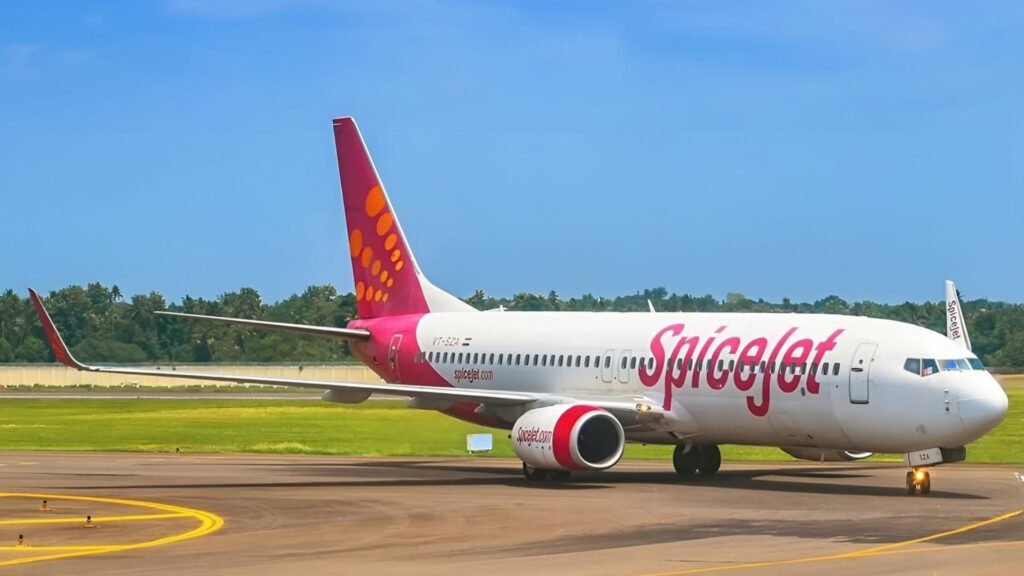
New Delhi, India: The Directorate General of Civil Aviation (DGCA) is carrying out operational and financial scrutiny of SpiceJet, Civil Aviation Minister K Rammohan Naidu said on 22 September, 2026 as the airline continues to face cash-flow pressure, flight disruptions, delayed salary payments and a sharp decline in its domestic market share.
Naidu said the ministry is continuously engaging with SpiceJet, with the immediate focus on ensuring that its financial difficulties do not affect flight operations or safety. He said the scrutiny is being conducted through the DGCA and that the government wants to ensure there is “no lapse in safety.”
The minister also made clear that the government has limits in dealing with a privately owned airline. “There are certain limits with which the government also can operate with them,” he said, while explaining that the ministry is nevertheless engaging with the airline to see how it can facilitate the situation.
The latest government position is that the DGCA is looking at both SpiceJet’s operations and, to a certain extent, its finances. The government has not publicly announced a new fleet grounding, operating ban or fresh safety restriction as part of this scrutiny.
Naidu said the ministry’s priority is to protect passengers and maintain safe and smooth operations. “Our major priority right now is to ensure the passengers shouldn’t face any inconvenience”, while safety must not be compromised during operations.
The minister’s comments followed continued disruption at SpiceJet, including delays and cancellations that have affected passengers at Delhi airport. The airline’s prolonged cash-flow problems have been worsened by the continuing conflict in the Middle East, which has added pressure to operating costs and aviation activity.
Importantly, the reports available on 21–23 September do not specify that DGCA has imposed a new financial reporting requirement, a new operating restriction or a fresh safety directive against SpiceJet. The regulator’s current role, as described by the minister, is scrutiny and monitoring of the airline’s operations and finances.
The financial side remains central to the crisis. Naidu said SpiceJet has received ₹150 crore under the Emergency Credit Line Guarantee Scheme (ECLGS), a government-backed credit-support mechanism extended to airlines facing difficulties linked to the West Asia crisis.
However, the minister said the remaining financial arrangements have to be worked out by SpiceJet with its banks. In other words, the government support already released does not by itself resolve the airline’s wider liquidity problem.
On 21 September SpiceJet was awaiting around ₹350 crore under ECLGS 5.0, while senior airline officials were considering fundraising options. The airline was looking at improving its operations by around mid-October, partly through the planned induction of 20 wet-leased aircraft.
The different figures should therefore be distinguished, ₹150 crore is the amount Naidu said had already been disbursed, while the approximately ₹350 crore figure refers to additional funding the airline was reportedly awaiting, according to sources cited by NDTV Profit.
SpiceJet is also facing a serious employee-payment problem. Reports said that airline employees had gone without salary payments for several months. Airline officials reported that salaries had not been paid to some employees for close to four months.
SpiceJet has previously said employee payments were being made in phases and that employee obligations remained a priority, while pointing to the difficult operating environment created by the situation in West Asia and its impact on costs and cash flows.
The financial problems have increasingly become visible to passengers. Several SpiceJet flights at Delhi’s Indira Gandhi International Airport were delayed or cancelled on 19 September because of operational disruptions. Delhi Airport said its teams were coordinating with SpiceJet and other stakeholders to assist affected passengers.
The most prominent recent disruption involved two Delhi–Dubai flights. Reports said the flights were repeatedly rescheduled, with one delay extending beyond five hours and another approaching 20 hours. The disruption led to a passenger protest at Delhi airport.
SpiceJet said the affected flights were delayed because of operational reasons following the grounding of an aircraft. The airline said alternate flights were being arranged and that it was attempting to minimise passenger inconvenience.
The scale of passenger complaints is also visible in government data. The Ministry of Civil Aviation’s Air Sewa dashboard recorded 1,453 grievances against SpiceJet on 21 September 2026, compared with 52 attributed to the DGCA on the same dashboard.
SpiceJet’s domestic market position has also weakened. According to the latest official data cited by Naidu, the airline’s domestic market share fell to 1.6% in July 2026 from 1.9% in June. Business Standard reported that SpiceJet’s share had been declining since February, when it stood at 3.9%.
The current situation is therefore not simply a short-term delay problem. The latest reports point to a combination of liquidity pressure, lower market share, operational disruption, delayed employee payments and the need for additional aircraft and funding.
While the airline is under scrutiny, it is also attempting to expand its operating capacity. SpiceJet said on 3 September that it had finalised lease agreements with three aircraft operators for 20 aircraft, 15 Boeing aircraft and five Airbus aircraft through damp and wet-lease arrangements. The aircraft are intended to support the airline’s winter schedule.
The airline was targeting an operational improvement around mid-October through the planned wet-lease induction. Sources said the additional aircraft were part of the airline’s effort to restore capacity while it works through its financial problems.
This creates a critical balancing act for SpiceJet: it needs additional aircraft and funding to restore capacity and reliability, while the regulator is simultaneously examining whether the airline’s financial condition could affect its operations or safety.
Naidu’s latest statements make the government’s position clear, SpiceJet remains a private airline, limiting direct government intervention, but its operations and finances are being watched through the DGCA.
The minister said the government would continue engaging with SpiceJet and would look at ways to facilitate the airline’s recovery, while stressing that passenger convenience and safety cannot be compromised.
The scrutiny also comes at a sensitive time for Indian aviation, following a series of operational disruptions across the sector. For SpiceJet, however, the immediate challenge extends beyond regulatory attention. The airline must address its cash-flow position, outstanding employee salaries, passenger disruption, declining market share and aircraft availability, while securing additional financing and bringing more aircraft into service.