Rio de Janeiro, Brazil: A tourist helicopter crashed in Rio de Janeiro’s Tijuca National Park on Saturday, August 8, killing all four people aboard, including a Brazilian pilot and three Colombian women from the same family.
The crash occurred at about 11:11 a.m. local time in the Vista Chinesa area of Alto da Boa Vista, according to the Rio de Janeiro Fire Department. The helicopter came down on a steep, densely wooded mountainside near Vista Chinesa, a popular lookout inside Tijuca National Park known for panoramic views of Rio de Janeiro and the surrounding coastline.
The aircraft was a Robinson R44 operating a sightseeing flight. It had four people aboard the pilot and three passengers. The passengers were Colombian nationals and members of the same family. Later reports identified them as 59-year-old Rocío Cubillos, 37-year-old Wendy Manrique and 17-year-old Sofía Murillo. The pilot was Brazilian Alessandro Rocha.
The family had travelled from Colombia to Rio de Janeiro for a holiday and had arranged a helicopter tour as part of a birthday celebration. Colombia’s Consul General in Rio de Janeiro, Diana Paez, told AFP that the wider family group consisted of six people but had to split into two groups because the helicopter could carry only three passengers. The three women who boarded the first flight were the birthday girl’s grandmother, aunt and cousin. The birthday girl, identified in later reports as 15-year-old Laura Manrique, was expected to take a second flight with her father and his partner.
The helicopter was reportedly taking tourists on a sightseeing route around Rio’s major attractions. The crash site was close to Vista Chinesa and the forested area around Corcovado, where helicopter tours commonly provide aerial views of landmarks including Christ the Redeemer. Reports have not established a separate destination because the flight was a sightseeing operation rather than a point-to-point journey.
Emergency crews were alerted shortly after 11 a.m. Firefighters reached the crash area but faced significant difficulties because the helicopter had fallen into extremely steep terrain surrounded by dense vegetation and cliffs. Almost 40 military firefighters and 11 vehicles were deployed during the response, while specialised teams approached the wreckage by land.
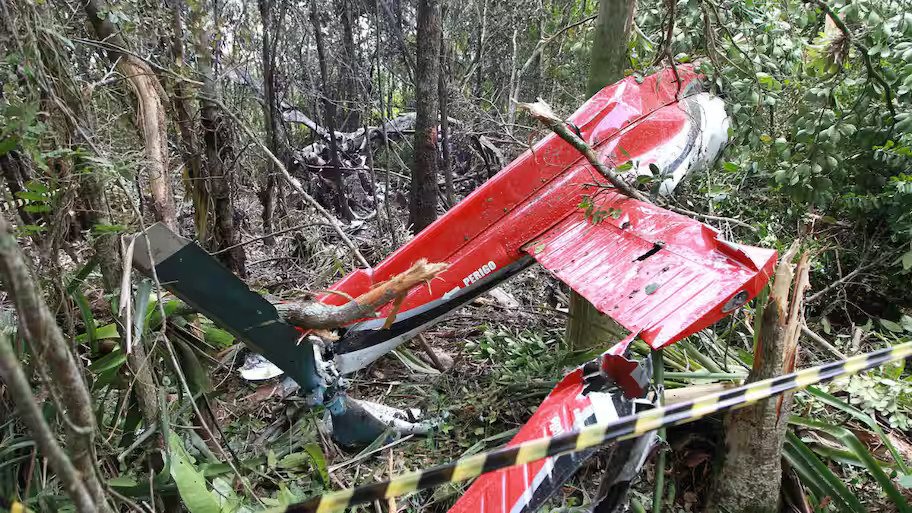
The aircraft caught fire after the impact. Rio Fire Department officials said all four occupants died in the resulting fire and described the victims as having been “burned to death.” Images released by the department showed firefighters working around the smoking, heavily damaged wreckage on the hillside.
Lieutenant Colonel Fábio Contreiras of the Rio de Janeiro Fire Department said the terrain was one of the biggest challenges facing rescuers. “The biggest challenge for the teams right now is access, both to enter and exit the site,” he said, according to reports. He explained that the aircraft had crashed in a very steep wooded area with precipitous sections where rescuers had to use rope techniques and safety equipment. Contreiras also said the post-crash fire had been caused by the aircraft’s fuel and had been extinguished by the time the rescue operation continued.
The condition of the victims made identification difficult. Diana Paez said Colombia’s consulate was assisting Brazilian authorities with the identification process because of the condition of the bodies. Initial reports from Brazilian authorities had not released the victims’ names, but the identities were subsequently reported by local and international media.
The cause of the accident remains unknown. Brazilian authorities have not publicly attributed the crash to pilot error, a mechanical problem or weather. The Brazilian Air Force’s accident investigation structure, CENIPA, is involved in the investigation, while the Civil Police are also conducting forensic work at the site. The crash area was isolated to allow investigators to examine the wreckage and recover the victims.
Weather has not been identified as a cause. Reports said Rio had experienced strong wind gusts on Friday, August 7, but conditions were reportedly stable on the morning of the crash on August 8. Investigators will have to determine whether any operational, technical or other factors contributed to the accident.
Eduardo Cavaliere, current Mayor of Rio de Janeiro, Brazil also said the Rio city government would make its resources available to ANAC to support any measures required following the accident. The investigation remains ongoing, and authorities have yet to release a finding explaining the cause of the crash.