Nazca, Peru: All 13 people aboard an Aerodiana sightseeing flight were killed after a Cessna Caravan C-208 (Grand Caravan) crashed near Peru’s world-famous Nazca Lines on August 1, 2026, prompting a government investigation into one of the country’s deadliest recent tourist aviation accidents.
According to Peru’s Ministry of Transport and Communications (MTC), the aircraft was carrying 11 foreign tourists and two Peruvian crew members when it went down in the Socos area, approximately 6 km from the city of Nazca and about 19 km from the Nazca Lines archaeological site, a UNESCO World Heritage Site famous for its giant desert geoglyphs.
The aircraft belonged to Aerodiana, a Peruvian sightseeing operator that has conducted aerial tours over the Nazca Lines for about 14 years using Cessna Grand Caravan aircraft. The flight departed from Pisco Airport, in Peru’s Ica region, at approximately 12:10 p.m. local time for a scenic tour over the Nazca Lines before returning to its departure airport.
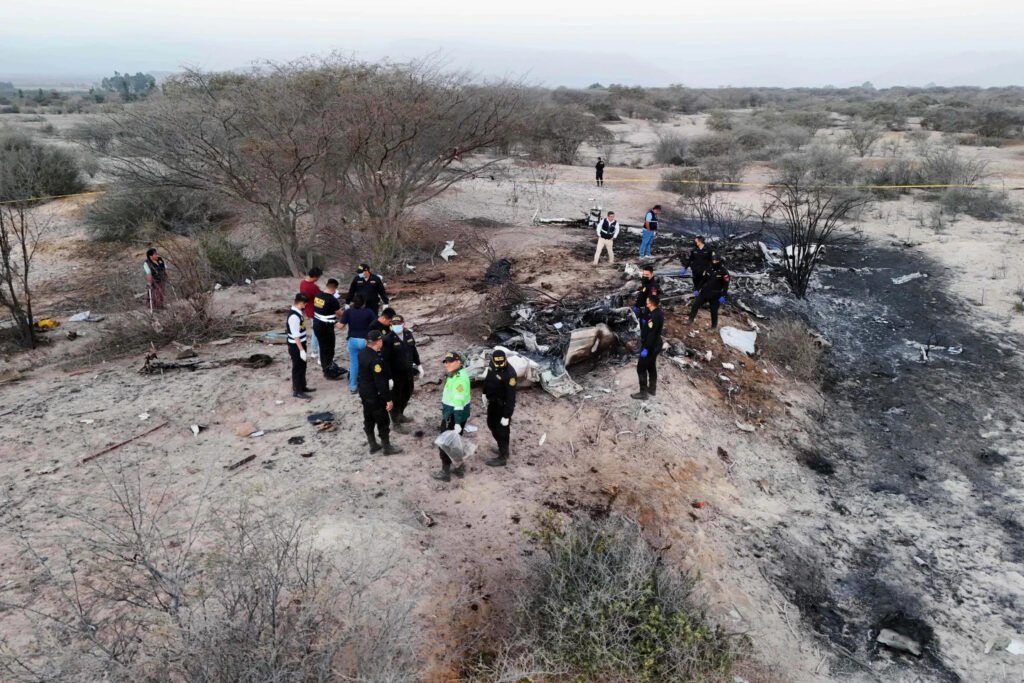
At around 1:00 p.m. local time, the crew reported an emergency to the Nazca Airport control tower. Shortly afterward, all radio communication with the aircraft was lost. Authorities later located the wreckage in the Socos area, where the aircraft had crashed and caught fire.
According to Peruvian broadcaster RPP, the post-impact fire engulfed the wreckage, making any rescue impossible. Firefighters and municipal police officers were dispatched to extinguish the fire and conduct the initial emergency response, but there were no survivors. Footage circulating on social media showed smoke rising from the wreckage on the arid plains.
The victims included seven Italian nationals, two Spanish nationals, and two German nationals, along with the two Peruvian flight crew, pilot Américo Salazar and co-pilot Irenka Guanilo del Carpio. Peru’s Transport Ministry identified the crew members as pilot Américo Salazar and co-pilot Irenka Guanilo del Carpio. The Italian victims were reported to be between 18 and 54 years old, while the two Spanish passengers were both 52 years old, and the German tourists were 77 and 78 years old.
The cause of the crash has not been determined, and authorities have launched a formal investigation. The investigation is being led by Peru’s aviation authorities under the Ministry of Transport and Communications and the country’s Commission for the Investigation of Aviation Accidents (CIAA).
In an official statement, Peru’s Ministry of Transport and Communications confirmed that the aircraft “was carrying 11 foreign tourists and two crew members” and said the crew had reported an emergency before communication was lost. The ministry also confirmed the location of the crash and said the incident remains under investigation.
Aerodiana also issued a statement following the accident, saying it “will assess its flight schedule in accordance with the directives of the relevant authorities.”
Peruvian President Keiko Fujimori expressed condolences to the victims’ families following the tragedy and said a temporary suspension of operations at the airport was being considered while authorities reviewed official reports into the accident.
Although investigators have not linked weather to the accident, sightseeing flights departing from María Reiche Airport near the Nazca Lines had been suspended the previous day after winds exceeded 40 km/h (25 mph), reducing visibility with blowing dust. Local media said those conditions forced at least two sightseeing aircraft to divert to Marcona Airport, including one carrying Peruvian tourists and another carrying foreign visitors. Authorities have not indicated whether those weather conditions played any role in Saturday’s crash.
The Nazca Lines remain one of Peru’s most visited attractions, drawing approximately 100,000 visitors annually. Because the enormous geoglyphs can only be fully appreciated from the air, sightseeing flights are a popular tourist activity, though the region has experienced several fatal air tour accidents over the past two decades.