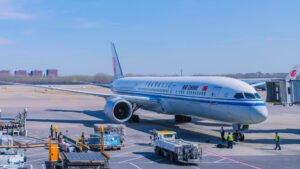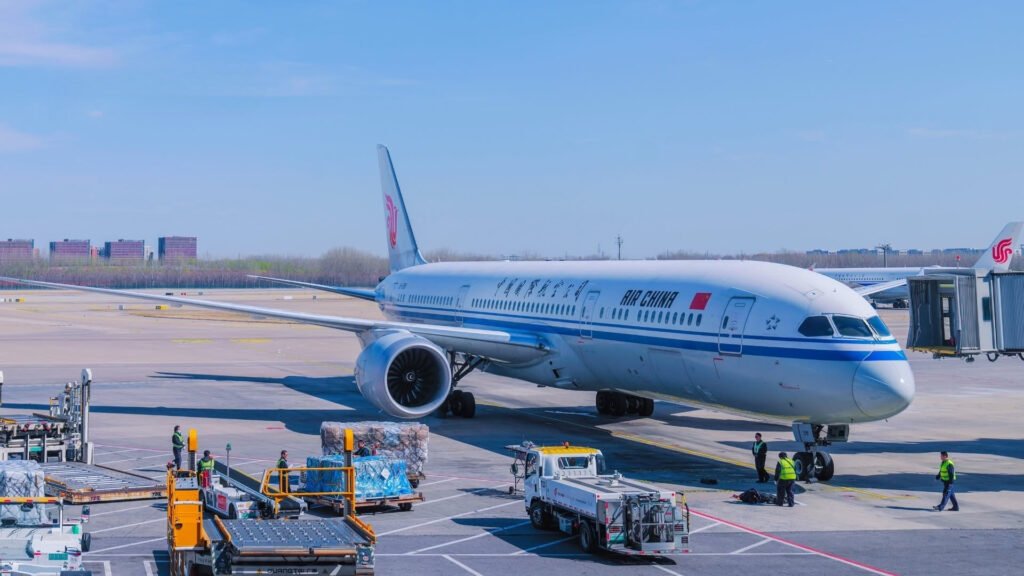
Beijing, China: China’s three largest airlines, Air China, China Eastern Airlines and China Southern Airlines, are heading towards another year of losses after their financial performance deteriorated sharply in the third quarter of 2026, with rising jet fuel costs emerging as a major pressure on earnings.
The latest third-quarter financial reports, covering the nine months ended 30 September 2026, show that all three carriers recorded net losses attributable to their shareholders, despite reporting higher operating revenues than in the corresponding period of 2025. The combined shareholder losses reached approximately ¥8.435 billion (US$1.267 billion) during the January–September period.
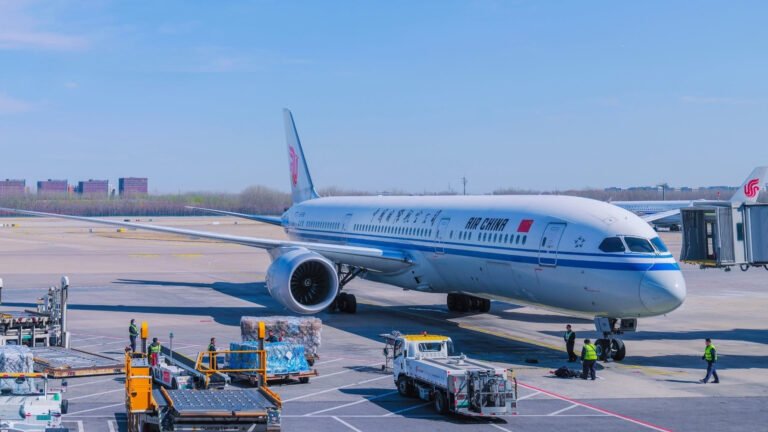
Air China reported revenue of ¥140.96 billion (US$21.172 billion) for the first nine months, up 8.58% year on year, but recorded a net loss attributable to shareholders of ¥2.015 billion (US$302.65 million). Its third-quarter net profit fell 92.64% to ¥270.596 million (US$40.64 million) compared with the same period last year.
China Eastern Airlines reported nine-month revenue of ¥117.066 billion (US$17.583 billion), an increase of 10.01%, while its net loss attributable to shareholders reached ¥2.115 billion (US$317.67 million). The carrier’s third-quarter net profit plunged 98.19% to ¥64 million (US$9.61 million).
China Southern Airlines recorded the largest nine-month shareholder loss among the three carriers, at ¥4.305 billion (US$22.111 billion), despite revenue increasing 6.93% to ¥147.212 billion (US$576.77 million).
Unlike its two counterparts, China Southern moved into a quarterly loss of ¥609 million (US$91.47 million), compared with a net profit of ¥3.84 billion (US$576.77 million) in the third quarter of 2025.
The three airlines identified higher oil and aviation fuel prices as a major factor behind their weaker financial performance.
Air China, in its third-quarter report, stated, “As affected by the steep rise in oil price, the Company’s jet fuel costs have increased significantly, resulting in substantial year-on-year fluctuations in its profit indicators.”
China Eastern Airlines attributed its weaker results to continued geopolitical tensions in the Middle East, which pushed international crude oil prices higher and subsequently increased aviation fuel prices. The airline described fuel as one of its most significant operating costs, noting that the increase directly raised operating expenses and contributed to the decline in its financial performance.
China Southern Airlines also identified oil-price fluctuations as the primary reason for its deteriorating results. Its third-quarter report stated, in translation, “The Company’s benefits decreased significantly due to the impact of oil price fluctuations.” The airline further attributed its operating losses during the first nine months to the same pressure.
The latest financial results have raised concerns about the airlines’ full-year 2026 performance. According to analyst estimates compiled by LSEG (London Stock Exchange Group), Air China and China Eastern Airlines are heading towards their seventh consecutive annual net losses since the COVID-19 pandemic.
China Southern Airlines, which returned to profitability in 2025 for the first time since 2019, is also expected to report a loss for 2026.
Analysts expect the pressure to continue into the fourth quarter, traditionally a weaker period for Chinese airlines following the summer travel season. Although domestic airfares reportedly showed signs of improvement after the October Golden Week holiday, elevated fuel costs remain a major challenge for the carriers.
The full-year 2026 results are yet to be reported. The latest figures confirm that all three airlines entered the final quarter with accumulated losses, despite revenue growth, highlighting the impact of higher operating costs on China’s airline industry.