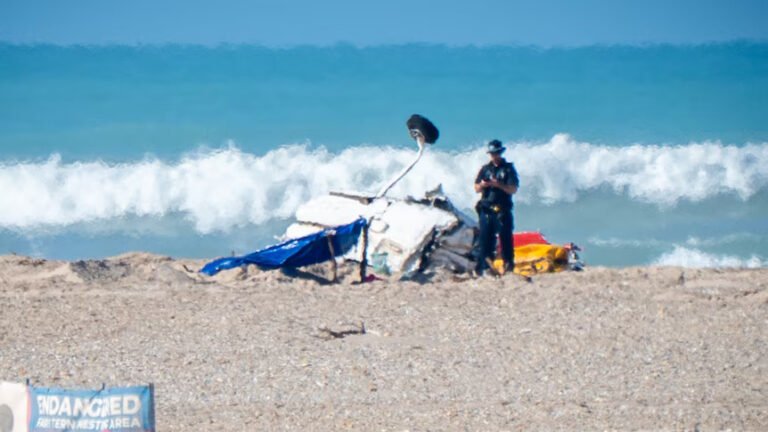
Goolwa, Australia: The Australian Transport Safety Bureau (ATSB) has found that an unauthorised spin manoeuvre likely preceded the fatal crash of a Cessna 210N near Goolwa, South Australia, on 6 February 2026, killing a flight instructor, a younger pilot and 20-year-old man from Pasadena. In its final report released on 28 October, the ATSB said the instructor likely initiated the spin to allow the commercial pilot seated in the left front seat to practise recovery, despite the aircraft not being approved for intentional spins. Investigators concluded that the pilot likely mishandled the recovery during the early stage of the spin and the instructor failed to intervene in time to prevent it from becoming fully developed.
The aircraft, registered VH-RDH and operated by Goolwa Air Pty Ltd, departed Goolwa Airport at approximately 4:08 pm local time for a private local-area flight. The six-seat, single-engine Cessna 210N was conducting a flight intended to build the commercial pilot’s experience on the aircraft under the supervision of the operator’s check and training instructor. The occupants were flight instructor Leo Howard, 53, from Morphett Vale; an 18-year-old pilot, Tristan Scheffers, from Freeling; and a 20-year-old passenger from Pasadena whose name was not identified in the ABC report published on 28 October. Scheffers held a commercial pilot licence, while the third occupant held a recreational pilot licence. The instructor occupied the front right seat, the commercial pilot sat in the front left seat and the passenger was seated in the second row on the left.
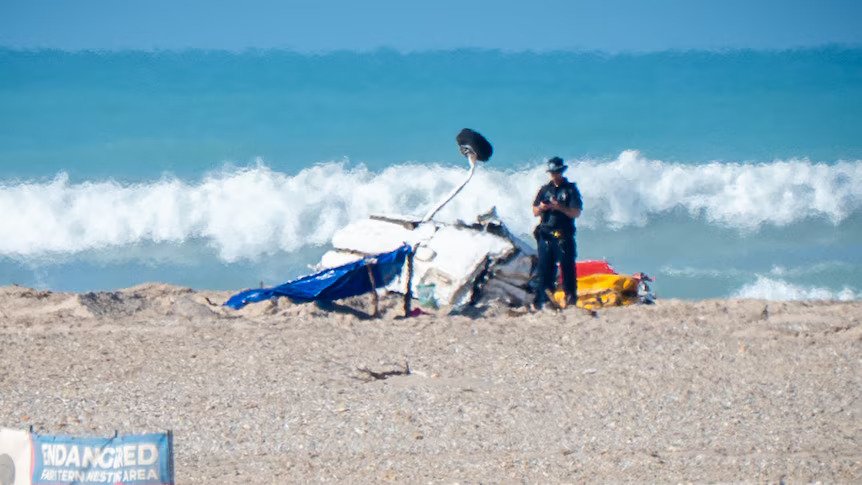
According to the ATSB, the aircraft initially tracked east along the coast at about 2,350 feet for approximately five minutes before turning south and then west towards the mouth of the Murray River. As it approached the Murray Mouth, its altitude increased to 3,375 feet while its ground speed decreased to 74 knots. The aircraft then entered a rapid descent. Radar data showed it at an uncorrected altitude of 2,700 feet at 4:20:57 pm, with the final radar return recorded at 1,200 feet at 4:21:05 pm. A witness on the western side of the Murray Mouth filmed the final moments. The footage showed the aircraft rotating to the left in a steep, nose-down attitude with its left wing low and landing gear retracted before it struck the water in the Long Bay area, approximately 14 km southeast of Goolwa Airport. Witnesses reported that the engine appeared to be running until impact. The aircraft was destroyed and all three occupants were fatally injured.
The ATSB’s investigation found that the instructor had a history of unauthorised spin activity involving aircraft that were not approved for intentional spinning. Investigators identified at least six previous instances through flight data and video evidence, including flights in 2023, 2024 and 2025. The report said earlier successful recoveries during the initial stage of spins likely gave the instructor confidence to initiate the manoeuvres at progressively lower altitudes. The instructor had previously been assessed as competent to conduct spin and aerobatics flights in 2006 and to deliver spin and aerobatics training in 2009. The ATSB also documented a history of student complaints during the instructor’s earlier employment with another operator at Aldinga Airport, as well as a reported near-collision incident in 2022.
In one earlier incident cited in the investigation, a pilot told the instructor that an aircraft could not be used for spinning. The instructor reportedly responded that it was certified for the manoeuvre and proceeded with the exercise. The pilot subsequently became nauseous after a series of upset-recovery exercises involving stalls, spins and spiral dives and did not complete the planned circuits. The ATSB found that the instructor’s previous spin violations had not been reported to Goolwa Air or the Civil Aviation Safety Authority (CASA), meaning no action was taken to stop the activity. Some pilots who knew about the manoeuvres were reluctant to report them because they felt powerless to intervene, believed it was not their responsibility or trusted the instructor’s judgement.
ATSB Chief Commissioner Angus Mitchell said: “The instructor had a history of spin activity violations in this aircraft, from which they had previously successfully recovered before the spin fully developed. This likely gave the instructor the confidence to begin spins at progressively lower heights.” He added that other pilots who knew about the unauthorized spins were reluctant to report them, including because they felt powerless to act or believed it was not their responsibility. Mitchell said the findings highlighted “the importance of designing and promoting reporting systems that recognise and address barriers to reporting unsafe flying practices.”
Emergency services responded after South Australia Police received reports of the aircraft crashing into the ocean in the Long Bay area at about 4:20–4:30 pm. The response included a police helicopter, police divers, Sea Rescue crews and three Country Fire Service vehicles. Surf Life Saving boats were also deployed to support the search and recovery operation.
Police divers searched the water, and the wreckage was recovered by South Australia Police on the night of the accident before ATSB investigators arrived at the site on the afternoon of 7 February. The ATSB subsequently deployed four investigators from Canberra with specialist expertise in piloting, aircraft maintenance and human factors. Investigators examined the wreckage, reviewed radar and video evidence, interviewed witnesses and obtained aircraft and maintenance records. Authorities did not publish a total headcount for all emergency personnel involved.
The ATSB’s examination found the wreckage was heavily fragmented, with the engine, propeller, wings, vertical fin and rudder missing from the recovered sections. Investigators found no evidence of a structural failure before impact, and the aircraft’s fuel quality was found to be satisfactory. The aircraft had undergone a 100-hour inspection on 11 December 2025, and its maintenance release was current at the time of the accident. Although the post-mortem examination indicated that the instructor had a higher risk of a cardiovascular medical event than predicted by the aviation medical examination, the ATSB said it could not determine whether this contributed to the crash.
The ATSB reiterated that intentional spins must not be conducted in aircraft that are not certified or approved for the manoeuvre. Its findings also highlighted the need for stronger reporting systems to address unsafe flying practices before they lead to fatal accidents. The bureau’s investigation focused on identifying safety factors and improving aviation safety rather than assigning legal liability.