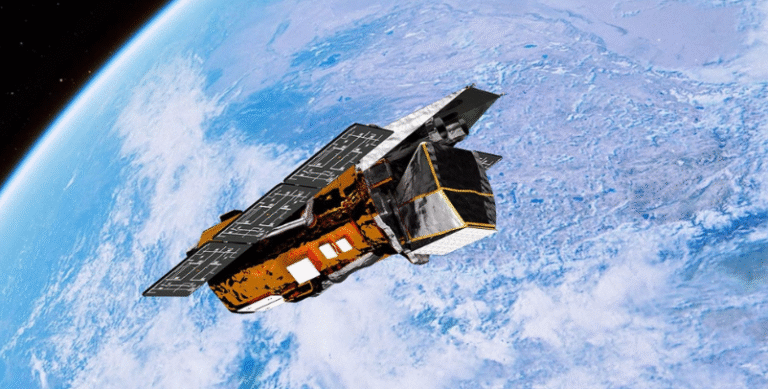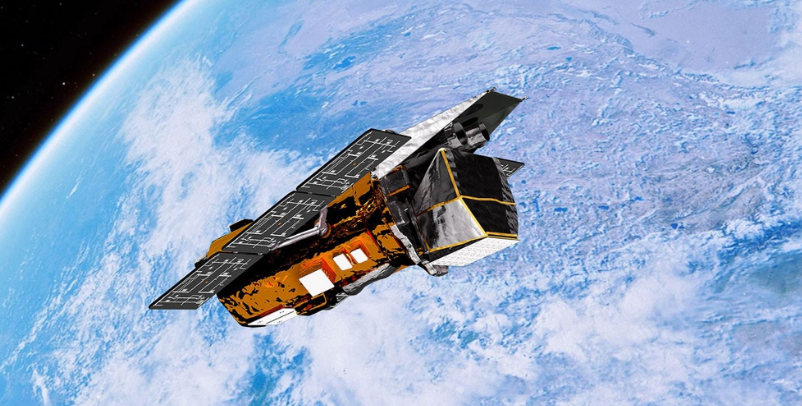
Washington, United States: NASA has ended the science mission of the Neil Gehrels Swift Observatory on October 23, 2026 after a privately developed spacecraft failed to rescue the ageing telescope from its declining orbit. The observatory collected its final scientific data on October 20, 2026, and is expected to re-enter Earth’s atmosphere in the coming weeks, according to NASA. The decision follows the failure of a $30 million rescue effort led by Arizona-based Katalyst Space Technologies, whose LINK spacecraft was designed to capture Swift and raise it to a higher orbit.
NASA awarded Katalyst Space the rescue contract in September 2025, giving the company slightly more than nine months to develop and launch LINK before Swift’s rapidly declining orbit threatened to end its operations. LINK launched on July 3, 2026, aboard a Northrop Grumman Pegasus XL rocket from Kwajalein Atoll in the South Pacific Ocean. However, approximately three weeks after launch, the spacecraft encountered problems involving its propulsion system and reaction wheels, which helped maintain its orientation in space. The malfunctions caused LINK to spin at an unexpected rate, preventing it from carrying out the planned capture and orbital boost.
NASA and Katalyst formally abandoned the original rescue objective on August 19, 2026, citing continuing attitude-control problems. LINK nevertheless managed to approach Swift to within approximately 7.5 to 9.3 miles (12 to 15 kilometres) and photograph the observatory. The spacecraft later re-entered Earth’s atmosphere on September 25, 2026, ending the attempt to save the telescope.
Swift’s orbit had been deteriorating because atmospheric drag gradually reduces the altitude of satellites in low Earth orbit. Increased solar activity intensified the effect, accelerating the observatory’s descent. Swift does not have thrusters capable of counteracting the drag and raising its orbit independently, making an external servicing mission necessary to extend its operational life. The planned rescue was unprecedented: no private spacecraft had previously captured and boosted a satellite that was not designed for servicing in this manner.
Despite the failed rescue, Swift continued conducting scientific observations after the boost mission was abandoned. NASA had previously paused some observations to reduce drag and preserve the spacecraft’s time in orbit. After science operations resumed, the observatory studied hundreds of targets, including remnants of stellar explosions, active supermassive black holes in distant galaxies and comets in the solar system. On October 20, 2026, Swift reached an altitude of 171 miles (275 kilometres), where it could no longer compensate for the increased drag and entered safe mode. The operations team at Penn State University Park then sent a command that effectively ended the mission and prepared the spacecraft for re-entry.
NASA Administrator Jared Isaacman said in the agency’s August 19 statement: “This is not the outcome we were working toward, but it does not change why this mission was worth attempting.” NASA described the project as a high-risk, high-reward effort intended both to extend Swift’s scientific life and to advance commercial spacecraft-servicing capabilities. Shawn Domagal-Goldman, director of NASA’s Astrophysics Division, said in the October 23 mission-end statement that Swift had left behind “an extraordinary archive of multiwavelength observations” expected to support new discoveries for decades.
Launched in November 2004 for a planned two-year mission, Swift operated for more than 21 years and was officially renamed the Neil Gehrels Swift Observatory in 2018, following the death of its first principal investigator in 2017. The telescope observed more than 2,000 gamma-ray bursts, the powerful cosmic explosions it was designed to investigate, and studied more than 1,400 supernova explosions. It also observed asteroids, comets and black holes and conducted an all-sky survey in X-ray light. NASA estimates that data from the mission has contributed to approximately 7,000 published scientific papers.
Although the observatory’s operations have ended, its archived observations are expected to remain scientifically valuable. NASA said it would continue seeking ways to respond rapidly to cosmic events and use existing missions to help fill the gap left by Swift. The failed rescue also provided experience in rapid spacecraft development, rendezvous operations and commercial satellite servicing, technologies that could support future efforts to extend the operational lives of spacecraft in orbit.