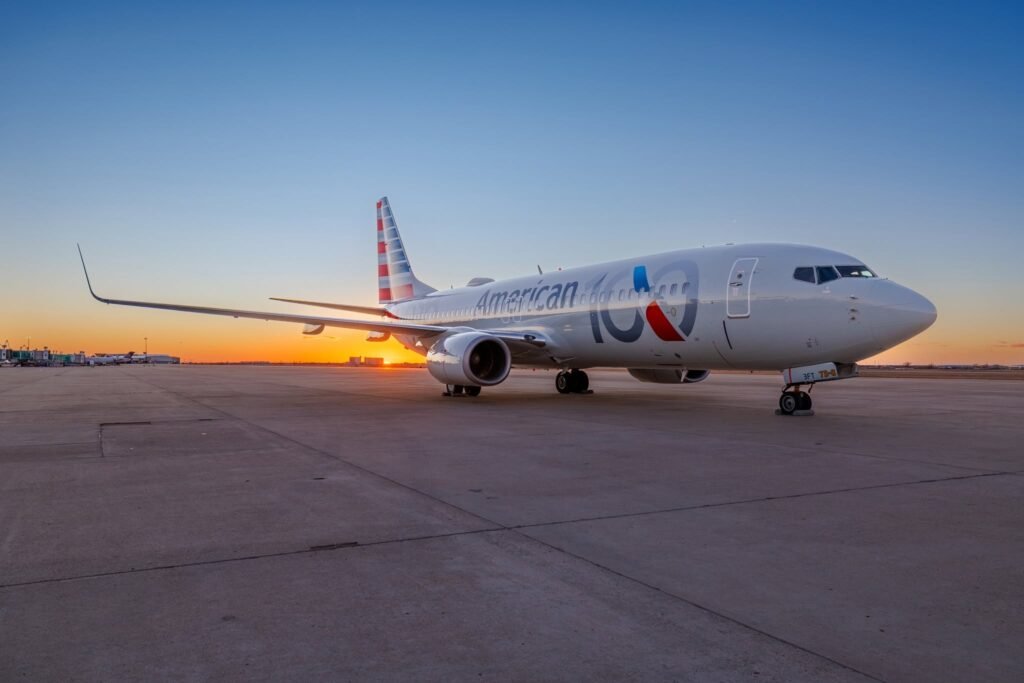
Phoenix, United States: A potential mid-air collision was averted near Phoenix Sky Harbor International Airport on August 14, 2026, after two American Airlines Boeing 737-800s were simultaneously operating under the same “American 2482” callsign while flying in opposite directions between Phoenix and Chicago.
One aircraft was arriving at Phoenix from Chicago O’Hare International Airport, while another had just departed Phoenix for Chicago. The unusual overlap occurred after the inbound Flight 2482 was delayed by weather, prompting American Airlines to use another aircraft already at Phoenix so passengers waiting for the outbound service could depart on schedule. Because Flight 2482 normally operates as a Chicago-Phoenix round trip using the same flight number, the replacement aircraft also operated under the 2482 identification.
The resulting callsign duplication placed both aircraft in the same area of airspace while communicating on the same frequency. Flightradar24 reported that the arriving aircraft was descending through about 11,000 feet while the departing aircraft was climbing toward 9,000 feet when the duplication was recognized. The FAA said the aircraft maintained the required separation throughout the incident.
The Phoenix air traffic controller quickly recognized the problem and began distinguishing the two aircraft as “American 2482 on the arrival” and “American 2482 on the departure.” The controller then kept the arriving aircraft above the departing aircraft and prevented the departure from climbing into the arrival’s altitude, maintaining vertical separation as their flight paths converged.
The controller also alerted both crews to the other aircraft. Reports said the pilots were able to see each other while they were still miles apart, providing an additional layer of awareness as the two aircraft crossed paths. No source has publicly released an exact minimum horizontal distance between the aircraft, and the FAA has confirmed only that required separation was maintained.
The incident was captured in air traffic control audio published by ATC.com and subsequently highlighted by media outlets. After the departing aircraft had cleared the area, the controller said, “I’ve been working air traffic for 25 years. I’ve never seen two aircraft pretty much merge with the same call sign. That’s pretty incredible.”
The arriving pilot later complimented the controller, saying “nice work.” The controller responded, “It could have been disastrous, but I’m glad it worked out.”
The precise passenger and crew numbers aboard the two Boeing 737-800s have not been publicly disclosed by the FAA or American Airlines. Both aircraft completed their flights safely, with no injuries or collision reported. American Airlines said, “The diligence and professionalism of air traffic controllers and our pilots ensured required separation was always maintained and the issue was identified and addressed. Both flights continued safely and without incident.”
Aviation safety expert Steve Arroyo, a former airline dispatcher and pilot, said the incident likely resulted from an oversight within the airline’s dispatch operation. He told Associated Press that someone should have identified that the two aircraft would be airborne at the same time under identical flight numbers. Arroyo described the event as an example of the aviation system’s ability to recover from an error once it reaches another safety layer.
The FAA and American Airlines are investigating how the duplicate callsign was allowed to occur. The investigation will determine how the delayed inbound flight and the replacement outbound aircraft were planned and identified, and why the normal safeguards for avoiding simultaneous use of the same callsign did not prevent the situation.