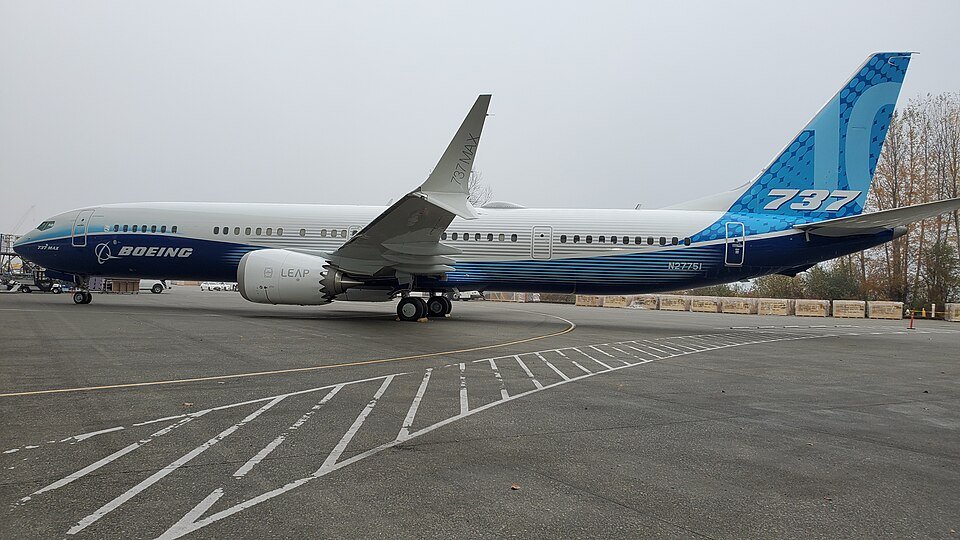
Washington, United States: The U.S. Federal Aviation Administration has ordered operators of 471 Boeing 737 MAX aircraft to inspect structural components around the forward galley-door area for possible cracking, citing a condition previously identified on older 737 Next Generation jets.
The finalized airworthiness directive was unveiled on August 6, 2026 and will take effect on September 10, 2026. It applies to certain in-service Boeing 737-8, 737-9 and 737-8200 aircraft, according to the FAA. The agency estimates that 471 aircraft are affected.
The inspections focus on the fuselage skin, bear strap and stub frame around the forward galley-door cutout. A bear strap is a metal structural component that reinforces areas of the fuselage around openings such as doors and emergency exits. The FAA said cracking, if left unaddressed, could eventually affect the aircraft’s structural integrity.
Importantly, the FAA said no cracks have so far been reported in the corresponding areas of the affected 737 MAX models. The directive follows reports of cracks on several 737NG aircraft. According to the FAA’s November 2025 proposal, cracks had been found in the bear strap and stub frame around the forward galley-door cutout.
Boeing’s investigation found surface scratches on the bear strap that were inadvertently created during the removal of sealant and adhesive in the hot-bonding process used to join the fuselage skin and bear strap. Those scratches, combined with locally elevated stresses, can reduce fatigue life and contribute to early cracking.
The FAA determined that the MAX should also be inspected because the newer aircraft have a similar design and build process to the 737NG, making them susceptible to the same type of cracking. The agency warned that, if the condition developed and was not detected, it could adversely affect the aircraft’s structural integrity.
Boeing said it identified and reported the issue previously and has been working with airline operators on it for about six years. The company said it provided inspection instructions for affected 737NG aircraft to operators in 2019, before the FAA mandated inspections on those aircraft in 2021. Boeing has since expanded the inspection process to MAX aircraft, with the latest FAA directive making those checks mandatory.
“We support both directives and continue to support our airline customers,” Boeing said in a statement. The company also said it has conducted an engineering analysis and is working on changes intended to prevent the cracking from occurring in future aircraft.
The FAA’s directive also calls for inspection of fuselage skin on aircraft where repairs have already been made. The agency’s regulatory record says the required inspections include checks for cracks in the fuselage skin, bear strap and stub frame, along with repetitive inspections and corrective action where necessary.
The action adds another structural inspection requirement to the 737 family after the FAA previously ordered inspections of 737NG aircraft over the same general cracking concern. The development also comes as Boeing remains under heightened regulatory scrutiny following years of safety and production issues involving the 737 MAX.