News
Civil Aviation
Pilot Training
Flight School Analysis
Aviation Jobs
Training
Services
About Us
Contact Us

Indian Pilot’s Body: AI171 Pilots Did Not Move Fuel Switches, Calls For Simulator Tests

Picture of Aviation Today News Desk

Aviation Today News Desk

New Delhi, India: The Federation of Indian Pilots (FIP) has intensified its challenge to the emerging narrative surrounding the Air India Flight 171 crash investigation, arguing that critical technical questions remain unanswered and urging investigators to conduct additional simulator testing before issuing a final report. Addressing a press conference on June 20, FIP President Captain C. S. Randhawa disputed suggestions that the Boeing 787's fuel control switches were deliberately moved by the flight crew, stating that “the pilots have actually not moved the switches.” The remarks come amid growing scrutiny of the Aircraft Accident Investigation Bureau's (AAIB) preliminary findings into the June 12, 2025 crash of Air India Flight 171, which killed 260 people shortly after departure from Ahmedabad. The AAIB's preliminary report concluded that both engine fuel control switches transitioned from RUN to CUTOFF shortly after takeoff, resulting in the loss of fuel supply to both engines. Cockpit voice recordings reportedly captured one pilot asking the other why the fuel had been cut off, with the second pilot denying responsibility. However, FIP argues that the preliminary findings leave several critical issues unresolved. According to Randhawa, the report failed to include cockpit warning sequences that would normally accompany a significant electrical malfunction. The federation contends that if an electrical disturbance occurred before the engines lost power, the cockpit voice recorder should contain caution messages, warning alerts and associated audio warnings that were not discussed in the preliminary findings. Randhawa also questioned why investigators allegedly did not give sufficient weight to the testimony of the crash's sole survivor, Vishwash Kumar Ramesh. According to Randhawa, Ramesh reported seeing lights flickering inside the cabin shortly after the aircraft became airborne. The FIP president argued that this observation could be a significant clue pointing toward a possible electrical malfunction, noting that cabin lights are normally configured for takeoff and should not have been flickering under normal conditions. He said the survivor's account, when considered alongside technical material submitted by the federation regarding electrical-system anomalies and transmitted fault codes, warranted a deeper examination of a potential electrical-failure scenario rather than an exclusive focus on pilot actions. Randhawa maintained that the survivor's statement could represent an important piece of evidence in understanding the chain of events that led to the crash. FIP further highlighted Aircraft Communications Addressing and Reporting System (ACARS) maintenance messages transmitted around the time of departure. The federation has requested that Air India provide the original ACARS records and that Boeing assist investigators in decoding the data to determine whether any technical abnormalities were present before the accident. Another area of concern involves the Full Authority Digital Engine Control (FADEC) system. FIP has urged investigators to examine whether a malfunction or protective system response within the engine-control architecture could have contributed to the simultaneous loss of power. The federation has additionally questioned the condition of the flight data recorder recovered from the aircraft, arguing that the extent of recorder damage appears inconsistent with reports that much of the tail section remained relatively intact. Randhawa also questioned why Captain Sandhu, who he described as an experienced Boeing 787 pilot, had not been involved in the investigation. FIP has formally written to the Prime Minister's Office, the Ministry of Civil Aviation, the Directorate General of Civil Aviation and the AAIB, requesting fresh simulator testing and a broader technical review before publication of the final accident report. The pilots' organization maintains that technical explanations have not been fully exhausted and warns against attributing blame to the flight crew while several lines of inquiry remain open. The final report into the crash has not yet been released, with investigators continuing engine analysis and other technical examinations. Aviation authorities have repeatedly urged caution against speculation, emphasizing that the investigation remains ongoing.

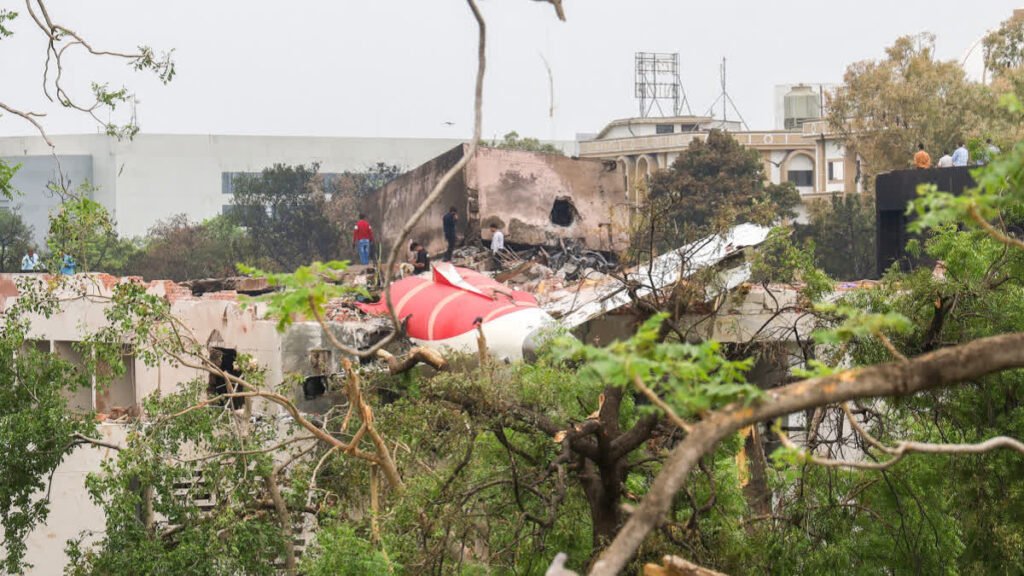
Image: ETV Bharat

New Delhi, India: The Federation of Indian Pilots (FIP) has intensified its challenge to the emerging narrative surrounding the Air India Flight 171 crash investigation, arguing that critical technical questions remain unanswered and urging investigators to conduct additional simulator testing before issuing a final report.

Addressing a press conference on June 20, FIP President Captain C. S. Randhawa disputed suggestions that the Boeing 787’s fuel control switches were deliberately moved by the flight crew, stating that “the pilots have actually not moved the switches.”

The remarks come amid growing scrutiny of the Aircraft Accident Investigation Bureau’s (AAIB) preliminary findings into the June 12, 2025 crash of Air India Flight 171, which killed 260 people shortly after departure from Ahmedabad.

The AAIB’s preliminary report concluded that both engine fuel control switches transitioned from RUN to CUTOFF shortly after takeoff, resulting in the loss of fuel supply to both engines. Cockpit voice recordings reportedly captured one pilot asking the other why the fuel had been cut off, with the second pilot denying responsibility. However, FIP argues that the preliminary findings leave several critical issues unresolved.

According to Randhawa, the report failed to include cockpit warning sequences that would normally accompany a significant electrical malfunction. The federation contends that if an electrical disturbance occurred before the engines lost power, the cockpit voice recorder should contain caution messages, warning alerts and associated audio warnings that were not discussed in the preliminary findings.

Randhawa also questioned why investigators allegedly did not give sufficient weight to the testimony of the crash’s sole survivor, Vishwash Kumar Ramesh. According to Randhawa, Ramesh reported seeing lights flickering inside the cabin shortly after the aircraft became airborne. 

The FIP president argued that this observation could be a significant clue pointing toward a possible electrical malfunction, noting that cabin lights are normally configured for takeoff and should not have been flickering under normal conditions. 

He said the survivor’s account, when considered alongside technical material submitted by the federation regarding electrical-system anomalies and transmitted fault codes, warranted a deeper examination of a potential electrical-failure scenario rather than an exclusive focus on pilot actions. Randhawa maintained that the survivor’s statement could represent an important piece of evidence in understanding the chain of events that led to the crash.

FIP further highlighted Aircraft Communications Addressing and Reporting System (ACARS) maintenance messages transmitted around the time of departure. The federation has requested that Air India provide the original ACARS records and that Boeing assist investigators in decoding the data to determine whether any technical abnormalities were present before the accident.

Another area of concern involves the Full Authority Digital Engine Control (FADEC) system. FIP has urged investigators to examine whether a malfunction or protective system response within the engine-control architecture could have contributed to the simultaneous loss of power.

The federation has additionally questioned the condition of the flight data recorder recovered from the aircraft, arguing that the extent of recorder damage appears inconsistent with reports that much of the tail section remained relatively intact. Randhawa also questioned why Captain Sandhu, who he described as an experienced Boeing 787 pilot, had not been involved in the investigation. 

FIP has formally written to the Prime Minister’s Office, the Ministry of Civil Aviation, the Directorate General of Civil Aviation and the AAIB, requesting fresh simulator testing and a broader technical review before publication of the final accident report.

The pilots’ organization maintains that technical explanations have not been fully exhausted and warns against attributing blame to the flight crew while several lines of inquiry remain open.

The final report into the crash has not yet been released, with investigators continuing engine analysis and other technical examinations. Aviation authorities have repeatedly urged caution against speculation, emphasizing that the investigation remains ongoing.

Leave a Comment

Subscribe to our Newsletter

Recent News