Garden Grove, United States: More than 30 lawsuits have been filed against GKN Aerospace following a chemical tank emergency at the company’s Garden Grove, California, facility that forced the evacuation of approximately 50,000 residents and triggered multiple state and federal investigations.
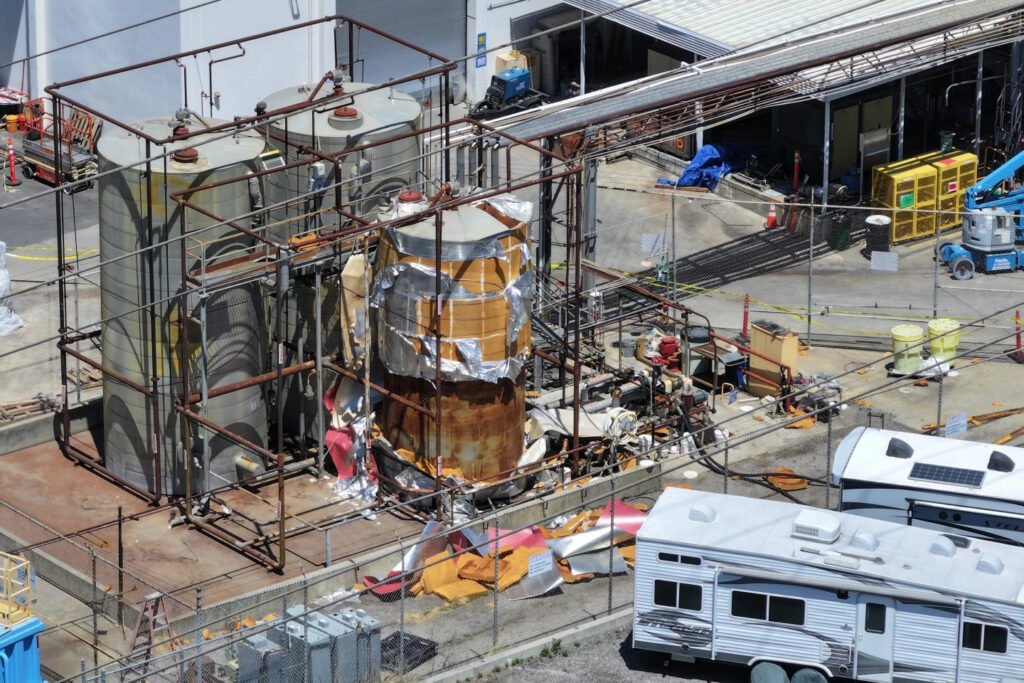
The legal actions stem from an incident that began on May 21, when a storage tank containing between 6,000 and 7,000 gallons of methyl methacrylate (MMA), a highly flammable chemical used in acrylic plastics and aerospace manufacturing, began overheating at GKN Aerospace’s Transparency Systems facility in Orange County.
Authorities feared the tank could rupture, ignite, or trigger a catastrophic explosion capable of endangering surrounding communities and nearby chemical storage tanks. The emergency prompted widespread evacuation orders across portions of Garden Grove and neighboring communities, including Anaheim, Cypress, Stanton, Westminster and Buena Park, during the Memorial Day holiday period.
According to emergency officials, the tank’s internal temperature rose steadily as responders worked around the clock to cool and stabilize the vessel. Initial attempts to neutralize the chemical reaction were complicated by damage to tank valves. At one point, officials warned that a rupture could release thousands of gallons of hazardous material.
The threat eased after responders identified what was described as a crack or fissure in the tank that appeared to relieve internal pressure. Air monitoring conducted throughout the emergency did not detect hazardous levels of contaminants outside the facility, and authorities ultimately reported that no explosion occurred and no significant chemical release was detected.
Despite the absence of a confirmed release, the incident disrupted the lives of tens of thousands of residents for several days. Evacuation orders remained in place until officials determined the immediate danger had passed.
The growing wave of litigation includes residents, workers, business owners, families and property owners who allege negligence in the maintenance, inspection and operation of the facility. At least 10 of the lawsuits have been filed as class-action cases in federal court, while numerous additional cases have been filed in California state courts.
Among the plaintiffs are residents who claim they experienced headaches, nausea, respiratory symptoms and other health effects during the emergency. Some families reported being forced to leave hospitals, hotels or temporary shelters as evacuation zones expanded. Business owners have also alleged significant financial losses after being forced to close during one of the busiest holiday weekends of the year.
Several lawsuits seek compensation for evacuation expenses, lost income, emotional distress, medical monitoring, diminished property values and other damages. Attorneys representing plaintiffs have argued that the company failed to adequately inspect, maintain and monitor the MMA storage system and failed to implement sufficient safeguards to prevent the incident. The legal scrutiny has been accompanied by an escalating federal investigation.
On June 10, agents from the Federal Bureau of Investigation and the U.S. Environmental Protection Agency executed a federal search warrant at the Garden Grove facility. Investigators collected documents, electronic records, maintenance files, inspection records and chemical samples as part of an inquiry into the circumstances surrounding the tank failure.
Federal officials said investigators are examining whether any federal environmental or industrial safety laws were violated. The warrant authorized the seizure of records related to the storage, handling, temperature control, maintenance, use and disposal of methyl methacrylate, as well as communications among company personnel regarding the chemical and storage systems.
Federal authorities also brought EPA scientists and chemists to the site to collect evidence, conduct testing and assist investigators. Officials have indicated that the inquiry remains active and could take months to complete.
In parallel, the Orange County District Attorney’s Office has launched a separate criminal investigation into the incident.
The emergency also renewed scrutiny of regulatory oversight surrounding the facility. Reports have highlighted previous regulatory actions involving the site, including workplace safety citations and a 2025 air-quality settlement with the South Coast Air Quality Management District.
Community leaders and residents have questioned whether hazardous chemical storage should continue in close proximity to densely populated residential neighborhoods. During public meetings held after the evacuation orders were lifted, residents urged GKN Aerospace to relocate its chemical storage operations or implement stronger safety protections.
Local officials have also criticized the company’s initial financial assistance package. GKN Aerospace announced community assistance totaling several million dollars to help offset emergency costs incurred by local governments and residents. However, some elected officials described the contribution as insufficient given the scale of the disruption and emergency response.
GKN Aerospace has repeatedly stated that it is cooperating fully with investigators and regulators. Company representatives have apologized to residents affected by the emergency and pledged to support ongoing recovery efforts.
The Garden Grove facility employs more than 500 workers and serves as a key supplier to major aerospace manufacturers. The plant produces aircraft transparencies, cockpit windows, passenger windows, windshields and canopies used on commercial and military aircraft, including Boeing 737 MAX airliners, Airbus A350 aircraft and Lockheed Martin F-35 fighter jets.
Following a temporary shutdown, GKN Aerospace recently announced plans to begin a phased restart of operations in portions of the facility unaffected by the MMA storage incident. Aerospace manufacturers have indicated that immediate impacts on production programs remain limited, although they continue to monitor developments closely.