News
Civil Aviation
Pilot Training
Flight School Analysis
Aviation Jobs
Training
Services
About Us
Contact Us

AIESL MRO Employee Unrest Grows Nationwide Amid Alleged Restrictive Labour Practices

Picture of Aviation Today News Desk

Aviation Today News Desk

Nagpur, India: Employees of AI Engineering Services Limited (AIESL), a Government of India undertaking under the Ministry of Civil Aviation (MoCA), have launched protests across multiple Maintenance, Repair and Overhaul (MRO) bases over what workers describe as a restrictive internal policy linked to resignations, No Objection Certificates (NOCs), and employee retention. Nearly 180 AIESL technicians reportedly submitted resignations while others stopped work in protest over delays in relieving orders and experience certificates. Employees alleged that the company is delaying resignations, withholding relieving orders, and creating obstacles for staff seeking employment opportunities with other airlines and MRO operators. An AIESL employee, while speaking to Aviation Today alleged that the situation has created “mental harassment” among employees and raised concerns over labour practices within the PSU. The latest unrest began after an internal circular dated May 8, 2026, Base Maintenance Manager (Engg.) for the A-320 Major Maintenance unit, announced stringent conditions for workforce mobility. According to the circular, employees were required to: Procure approval from the AIESL CHRO before applying to external companies Obtain management approval before appearing for interviews or written examinations Route resignation and voluntary retirement cases centrally through the CHRO office Comply with the revised procedure before resignation applications would be processed Employees claim the policy effectively restricts their freedom to pursue better career opportunities. On May 14, 2026, the collective FTE Employees of AIESL submitted a formal representation to the General Manager demanding the immediate withdrawal of this "restrictive policy," alongside long-pending salary revisions, Dearness Allowance (DA), and a transparent career progression matrix. The friction prompted an immediate and stern counter-response from the top executive management; on May 15, 2026, AIESL Chief Executive Officer Sharad Agarwal issued a company-wide warning condemning the emerging labor agitation as an illegal misconduct. Citing historical rulings from the Supreme Court and a specific 2025 Delhi High Court injunction, Agarwal emphasized that PSU workers hold no legal right to strike, warning employees that continuing unauthorized absences would result in the enforcement of a strict "No Work, No Pay" mandate and potential termination of service. Workers argue that their original employment agreements only required them to serve a notice period or pay salary in lieu of notice before resignation. They allege that the new NOC requirement was introduced unilaterally and falls outside their signed contractual conditions. The protests initially gained visibility at AIESL’s Nagpur MRO facility, where employees staged a sit-in demonstration outside the General Manager’s office. The protesting employees mainly include aircraft maintenance technicians, certifying staff, support staff, and engineering personnel working at AIESL’s MRO facilities. Several employees have alleged that the company’s practices violate labour protections and Fixed Term Employment (FTE) norms introduced by the Government of India. Workers claim that despite serving notice periods or offering notice pay, some employees were not issued relieving letters or experience certificates in time, affecting their ability to join new employers. According to employees, the issue is not limited to a few resignations but reflects broader concerns over employee mobility, wages, contractual conditions, and workplace treatment. An employee associated with the protest said workers felt they were being “treated like hostages instead of employees” and accused the management of attempting to prevent skilled manpower from leaving the organisation. The matter has reportedly reached labour authorities in Nagpur. According to aviation industry reports, the Deputy Chief Labour Commissioner’s office in Nagpur clarified that resignation is a legal right of employees and that no employer can forcibly retain a worker once notice requirements have been fulfilled. Employees allege that despite such observations, implementation on the ground remains inconsistent and resignation processing continues to face delays. Industry sources indicate that India’s aviation maintenance sector is witnessing increasing demand for trained aircraft maintenance personnel due to airline expansion, fleet growth, and rising MRO activity. Private airlines and independent MRO operators have reportedly been offering significantly higher salaries and improved career progression opportunities compared to legacy PSU structures. Employees claim many skilled technicians are attempting to move to private aviation firms but are facing delays because relieving documents and approvals are not being issued on time. As of now, AIESL management has not issued a detailed public statement addressing the allegations raised by protesting employees. However, according to media reports, officials within the organisation stated that recent procedures require resignation formalities to be processed centrally through the Delhi headquarters. Some officials reportedly argued that experience certificates were not mandatory because new employers may accept candidates without them. Employees involved in the protest say the demonstrations are being organised collectively by affected technical staff and engineers at various MRO bases. The dispute has reignited discussions within the aviation sector over manpower retention, employment conditions, and the future of technical staffing within aviation PSUs. Employees involved in the protest have appealed for intervention from labour authorities, aviation regulators, media organisations, and the Ministry of Civil Aviation. They maintain that the protest is not only about resignations but also about employee rights, career mobility, and implementation of labour protections within a government-owned aviation engineering company.

Image: AIESL

Nagpur, India: Employees of AI Engineering Services Limited (AIESL), a Government of India undertaking under the Ministry of Civil Aviation (MoCA), have launched protests across multiple Maintenance, Repair and Overhaul (MRO) bases over what workers describe as a restrictive internal policy linked to resignations, No Objection Certificates (NOCs), and employee retention. Nearly 180 AIESL technicians reportedly submitted resignations while others stopped work in protest over delays in relieving orders and experience certificates.

Employees alleged that the company is delaying resignations, withholding relieving orders, and creating obstacles for staff seeking employment opportunities with other airlines and MRO operators.

An AIESL employee, while speaking to Aviation Today alleged that the situation has created “mental harassment” among employees and raised concerns over labour practices within the PSU. 

The latest unrest began after an internal circular dated May 8, 2026, Base Maintenance Manager (Engg.) for the A-320 Major Maintenance unit, announced stringent conditions for workforce mobility. 

According to the circular, employees were required to:

  • Procure approval from the AIESL CHRO before applying to external companies
  • Obtain management approval before appearing for interviews or written examinations
  • Route resignation and voluntary retirement cases centrally through the CHRO office
  • Comply with the revised procedure before resignation applications would be processed

Employees claim the policy effectively restricts their freedom to pursue better career opportunities.

On May 14, 2026, the collective FTE Employees of AIESL submitted a formal representation to the General Manager demanding the immediate withdrawal of this “restrictive policy,” alongside long-pending salary revisions, Dearness Allowance (DA), and a transparent career progression matrix. 

The friction prompted an immediate and stern counter-response from the top executive management; on May 15, 2026, AIESL Chief Executive Officer Sharad Agarwal issued a company-wide warning condemning the emerging labor agitation as an illegal misconduct. Citing historical rulings from the Supreme Court and a specific 2025 Delhi High Court injunction, Agarwal emphasized that PSU workers hold no legal right to strike, warning employees that continuing unauthorized absences would result in the enforcement of a strict “No Work, No Pay” mandate and potential termination of service. 

Workers argue that their original employment agreements only required them to serve a notice period or pay salary in lieu of notice before resignation. They allege that the new NOC requirement was introduced unilaterally and falls outside their signed contractual conditions.

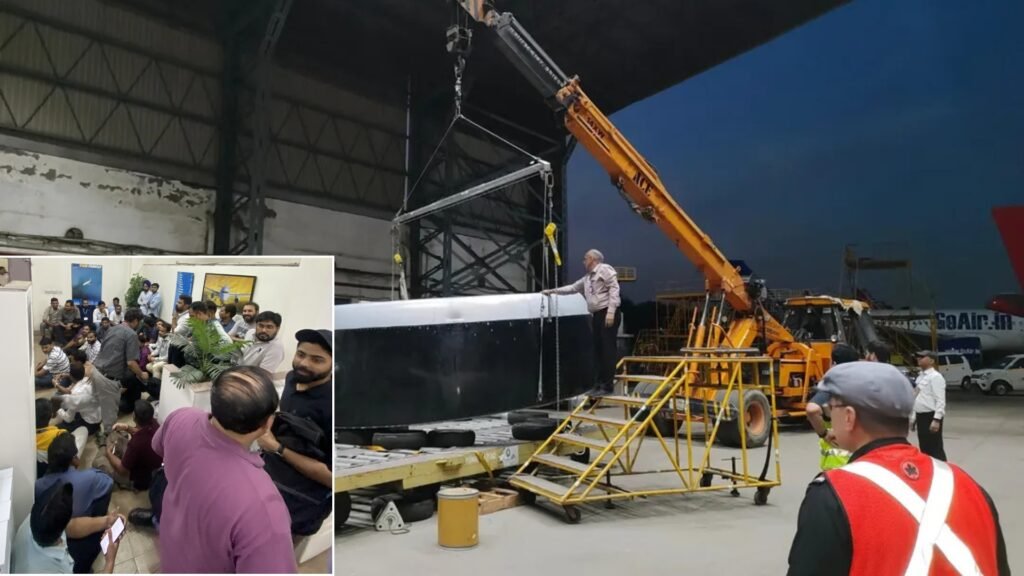
The protests initially gained visibility at AIESL’s Nagpur MRO facility, where employees staged a sit-in demonstration outside the General Manager’s office. 

The protesting employees mainly include aircraft maintenance technicians, certifying staff, support staff, and engineering personnel working at AIESL’s MRO facilities.

Several employees have alleged that the company’s practices violate labour protections and Fixed Term Employment (FTE) norms introduced by the Government of India.

Workers claim that despite serving notice periods or offering notice pay, some employees were not issued relieving letters or experience certificates in time, affecting their ability to join new employers.

According to employees, the issue is not limited to a few resignations but reflects broader concerns over employee mobility, wages, contractual conditions, and workplace treatment.

An employee associated with the protest said workers felt they were being “treated like hostages instead of employees” and accused the management of attempting to prevent skilled manpower from leaving the organisation.

The matter has reportedly reached labour authorities in Nagpur. According to aviation industry reports, the Deputy Chief Labour Commissioner’s office in Nagpur clarified that resignation is a legal right of employees and that no employer can forcibly retain a worker once notice requirements have been fulfilled.

Employees allege that despite such observations, implementation on the ground remains inconsistent and resignation processing continues to face delays.

Industry sources indicate that India’s aviation maintenance sector is witnessing increasing demand for trained aircraft maintenance personnel due to airline expansion, fleet growth, and rising MRO activity.

Private airlines and independent MRO operators have reportedly been offering significantly higher salaries and improved career progression opportunities compared to legacy PSU structures.

Employees claim many skilled technicians are attempting to move to private aviation firms but are facing delays because relieving documents and approvals are not being issued on time.

As of now, AIESL management has not issued a detailed public statement addressing the allegations raised by protesting employees.

However, according to media reports, officials within the organisation stated that recent procedures require resignation formalities to be processed centrally through the Delhi headquarters.

Some officials reportedly argued that experience certificates were not mandatory because new employers may accept candidates without them.

Employees involved in the protest say the demonstrations are being organised collectively by affected technical staff and engineers at various MRO bases.

The dispute has reignited discussions within the aviation sector over manpower retention, employment conditions, and the future of technical staffing within aviation PSUs.

Employees involved in the protest have appealed for intervention from labour authorities, aviation regulators, media organisations, and the Ministry of Civil Aviation.

They maintain that the protest is not only about resignations but also about employee rights, career mobility, and implementation of labour protections within a government-owned aviation engineering company.


Leave a Comment

Subscribe to our Newsletter

Recent News